 Imen
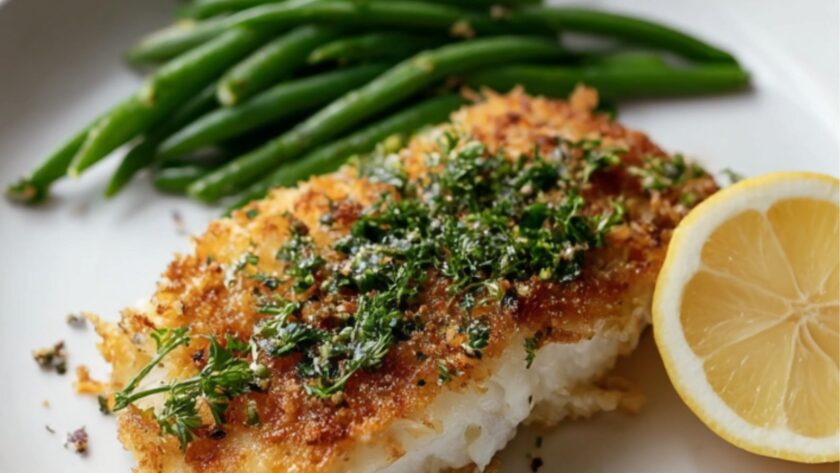
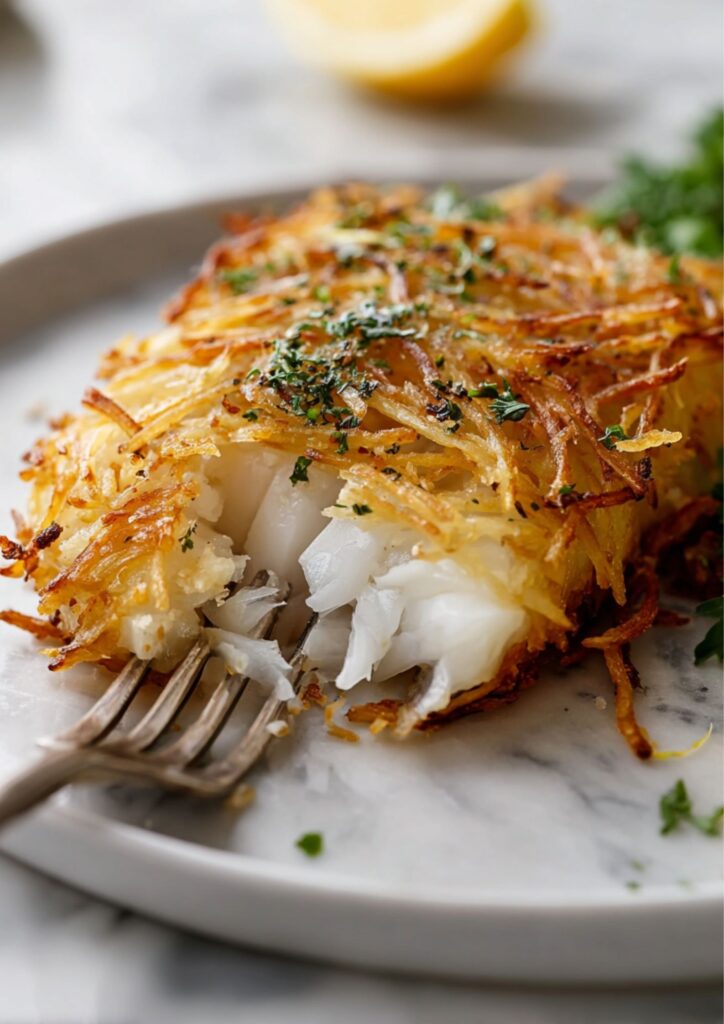
Imen Gordon Ramsay Potato Crusted Fish is a sophisticated British-inspired dish that replaces traditional heavy batter with a crisp, lace-like layer of shredded potatoes. This method, often championed by Gordon Ramsay, creates a beautiful textural contrast between the crunchy exterior and the flaky, tender white fish inside.
Ramsay’s technique relies heavily on moisture management. Most people make the mistake of leaving the grated potatoes wet, but you’ll fail this recipe if you don’t squeeze them until they’re bone-dry. If there is any water left in the potatoes, they will steam the fish instead of frying, resulting in a soggy, gray mess that falls off the fillet.
The “sear-to-oven” method is what ensures the fish doesn’t overcook. By browning the crust in a skillet first, you lock in the juices and set the structure of the potato. I’ve found that using a high-quality non-stick pan is essential here; otherwise, that beautiful golden crust you worked so hard to press on will stay stuck to the bottom of the pan when you try to flip it.
Gordon Ramsay Potato Crusted Fish Ingredients
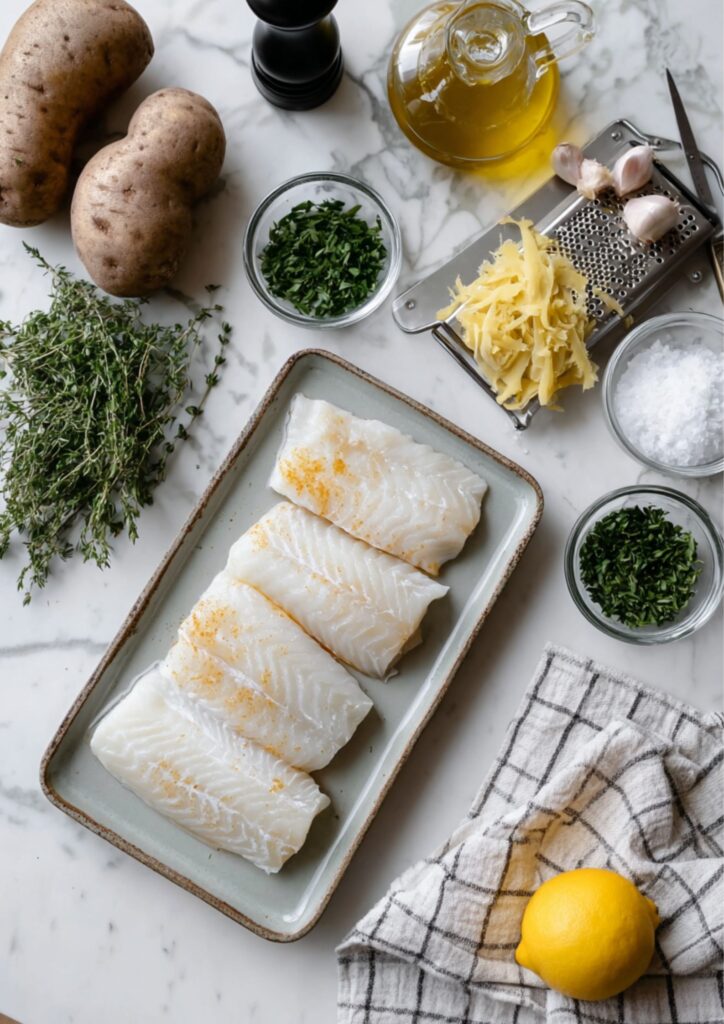
- 4 white fish fillets (cod, haddock, or tilapia work best)
- 2 large starchy potatoes (like Russets or King Edwards)
- 2 tablespoons olive oil
- 2 garlic cloves, crushed
- Salt and freshly ground black pepper
- Zest of 1 lemon
- 1 tablespoon fresh thyme leaves
- 1 tablespoon fresh parsley, chopped
- 1 tablespoon fresh chives, chopped
How To Make Gordon Ramsay Potato Crusted Fish
- 1. Preheat the oven: Set your oven to 200°C (400°F). Make sure your oven rack is in the center position so the fish cooks evenly without burning the potato topping.
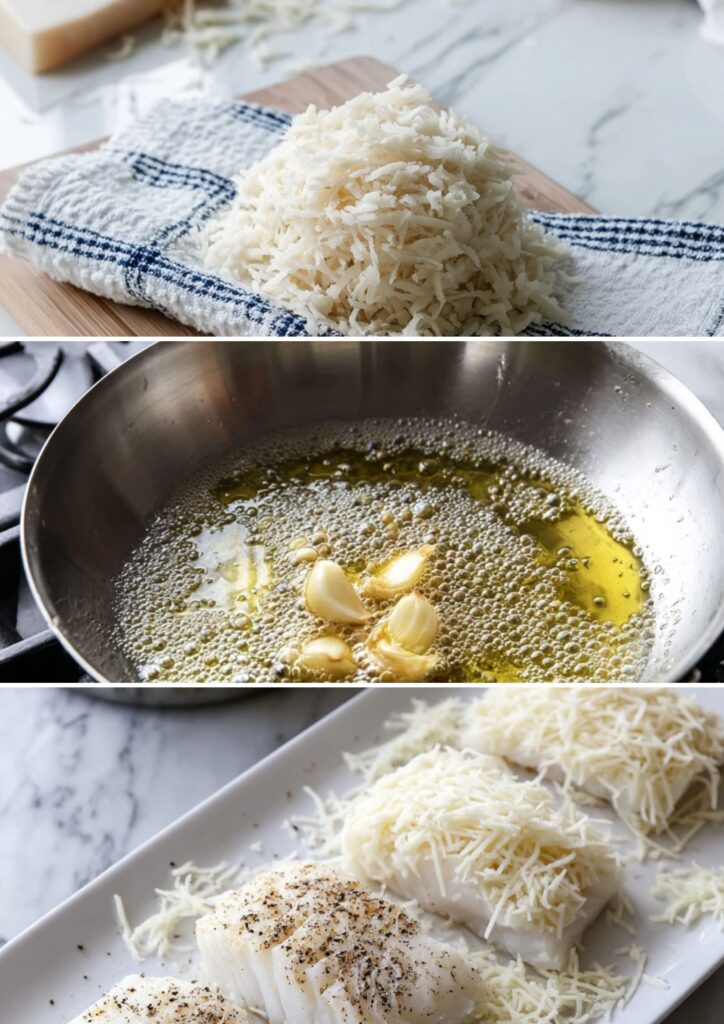
- 2. Prepare the potatoes: Peel the potatoes and grate them coarsely using a box grater. This is the most important part: wrap the grated potatoes in a clean kitchen towel and wring it out with all your strength. Pat them once more with paper towels to ensure they are completely dry.
- 3. Infuse the oil: Heat the olive oil in a large, oven-proof skillet over medium-high heat. Add the crushed garlic cloves and let them sizzle for 30 seconds to flavor the oil, then remove and discard the garlic so it doesn’t burn.
- 4. Crust the fish: Season your fillets with salt and pepper. Take a handful of the dried potato and press it firmly onto the top side of the fish. You can do both sides, but doing just the top (the “presentation side”) is often easier for beginners and keeps the fish from sticking.
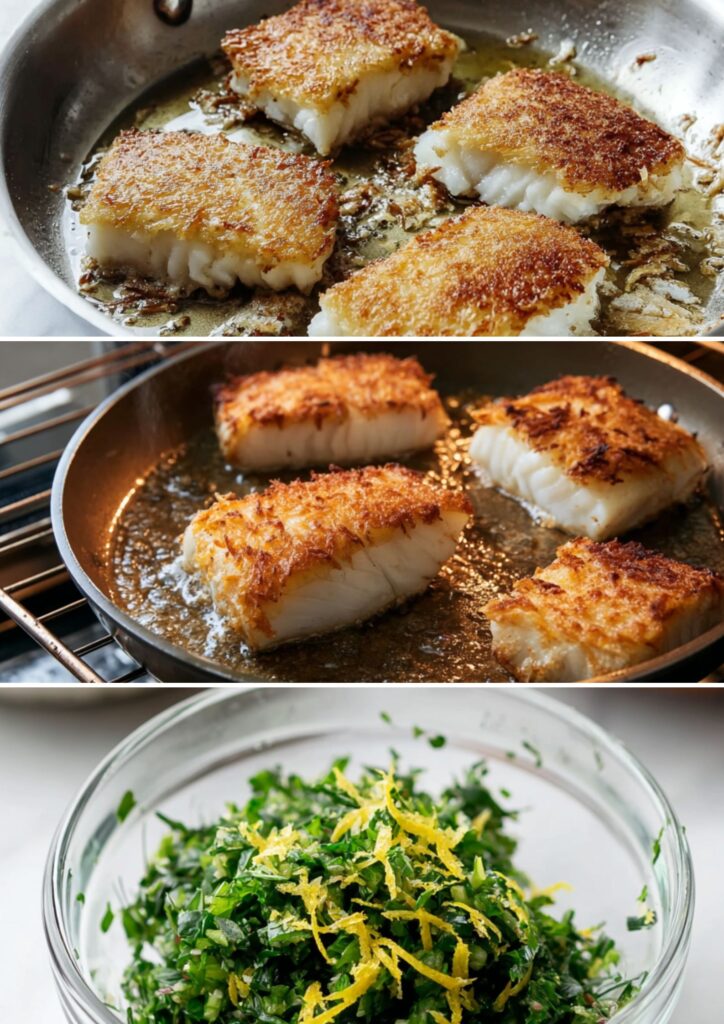
- 5. Sear the crust: Carefully place the fish fillets into the hot skillet, potato-side down. Cook for 2–3 minutes without moving them. You want the natural starches in the potato to “glue” themselves to the fish and turn a deep, golden brown.
- 6. Flip and bake: Carefully flip the fillets over. If the potato is well-browned, it should stay attached. Immediately transfer the entire skillet into the oven and bake for 5–7 minutes. The fish is done when the meat is opaque and flakes easily with a fork.
- 7. Make the herb finish: While the fish bakes, toss the lemon zest, thyme, parsley, and chives in a small bowl with a tiny pinch of salt and pepper.
- 8. Serve: Plate the fish crust-side up and sprinkle the fresh herb and lemon mixture over the top. Serve immediately while the potato is at its maximum crunch.
Recipe Tips
- Use starchy potatoes: Avoid waxy varieties like red bliss or new potatoes. You need the high starch content of a Russet to act as a natural adhesive to keep the crust stuck to the fish.
- Don’t crowd the pan: If you put all four fillets in a small skillet, the temperature of the oil will drop, and the potatoes will soak up grease instead of crisping. Work in batches if necessary.
- Season the potatoes, too: While the recipe calls for seasoning the fish, adding a tiny pinch of salt to the grated potatoes right before you press them on adds another layer of flavor. Don’t salt them too early, though, or they will release water.
- Choose thick fillets: A thicker cut of cod or haddock is better than a thin tilapia fillet. Thick fish takes longer to cook, which gives the potato crust enough time to get perfectly crispy without the fish turning into rubber.
- Use a fish spatula: A thin, flexible metal spatula is the best tool for getting under that potato crust to flip the fish without breaking the seal.
What To Serve With Gordon Ramsay Potato Crusted Fish
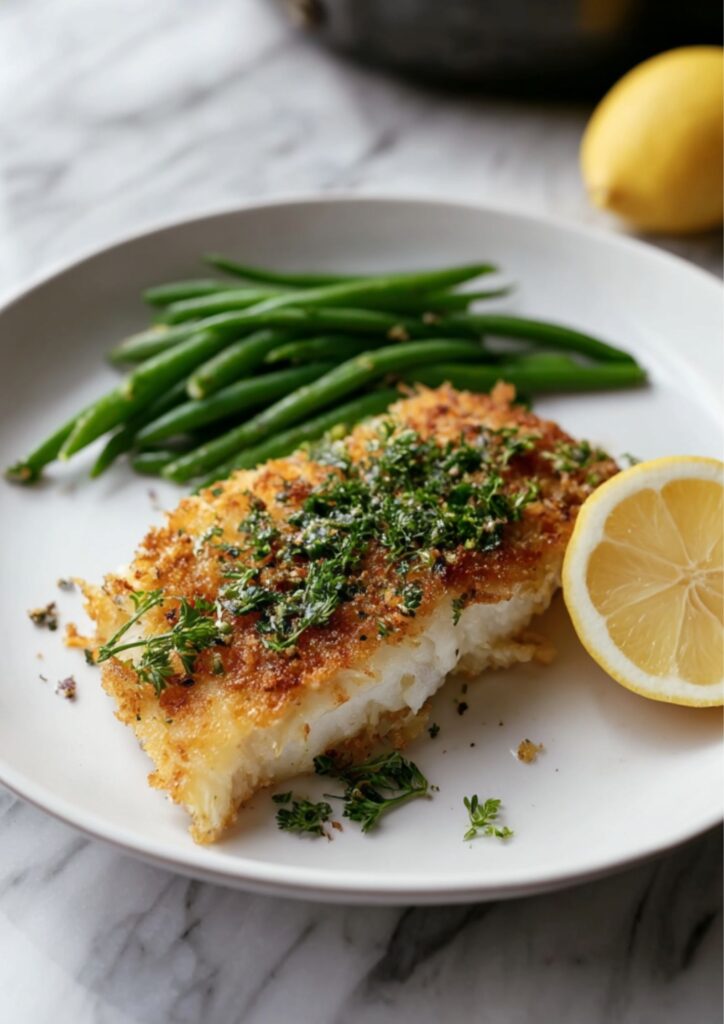
This dish is quite earthy and rich, so it pairs perfectly with something bright and acidic. A side of garlicky sautéed spinach or blanched green beans with a squeeze of lemon works beautifully.
If you want to keep with the “Ramsay” vibe, a light pea purée or a simple tartare sauce on the side adds a creamy element that complements the crunch of the potatoes.
Storing & Reheating Tips
- Fridge: You can store leftovers in an airtight container for up to 2 days. However, be warned: the potato crust will lose its crunch and become soft in the refrigerator.
- Freeze: I don’t recommend freezing this dish. The texture of both the cooked white fish and the shredded potato will degrade significantly once thawed.
- Reheat: Do not use a microwave! To revive the crust, place the fish on a wire rack over a baking sheet and heat in a 190°C (375°F) oven for 8–10 minutes until the potato crisps up again.
Gordon Ramsay Potato Crusted Fish Nutrition Facts
Per serving (1 fillet):
- Calories: 310 kcal
- Protein: 28g
- Fat: 9g
- Carbohydrates: 24g
- Sugar: 1g
- Sodium: 420mg
FAQs
Can I make the potato crust ahead of time?
No. Once potatoes are grated, they oxidize and turn a gray-brown color very quickly. You should grate, squeeze, and crust the fish immediately for the best flavor and appearance.
My potato crust fell off in the pan. What happened?
This usually happens for two reasons: the potatoes were too wet, or the pan wasn’t hot enough when you put the fish in. The initial sear is what “cements” the starch to the protein of the fish.
Can I use sweet potatoes instead?
You can, but sweet potatoes have a higher sugar content and a lower starch content. They will brown much faster (and can burn easily), and they won’t stick to the fish quite as well as white potatoes.
Is this Gordon Ramsay Potato Crusted Fish gluten-free?
Yes! Since the “breading” is made entirely of potatoes, this is a fantastic naturally gluten-free alternative to traditional fried or breaded fish.
What if I don’t have an oven-proof skillet?
Simply sear the fish in a regular pan, then carefully transfer the fillets to a preheated baking sheet to finish them in the oven.
Try More Gordon Ramsay Recipes:

Gordon Ramsay Potato Crusted Fish
Description
Gordon Ramsay Potato Crusted Fish is a masterclass in texture, featuring tender white fish fillets topped with a shatteringly crisp, golden potato “scale” crust. By using grated starchy potatoes that have been thoroughly dried and seared in garlic-infused oil, the natural starches create a secure, flavorful bond with the fish. Finished in the oven and topped with a bright medley of lemon zest, fresh thyme, parsley, and chives, this dish offers a sophisticated, restaurant-quality alternative to traditional battered fish.
Ingredients
Instructions
- Preheat the oven: Set your oven to 200°C (400°F). Make sure your oven rack is in the center position so the fish cooks evenly without burning the potato topping.
- Prepare the potatoes: Peel the potatoes and grate them coarsely using a box grater. This is the most important part: wrap the grated potatoes in a clean kitchen towel and wring it out with all your strength. Pat them once more with paper towels to ensure they are completely dry.
- Infuse the oil: Heat the olive oil in a large, oven-proof skillet over medium-high heat. Add the crushed garlic cloves and let them sizzle for 30 seconds to flavor the oil, then remove and discard the garlic so it doesn’t burn.
- Crust the fish: Season your fillets with salt and pepper. Take a handful of the dried potato and press it firmly onto the top side of the fish. You can do both sides, but doing just the top (the “presentation side”) is often easier for beginners and keeps the fish from sticking.
- Sear the crust: Carefully place the fish fillets into the hot skillet, potato-side down. Cook for 2–3 minutes without moving them. You want the natural starches in the potato to “glue” themselves to the fish and turn a deep, golden brown.
- Flip and bake: Carefully flip the fillets over. If the potato is well-browned, it should stay attached. Immediately transfer the entire skillet into the oven and bake for 5–7 minutes. The fish is done when the meat is opaque and flakes easily with a fork.
- Make the herb finish: While the fish bakes, toss the lemon zest, thyme, parsley, and chives in a small bowl with a tiny pinch of salt and pepper.
- Serve: Plate the fish crust-side up and sprinkle the fresh herb and lemon mixture over the top. Serve immediately while the potato is at its maximum crunch.
Notes
-
Use starchy potatoes: Avoid waxy varieties like red bliss or new potatoes. You need the high starch content of a Russet to act as a natural adhesive to keep the crust stuck to the fish.
Don’t crowd the pan: If you put all four fillets in a small skillet, the temperature of the oil will drop, and the potatoes will soak up grease instead of crisping. Work in batches if necessary.
Season the potatoes, too: While the recipe calls for seasoning the fish, adding a tiny pinch of salt to the grated potatoes right before you press them on adds another layer of flavor. Don’t salt them too early, though, or they will release water.
Choose thick fillets: A thicker cut of cod or haddock is better than a thin tilapia fillet. Thick fish takes longer to cook, which gives the potato crust enough time to get perfectly crispy without the fish turning into rubber.
Use a fish spatula: A thin, flexible metal spatula is the best tool for getting under that potato crust to flip the fish without breaking the seal.
