 Claire Dawson
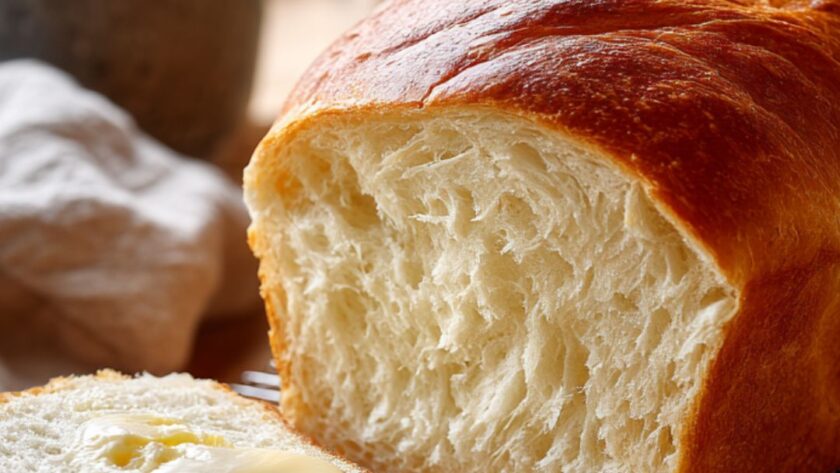
 Pioneer Woman White Sandwich Bread is a soft, no-fuss homemade loaf made with all-purpose flour, butter, yeast, sugar, and salt, ready in about 4 hours with only 30 minutes of hands-on work.
This recipe comes straight from Ree Drummond’s Food Network page, featured on The Pioneer Woman show episode called “FAQ.” It is the same simple dough she shapes into two classic loaves, and the ingredient list is just five items plus water.
The kneading is everything here. Ree calls for a full 15 minutes by hand and says to keep the dough sticky rather than adding too much flour too fast, because a dry dough bakes up dense and tough instead of soft.

Pioneer Woman White Sandwich Bread
Description
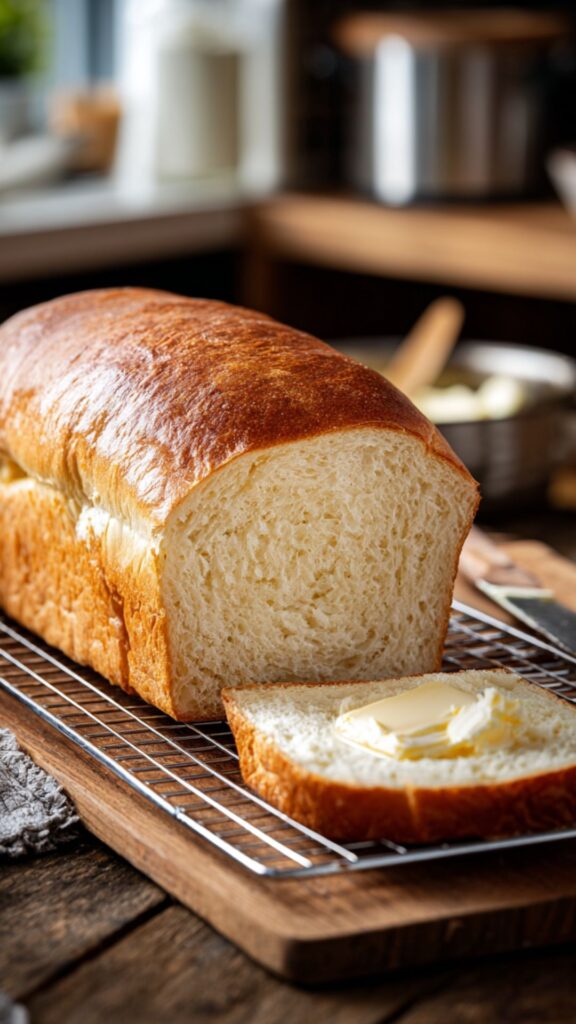
A five-ingredient yeast bread that bakes into two tall, soft loaves perfect for sandwiches, toast, or eating warm with butter. Minimal equipment, no stand mixer required.
Ingredients
Instructions
- Dissolve the yeast. Combine the yeast and 2 cups (480ml) warm water in a large mixing bowl. Stir until the yeast dissolves, about 30 seconds.
- Add butter, sugar, and salt. Pour in the melted butter, sugar, and salt. Stir to combine.
- Mix in the flour in thirds. Add one third of the flour and stir with a wooden spoon until smooth. Add the second third and stir until a shaggy dough forms.
- Knead for 15 minutes. Turn the dough out onto a floured board. Knead for a full 15 minutes, working in the remaining flour gradually. Keep the dough on the sticky side rather than dumping in flour to dry it out.
- First rise (1 hour). Place the dough in a buttered bowl and cover tightly with plastic wrap. Let rise in a warm spot for 1 hour, until roughly doubled.
- Second knead and rise (1 hour). Punch down the dough and knead for another 5 minutes. Return it to the bowl, cover, and let rise another hour.
- Shape and third rise (45 minutes). Butter two standard loaf pans. Divide the dough in half, shape each piece into a loaf, and place seam side down in the pans. Cover and let rise 45 minutes.
- Preheat the oven. Heat the oven to 400F (200C) while the loaves finish their final rise.
- Bake until golden. Bake 30 to 35 minutes until the tops are golden brown and the loaves sound hollow when tapped on the bottom. Turn out onto a wire rack to cool before slicing.
FAQs
Why does Ree knead by hand instead of using a stand mixer?
This dough has no milk, no eggs, and no enrichments to help build structure. The long hand knead lets you feel exactly when the gluten develops enough to hold a tall loaf shape.
A stand mixer can overwork this lean dough in just a few minutes, which makes the crumb gummy. Fifteen minutes by hand gives you control over the texture without any risk of over-mixing.
Why keep the dough sticky instead of adding more flour?
Extra flour is the fastest way to ruin sandwich bread. A sticky dough traps more moisture during baking, which is what creates that soft, squeezable crumb you want in a slicing loaf.
If you flour it until it feels “easy” to handle, the finished bread will be dry and crumbly by the next day. Resist the urge and use just enough flour to keep it from welding itself to the board.
Why does this recipe need two separate rises before shaping?
The first rise builds the bulk of the flavor through fermentation. The second rise after the 5-minute knead redistributes the yeast and tightens the gluten network so the loaf holds a clean shape in the pan.
Skipping the second rise gives you bread that tastes flat and spreads sideways instead of rising upward. The extra hour is the difference between a squat loaf and one that domes above the pan.
Can you freeze the second loaf?
Yes, and this recipe is built for it since it makes two loaves. Let the bread cool completely, then wrap it tightly in plastic wrap followed by a layer of aluminum foil.
Frozen bread keeps well for up to 3 months. Thaw it on the counter still wrapped so the condensation stays on the outside of the plastic, not on the crust.
Why bake at 400F when most sandwich breads call for 350F?
The higher temperature gives this lean dough a quick burst of oven spring in the first 10 minutes, which is how you get a tall loaf from such a simple recipe. A richer dough with eggs and milk would burn at this heat, but water-based dough can handle it.
If you drop to 350F (180C), the loaves spread wider and bake flatter. Stick with 400F and move the rack to the center of the oven so the tops brown evenly.