 Claire Dawson
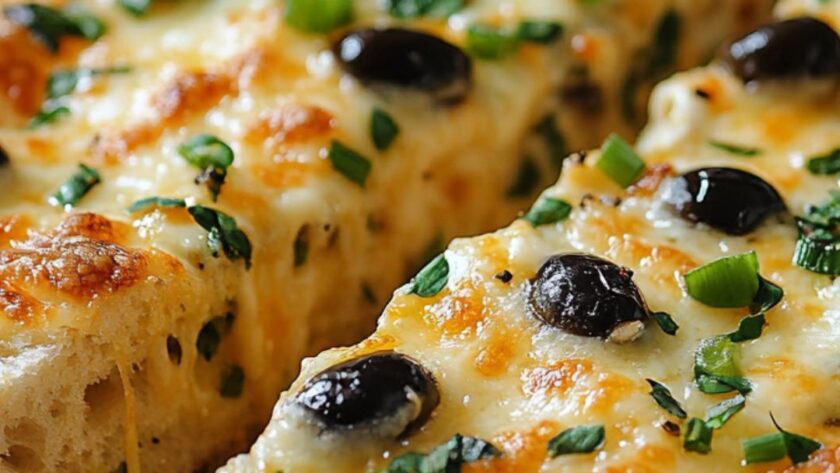
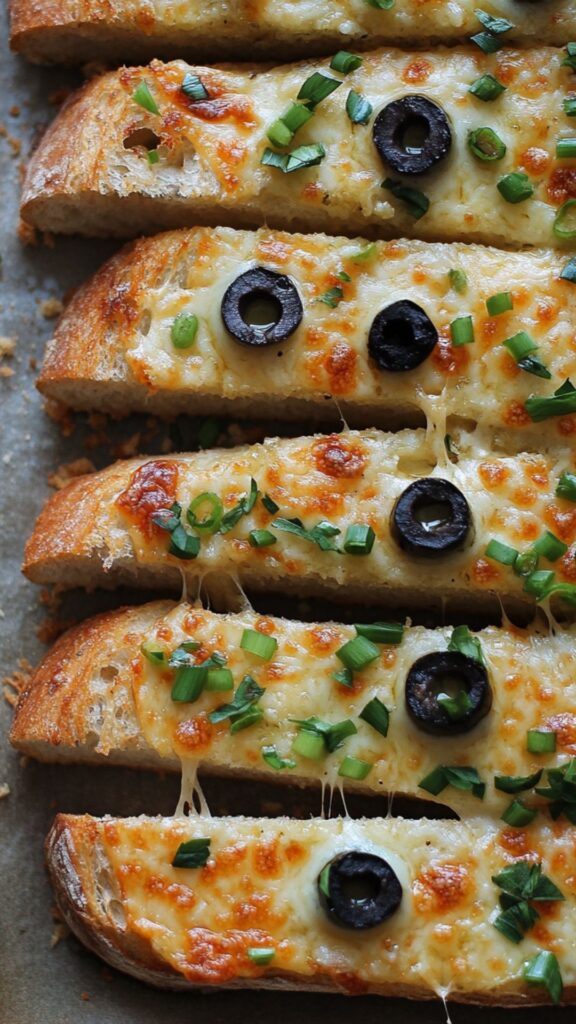
 Pioneer Woman olive cheese bread is crusty French bread spread with a mixture of Monterey Jack cheese, chopped black and green olives, butter, mayonnaise, and green onions, baked until bubbly in about 25 minutes.
Ree originally shared this recipe on thepioneerwoman.com and later published it on Food Network during The Pioneer Woman episode “Triple Act.” It also appears in her cookbook The Pioneer Woman Cooks. She calls olive cheese bread her “best friend” and notes the topping doubles as a cold cracker spread when refrigerated.
The olives need a rough chop, not a fine mince. Large pieces give you pockets of salty, briny flavor against the melted cheese instead of blending in and disappearing. Mince them too fine and the olive flavor spreads thin across the whole topping without any punch in individual bites.

Pioneer Woman Olive Cheese Bread
Description
A savory spread of melted Monterey Jack, chopped black and green olives, and green onions baked onto crusty French bread. Make the topping ahead and refrigerate it for up to two days, or use it straight as a dip with crackers.
Ingredients
Instructions
- Preheat the oven. Set it to 325F (160C).
- Chop the olives. Drain both the black olives and green olives. Roughly chop them into pieces about the size of a pea so they hold their shape in the topping.
- Mix the topping. Combine the softened butter, mayonnaise, grated cheese, chopped olives, and green onions in a large bowl. Stir until everything is thoroughly combined. Add a dash of salt and pepper.
- Spread onto the bread. Lay both halves of the French bread cut-side up on a baking sheet. Spread the olive cheese mixture evenly across both halves, pressing it to the edges.
- Bake. Bake until the cheese is fully melted, bubbly, and browning in spots, 20 to 25 minutes.
- Slice and serve. Cut into diagonal chunks while still hot and serve immediately.
FAQs
Why does Ree use both black olives and green olives in this recipe?
Black olives are mild and buttery, while pimiento-stuffed green olives are briny and slightly tangy. Using both gives the topping a more complex salty flavor than either type alone, and the red pimiento inside the green olives adds a subtle sweetness that balances the richness of the cheese.
If you only have one kind, the bread still works. Black olives alone make it milder, while all green olives push it saltier. Taste the topping before spreading and adjust salt accordingly.
Why is the oven temperature lower than regular cheesy bread?
Ree bakes her olive cheese bread at 325F instead of the 375F she uses for her garlic cheese bread. The lower temperature gives the thick layer of cheese and olives time to heat through and melt evenly without burning the exposed olive pieces on top.
At higher heat, the olives char before the cheese underneath fully melts, leaving you with a burnt topping and cold spots in the middle. The extra five minutes at lower heat is worth the wait for even browning.
Can you freeze the olive cheese mixture for later?
Yes. The topping freezes well for up to a month in an airtight container or freezer bag. Thaw it in the fridge overnight before spreading onto the bread, because frozen topping will not spread evenly and bakes unevenly.
Ree notes the mixture can be refrigerated for up to two days and used cold as a cracker dip. That same make-ahead quality is what makes it freezer-friendly. Spread it on the bread straight from the fridge and add a few extra minutes to the bake time.
What type of French bread works best?
A crusty loaf with a firm interior holds the heavy topping without going soggy underneath. The crust provides a structural base that stays crunchy while the cheese melts on top, giving you contrast between the crispy bottom and gooey surface.
Avoid soft baguettes or sandwich-style French bread because they compress under the weight of the topping and turn mushy during baking. If your loaf feels light and airy when you squeeze it, pick a denser one.
Can you use the olive cheese mixture as a dip instead of baking it?
Ree specifically suggests this in her recipe. Refrigerate the mixture for several hours until firm, then serve it cold with crackers as an appetizer. The butter and mayo solidify in the fridge, giving it a spreadable texture similar to a cold cheese ball.
The flavor actually develops more when the mixture sits overnight because the olive brine works its way through the cheese and butter. It tastes different cold than baked, more like a savory spread than a melted topping, so both versions are worth trying.