 Claire Dawson
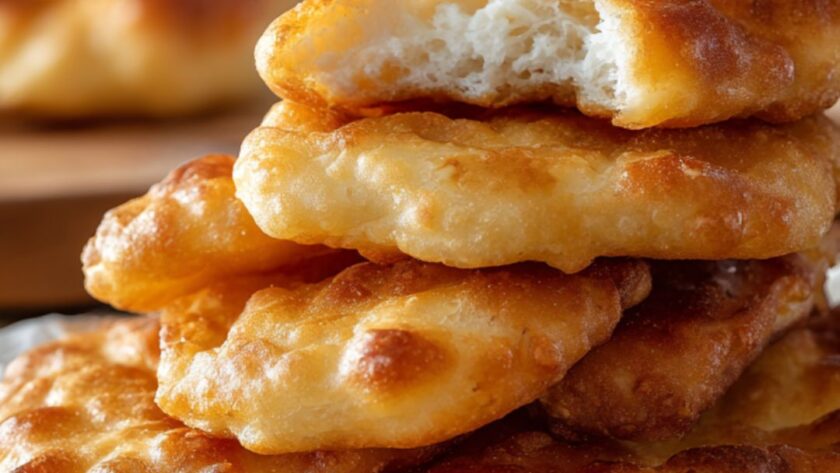
 Pioneer Woman Navajo fry bread is a simple fried dough made with just self-rising flour, salt, and warm water, stretched thin and fried until golden brown on both sides in about 30 minutes of active time.
This recipe comes from Addie Hudgins, a traditional Osage cook and director of the Wahzhazhe Cultural Center, featured on Ree Drummond’s site thepioneerwoman.com. Addie learned to cook from her aunt and mother, and this fry bread is one of the first things she makes for community gatherings in Pawhuska, Oklahoma.
The step that makes or breaks this bread is letting the dough rest 30 to 40 minutes after mixing. That rest lets the flour fully absorb the water, so the dough stretches without tearing when you pull each piece before frying. Skip it and the dough snaps back and fries up thick and dense.

Pioneer Woman Navajo Fry Bread Recipe
Description
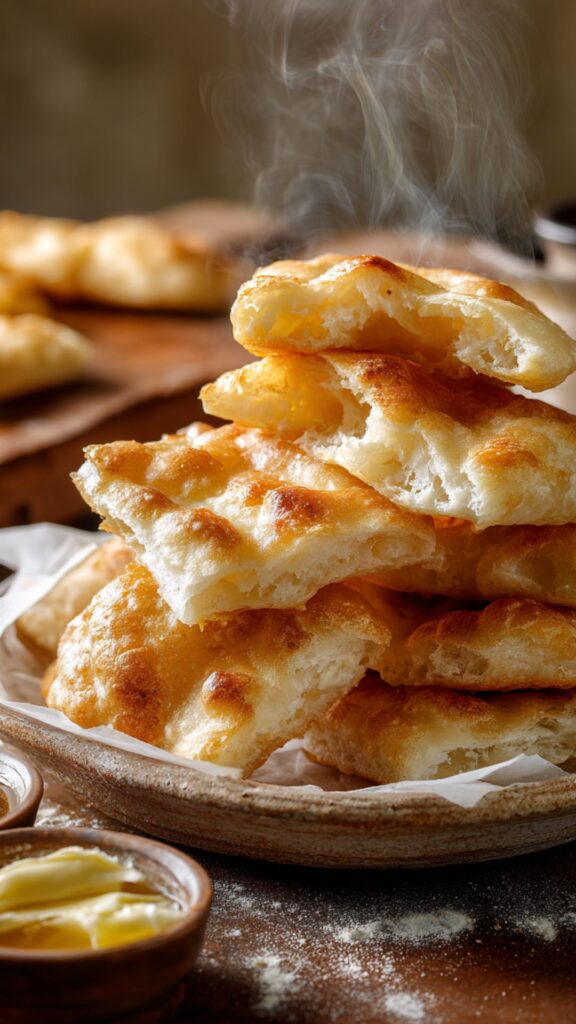
Three ingredients and a rest period are all that stand between you and hot, puffy fry bread with a crisp golden shell and soft chewy center. This is traditional Osage fry bread passed down through generations of community cooks.
Ingredients
Instructions
- Mix the dough. Add the self-rising flour to a large mixing bowl and stir in the salt. Slowly pour in the warm water while mixing until all the flour is wet and a shaggy dough forms.
- Rest. Cover the bowl and let the dough sit at room temperature for 30 to 40 minutes. The dough will soften and become easier to handle.
- Heat the oil. Fill a deep fryer or heavy skillet with vegetable oil to a depth of 1 1/2 to 2 inches. Heat to 350-375F (180-190C).
- Shape the dough. Turn the rested dough onto a well-floured surface and knead lightly, just enough to bring it together. Roll to about 1/2 inch thickness and cut into 3 inch squares.
- Stretch and fry. Gently pull and stretch each square slightly thinner before dropping it into the hot oil. Fry 2 to 3 pieces at a time, turning once when the bottom is golden brown. Remove when both sides are golden, about 1 to 2 minutes per side.
- Drain and serve. Transfer to a paper towel-lined plate. Serve hot.
Notes
- Storage: Fry bread is best eaten immediately. Leftovers can be stored in an airtight container at room temperature for up to 1 day, but the texture softens. Reheat in a 375F oven for 5 minutes to restore some crispness.
FAQs
Why does the dough need to rest for 30 to 40 minutes before frying?
The rest gives the flour time to fully hydrate, which makes the dough pliable enough to stretch without tearing. Self-rising flour absorbs water more slowly than you would expect, so freshly mixed dough still has dry pockets inside even when it looks wet on the surface.
Rested dough also relaxes the gluten that forms during mixing. Relaxed gluten stretches instead of snapping back, so each piece pulls thin enough to puff up properly in the hot oil.
Why use self-rising flour instead of all-purpose flour with baking powder?
Self-rising flour has the leavening already blended evenly throughout, so every piece of dough rises at the same rate in the oil. Mixing baking powder into all-purpose flour by hand risks uneven distribution, which means some pieces puff while others fry flat.
Addie’s recipe reflects traditional community cooking where simplicity matters. Fewer separate ingredients means fewer things to measure wrong when you are cooking large batches outdoors over an open fire.
Why stretch each piece before dropping it in the oil?
Stretching thins the center so the hot oil can puff the dough from both sides at once. A thick, unstretched square fries unevenly because the outside crisps before the center cooks through, leaving you with doughy raw spots in the middle.
The stretch also creates slight variations in thickness across each piece. Those thin spots puff into airy bubbles while the thicker edges stay chewy, giving you two textures in every bite.
Can you make a smaller batch of this dough?
This recipe is scaled for community cooking, which is how Addie traditionally prepares it. To make a smaller batch at home, use 2 cups self-rising flour, 1 teaspoon salt, and about 1 cup warm water. That gives you roughly 6 to 8 pieces.
Add the water slowly because you may not need the full cup. The dough should be wet and slightly sticky but not soupy. Everything else stays the same: rest 30 to 40 minutes, roll, cut, stretch, and fry.
What is the best way to serve fry bread?
For a savory meal, pile it with seasoned ground beef, shredded lettuce, diced tomatoes, cheese, and sour cream to make Indian tacos. Addie notes that Osage cooking centers around simple ingredients, so the bread works as a side next to meat gravy or chicken and dumplings.
For a sweet version, drizzle warm fry bread with honey, or spread it with a mix of equal parts honey and butter. Cinnamon sugar sprinkled on while the bread is still hot and oily sticks perfectly without needing extra butter.