
 Claire Dawson
 Pioneer Woman Beet Pickled Eggs are tangy, firm hard-boiled eggs soaked in a sweet vinegar brine with cooked beets, dill, sweet onion, peppercorns, and mustard seeds until they turn deep pink all the way through. The whole process takes about 15 minutes of hands-on work, but the eggs need at least one full day in the fridge before they are ready.
Ree Drummond posts this recipe as Beet Pickled Eggs on her official website, where she uses fresh cooked beets cut into wedges and keeps the spice list short with just peppercorns and mustard seeds. That simple combination lets the beet and vinegar flavor come through without anything competing.
Letting the eggs sit in the brine for the full four days instead of pulling them after one makes a big difference in both color and taste. At 24 hours the pink barely reaches past the surface, but by day four it goes almost to the yolk. The longer soak also gives the vinegar and mustard seeds more time to work into the whites.
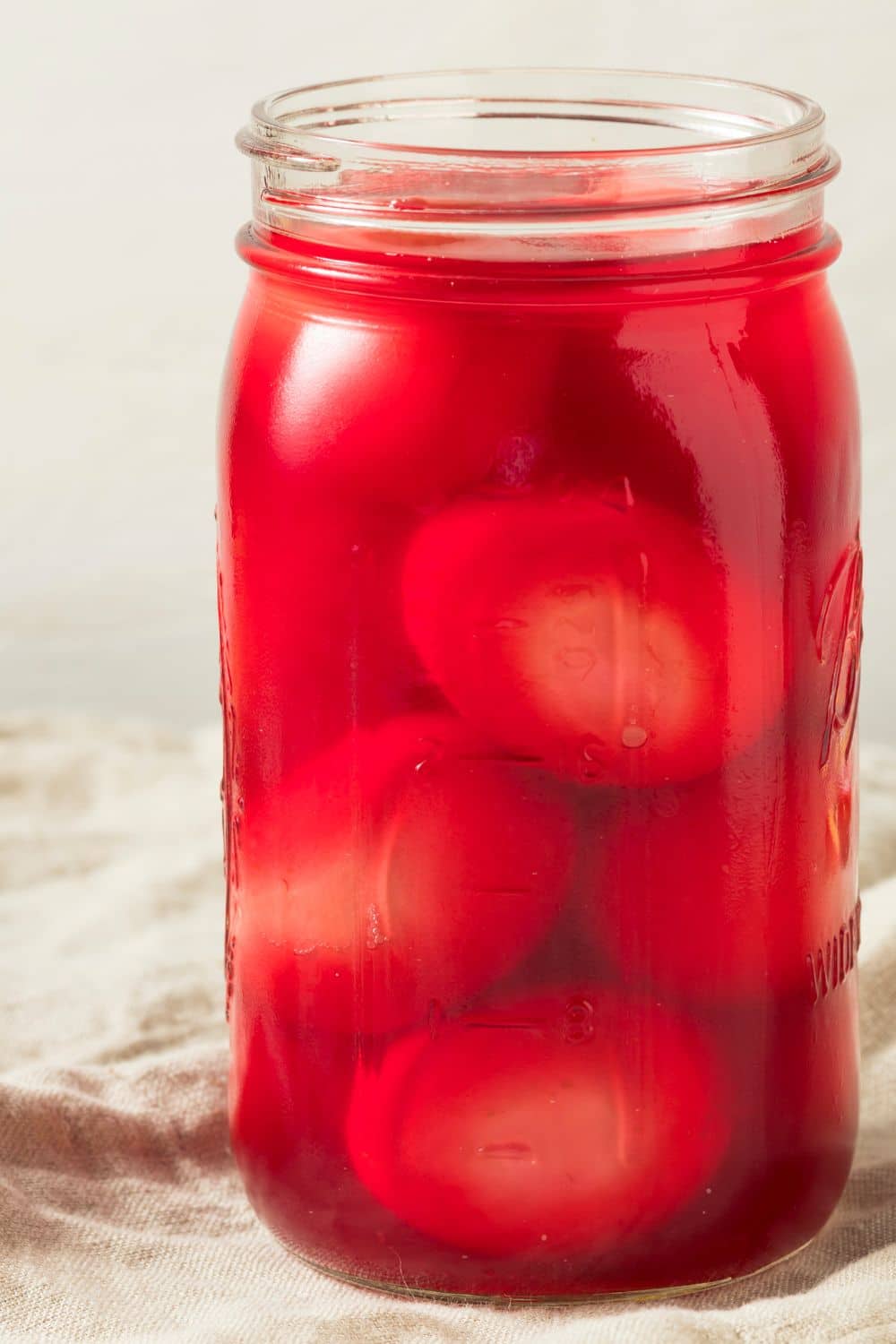

Pioneer Woman Beet Pickled Eggs
Description
Cooked beet wedges, hard-boiled eggs, sliced sweet onion, and fresh dill packed into a jar, then covered with a hot vinegar brine spiced with peppercorns and mustard seeds and chilled for one to four days.
Ingredients
Instructions
- Pack the jar: Place the dill sprigs, cooked beet wedges, hard-boiled eggs, and sliced sweet onion into a quart-sized jar, layering them so the beets and eggs sit side by side.
- Heat the brine: Combine the vinegar, sugar, kosher salt, black peppercorns, mustard seeds, and 1/2 cup water in a saucepan over medium heat, then stir until the sugar and salt dissolve completely.
- Pour and chill: Pour the hot brine into the jar over the eggs and beets, then let it cool to room temperature. Cover the jar and refrigerate for at least 1 day and up to 4 days.
FAQs
How long should I boil eggs before pickling them?
A 10 to 12 minute boil followed by an ice bath gives you a fully set yolk without the gray-green ring around the outside. Overcooking makes the whites rubbery, and rubbery whites do not absorb the brine well. Pull them at 11 minutes if you want a yolk that is firm but still slightly creamy in the center.
Why does this recipe use fresh beets instead of canned?
Fresh cooked beets release more natural pigment into the brine, which is why the eggs turn a deeper, more even shade of pink than they would with canned slices. Canned beets also carry a softer, slightly metallic taste from the processing liquid. If you only have canned, drain and rinse them first so the canning liquid does not dilute the vinegar brine, similar to how you would prep beets for a roasted beet and onion side dish.
Can I reuse the brine for a second batch of eggs?
The brine loses most of its acidity and flavor after the first batch, so starting fresh each time is the safest approach. Reused brine also carries leftover egg proteins that can make the liquid cloudy and shorten how long the second batch stays good. A new batch of brine takes under five minutes to make, which is not much effort for a better result.
How do I know when the eggs are fully pickled?
Cut one in half after 24 hours and check how far the pink color has reached toward the yolk. A thin pink ring means they need another day, while color that reaches about halfway through the white means they are ready to eat. Eggs left for the full four days will be pink almost to the center and will have a stronger vinegar tang.
Do the mustard seeds and peppercorns change the flavor much?
They add a warm, slightly spicy undertone that keeps the brine from tasting like straight vinegar and sugar. Without them the eggs taste flat and one-note, because there is nothing to balance the sharpness of the white vinegar. You can toast the mustard seeds in a dry pan for about 30 seconds before adding them to the brine if you want that warmth to come through even more, which works well when serving these alongside something like macaroni salad.
What is the best way to store these after opening the jar?
Keep the eggs fully submerged in the brine inside a sealed glass jar in the refrigerator at all times. Eggs that sit above the liquid line will dry out and lose their color within a day. They stay good for up to three weeks as long as the jar stays cold and sealed between servings.