 Claire Dawson
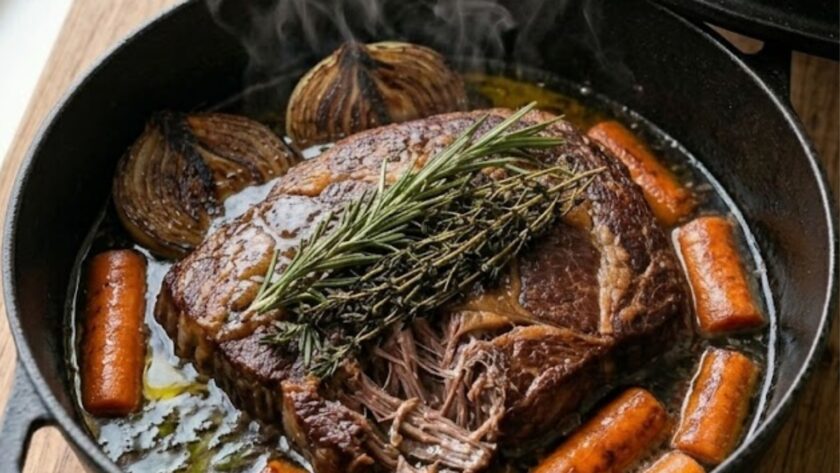
 Pioneer Woman Pot Roast is a classic American comfort dinner that feeds a large family. This slow-cooked meal uses a whole chuck roast seared until crusty and braised with red wine, fresh herbs, and chunky carrots for a tender, fall-apart finish.
Approach B: If you do nothing else, make sure you sear the meat until it has a very dark, mahogany crust on every single side. That’s the difference between a rich, savory gravy and a pot of grey, boiled-tasting beef. I’ve found that rushing the browning stage is the biggest mistake home cooks make because you can’t get that deep flavor back once the liquid goes in.
The fresh rosemary and thyme are doing more work than you’d think here. As the roast sits in the oven for four hours, those woody herbs infuse the beef stock with an earthy scent that matches the sweetness of the caramelized onions. I always make this on a rainy Sunday because the smell fills the whole house and the leftovers make the best sandwiches the next day.
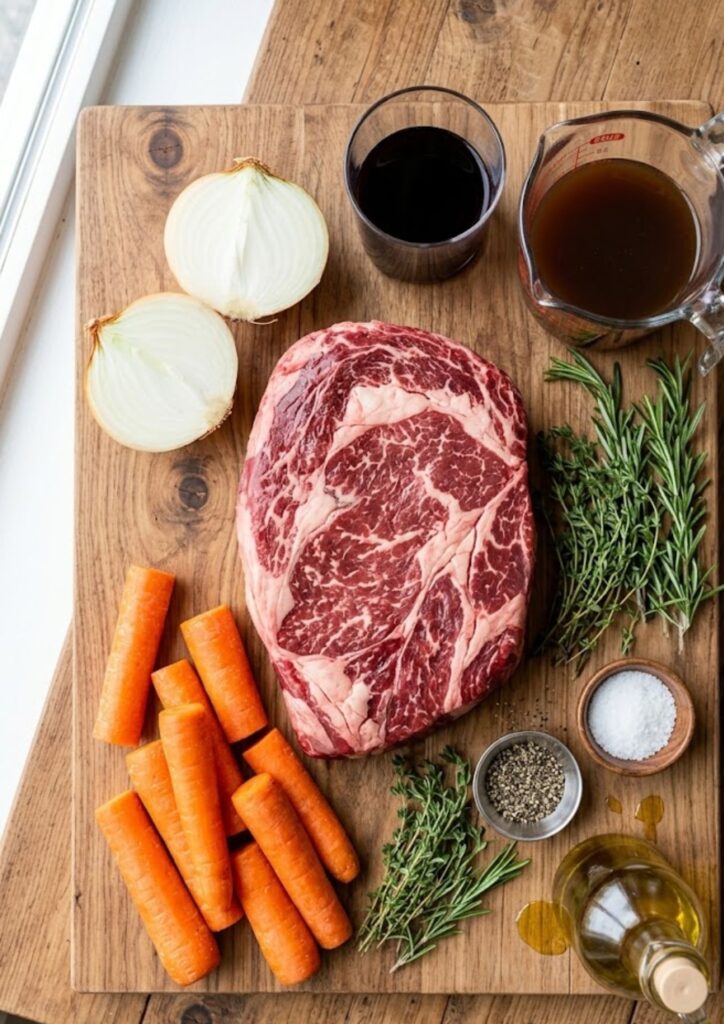
Pioneer Woman Pot Roast Ingredients
- 4 to 5 lb (1.8 to 2.3kg) whole chuck roast
- Kosher salt and pepper, to taste
- 2 tbsp olive oil, plus more as needed
- 2 whole onions, peeled and halved
- 6 to 8 whole carrots, cut into 2-inch chunks
- 1 cup (240ml) red wine (or extra beef broth)
- 2 to 3 cups (475 to 710ml) beef stock
- 3 sprigs fresh thyme
- 3 sprigs fresh rosemary
How To Make Pioneer Woman Pot Roast
- 1. Season the roast: Preheat your oven to 135°C (275°F). Take the chuck roast out of the paper and use a generous amount of kosher salt and black pepper to coat every inch of the meat, including the sides.
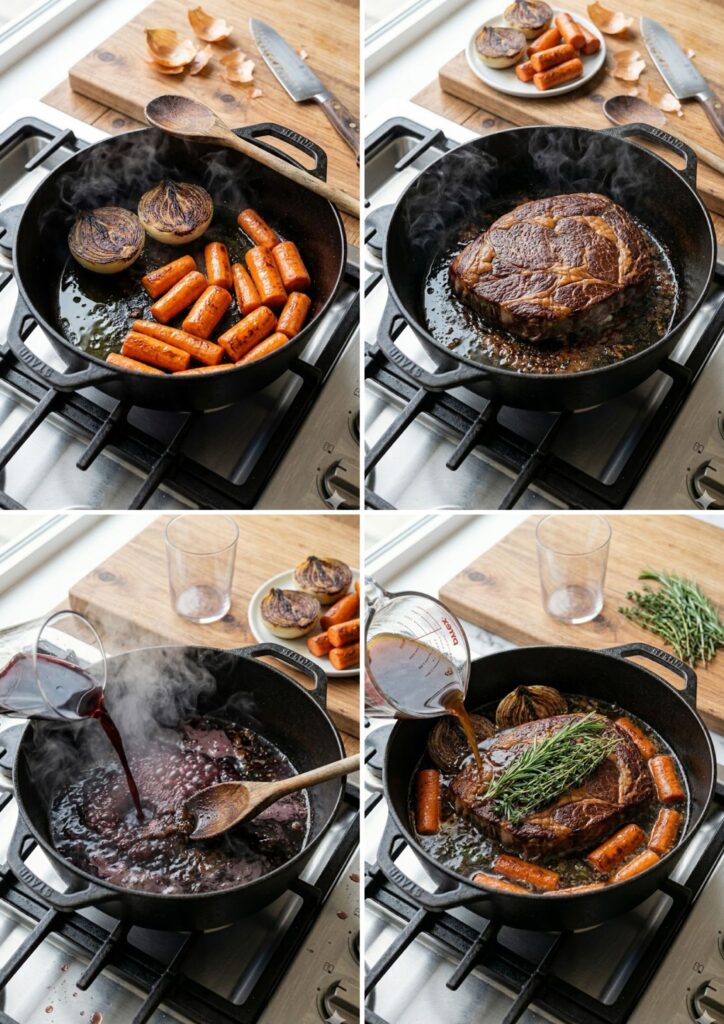
- 2. Sear the vegetables: Heat the olive oil in a large Dutch oven over medium-high heat. Place the onion halves face-down in the oil until they’re dark brown, then toss in the carrot chunks for a minute before moving all the vegetables to a plate.
- 3. Sear the meat: Add another splash of oil to the same pot if it looks dry. Lay the seasoned roast into the hot pan and leave it alone for at least a minute per side until a heavy, dark crust forms.
- 4. Deglaze the pan: Lift the meat out onto a plate and pour the red wine or a splash of beef broth into the hot pot. Use a wooden spoon to scrape up all the stuck-on brown bits from the bottom, as these contain the most flavor for your sauce.
- 5. Assemble the pot: Place the roast back into the liquid and tuck the seared onions and carrots around the sides. Pour in enough beef stock so the liquid comes about halfway up the side of the meat, then lay the herb sprigs right on top.
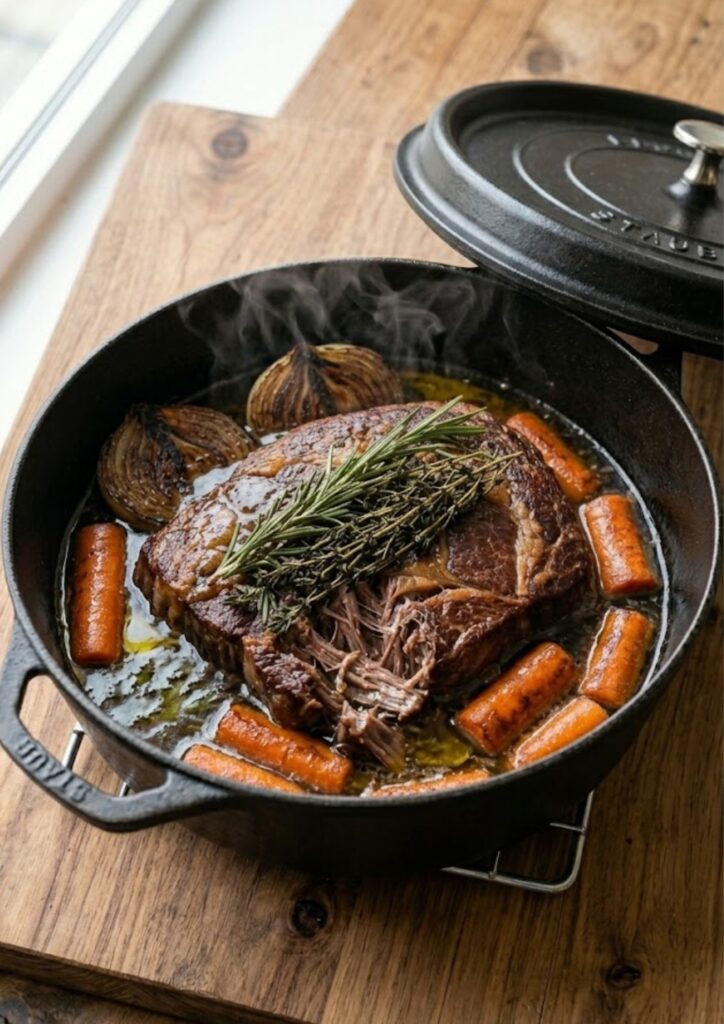
- 6. Roast until tender: Put the heavy lid on the pot and slide it into the oven. Let it cook for 4 hours without opening the door, checking at the end to see if the meat pulls apart easily with a fork.
If the meat still feels tough or bouncy when you poke it, put the lid back on and give it another thirty minutes. A chuck roast has a lot of connective tissue that needs a long time at a low temperature to melt into that tender, buttery texture we’re looking for.
Recipe Tips
- Buy a well-marbled roast: Look for a chuck roast that has plenty of white flecks of fat running through the red meat. That fat is what keeps the beef moist during the long stay in the oven; a lean cut like a round roast will end up dry and stringy.
- Use a heavy pot: A cast-iron Dutch oven is the best tool for this because it holds heat evenly and has a tight-fitting lid. If your lid is a bit loose, lay a piece of foil over the pot before putting the lid on to keep the steam trapped inside.
- Don’t peel the carrots: If you’re using organic carrots, just give them a good scrub instead of peeling them. The skin holds its shape better during a four-hour braise, so you don’t end up with carrot mush at the bottom of the pot.
- Let the wine simmer: When you deglaze the pan, let the wine bubble for a minute or two before adding the stock. This cooks off the raw alcohol taste and leaves behind the fruity, complex notes that make the gravy taste professional.
- Skim the fat: Before serving, you might see a layer of yellow oil sitting on top of the liquid. Use a large spoon to gently skim that off so the sauce is rich and silky rather than greasy.
- Keep the vegetables large: Cutting the carrots into big two-inch chunks ensures they don’t disintegrate. Since they’re cooking for the same amount of time as a five-pound piece of beef, smaller pieces would vanish into the sauce.
What To Serve With Pioneer Woman Pot Roast Recipe
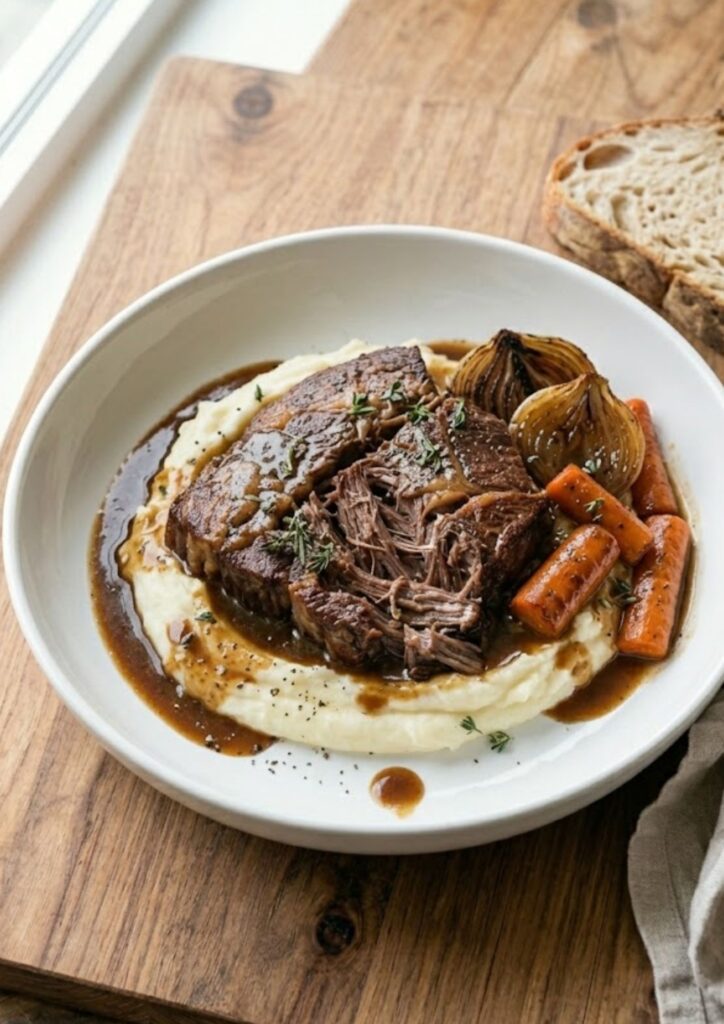
A big pile of creamy mashed potatoes is the natural partner for this roast because it soaks up all the extra gravy. You could also serve it over wide egg noodles if you want something a bit lighter.
A side of crusty bread is essential for cleaning up the plate at the end. If you want something green, some simple steamed peas or a small garden salad with a sharp dressing provides a nice break from the rich beef.
How To Store Pioneer Woman Pot Roast Recipe
- Fridge: Store the meat and vegetables in their own cooking liquid in a sealed container for up to 4 days. The flavor actually improves overnight, making it a great dish to cook a day before you need it.
- Reheat: The best way to warm it up is in a saucepan over medium-low heat so the meat doesn’t dry out. If you’re using a microwave, cover the dish and add a few spoonfuls of gravy to keep the beef moist.
- Freeze: This freezes perfectly for up to three months in a freezer-safe bag. I like to shred the leftover meat into the gravy before freezing so it’s ready to be used for a quick pasta sauce or a filling for shepherd’s pie.
Pioneer Woman Pot Roast Nutrition Facts
Per serving (1 of 8):
- Calories: 510 kcal
- Protein: 42g
- Fat: 34g
- Carbohydrates: 8g
- Sugar: 3g
- Sodium: 820mg
FAQs
Can I make Pioneer Woman Pot Roast in a slow cooker?
Yes, you can do the searing on the stove first and then move everything to a slow cooker. Cook it on the low setting for 8 to 10 hours until the meat is tender enough to shred with a spoon.
What’s the best substitute for red wine?
If you don’t want to use wine, just use an extra cup of high-quality beef stock and a tablespoon of balsamic vinegar. The vinegar gives that slight acidity that the wine usually provides to help break down the meat.
Why is my Pioneer Woman Pot Roast still tough after 4 hours?
It likely just needs more time. Every piece of meat is different, and some chuck roasts have tougher fibers that take longer to soften; as long as there is still liquid in the pot, you can keep cooking it.
Do I have to sear the meat first?
You don’t have to, but I strongly recommend it for the best flavor. Searing creates the Maillard reaction, which produces those savory, roasted notes that you simply won’t get if you just put raw meat into the liquid.
Can I add potatoes to the pot?
You can add whole small potatoes or large chunks of Russets during the last hour of cooking. If you put them in at the beginning, they will likely fall apart and disappear into the gravy before the meat is done.
Try More Pioneer Woman Recipes:
- Pioneer Woman Potato Nachos Recipe
- Pioneer Woman Potato Chip Cookies Recipe
- Pioneer Woman Candied Sweet Potatoes Recipe

Pioneer Woman Pot Roast Recipe
Description
The Pioneer Woman’s Pot Roast is the definition of melt-in-your-mouth, slow-cooked comfort. By heavily searing a well-marbled chuck roast and deeply caramelizing onions and thick-cut carrots, you build an incredible foundation of flavor. Braised low and slow in a rich bath of beef stock, red wine, and fresh herbs, the tough cut of meat magically transforms into a tender, pull-apart masterpiece with a built-in, deeply savory pan gravy.
Ingredients
Instructions
- Season the roast: Preheat your oven to 135°C (275°F). Take the chuck roast out of the paper and use a generous amount of kosher salt and black pepper to coat every inch of the meat, including the sides.
- Sear the vegetables: Heat the olive oil in a large Dutch oven over medium-high heat. Place the onion halves face-down in the oil until they’re dark brown, then toss in the carrot chunks for a minute before moving all the vegetables to a plate.
- Sear the meat: Add another splash of oil to the same pot if it looks dry. Lay the seasoned roast into the hot pan and leave it alone for at least a minute per side until a heavy, dark crust forms.
- Deglaze the pan: Lift the meat out onto a plate and pour the red wine or a splash of beef broth into the hot pot. Use a wooden spoon to scrape up all the stuck-on brown bits from the bottom, as these contain the most flavor for your sauce.
- Assemble the pot: Place the roast back into the liquid and tuck the seared onions and carrots around the sides. Pour in enough beef stock so the liquid comes about halfway up the side of the meat, then lay the herb sprigs right on top.
- Roast until tender: Put the heavy lid on the pot and slide it into the oven. Let it cook for 4 hours without opening the door, checking at the end to see if the meat pulls apart easily with a fork.
Notes
-
Buy a well-marbled roast: Look for a chuck roast that has plenty of white flecks of fat running through the red meat. That fat is what keeps the beef moist during the long stay in the oven; a lean cut like a round roast will end up dry and stringy.
Use a heavy pot: A cast-iron Dutch oven is the best tool for this because it holds heat evenly and has a tight-fitting lid. If your lid is a bit loose, lay a piece of foil over the pot before putting the lid on to keep the steam trapped inside.
Don’t peel the carrots: If you’re using organic carrots, just give them a good scrub instead of peeling them. The skin holds its shape better during a four-hour braise, so you don’t end up with carrot mush at the bottom of the pot.
Let the wine simmer: When you deglaze the pan, let the wine bubble for a minute or two before adding the stock. This cooks off the raw alcohol taste and leaves behind the fruity, complex notes that make the gravy taste professional.
Skim the fat: Before serving, you might see a layer of yellow oil sitting on top of the liquid. Use a large spoon to gently skim that off so the sauce is rich and silky rather than greasy.
Keep the vegetables large: Cutting the carrots into big two-inch chunks ensures they don’t disintegrate. Since they’re cooking for the same amount of time as a five-pound piece of beef, smaller pieces would vanish into the sauce.