 Claire Dawson
 Pioneer Woman pie crust is a flaky, tender homemade dough made with both cold butter and shortening, an egg, ice water, and a splash of white vinegar. This recipe yields enough dough for two full crusts and comes together in about 15 minutes of hands-on time.
This is Ree Drummond’s “Perfect Pie Crust” published on thepioneerwoman.com. Ree says she used to swear by an all-shortening crust, but once she started adding butter she never looked back. This version combines both fats for rich flavor and a forgiving, easy-to-roll dough.
Every ingredient must stay cold, especially the butter and shortening, because solid fat is what creates flaky layers. When those cold pieces hit the hot oven they melt and release steam, puffing the dough apart. Warm fat blends into the flour instead, giving you a flat, dense crust with no lift.

Pioneer Woman Pie Crust
Description
Ree’s updated go-to pie dough that pairs cold butter with shortening for a crust that bakes up golden, crisp, and flaky every time. The dough freezes beautifully, so you can make it weeks ahead and pull it out when pie season hits.
Ingredients
Instructions
- Mix flour and salt. Combine flour and kosher salt in a large bowl and stir until evenly distributed.
- Cut in the fats. Add the cold shortening and cold butter pieces to the bowl. Using a pastry cutter or your fingers, work them into the flour until the mixture resembles coarse crumbs, about 3 to 4 minutes.
- Add the wet ingredients. Beat the egg with a fork in a small bowl. Pour it into the flour mixture along with the ice water and vinegar. Stir gently until just combined and the dough holds together when pinched. If it does not hold together, add more water 1 teaspoon at a time.
- Divide the dough. Split the dough into 2 equal pieces and form each into a ball.
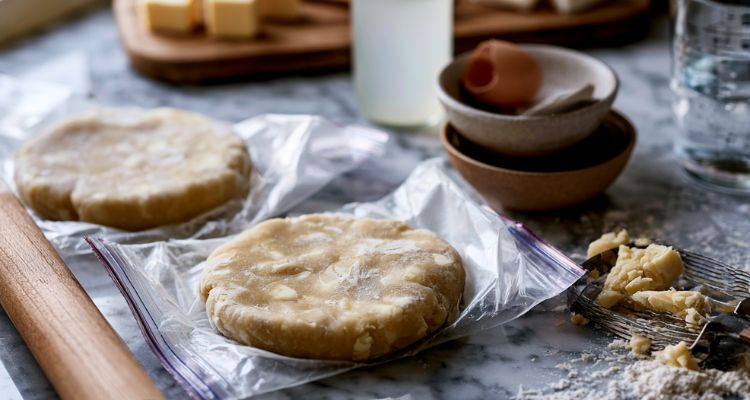
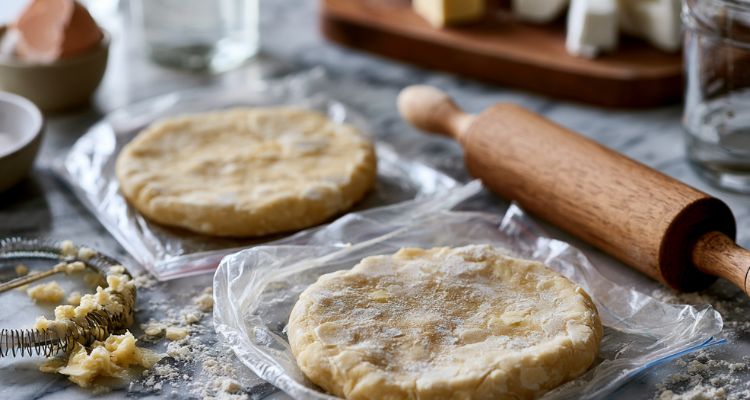
- Flatten and freeze. Place each ball in a gallon-sized zip-top plastic bag without sealing it. Use a rolling pin to flatten each ball into a disc about 1/2 inch thick. Seal the bags and place them in the freezer until firm, about 30 minutes.
- Roll out the dough. When ready to use, remove from the freezer. On a generously floured surface, roll out from the center working outward in single strokes. If the dough sticks, loosen it with a metal spatula or bench scraper and add more flour underneath. Roll until the dough is about 2 inches larger than your pie plate.
- Transfer to the pie plate. Loosen the dough with a spatula and lift it into a 9-inch pie plate, or roll it over the rolling pin and unroll it onto the plate. Let the dough settle naturally into the bottom and sides without pressing or stretching.
- Trim and shape. Trim excess dough, leaving about 1 inch of overhang. Pinch and tuck the dough under itself around the rim to create a clean edge. For a single-crust pie, crimp or flute the edges with a fork or your fingers.
Notes
- Pie dough keeps in a zip-top bag in the refrigerator for up to 2 days or in the freezer for up to 3 months. If frozen less than 1 hour, roll it out right away. If frozen 4 hours or more, let it rest at room temperature for 15 minutes before rolling. Dough frozen solid can be thawed in the fridge for 4 hours or at room temperature for 1 hour.
FAQs
Why does Ree use both butter and shortening instead of just one fat?
Butter gives the crust its rich flavor and golden, flaky layers when baked. Shortening keeps the dough tender and forgiving, making it much easier to roll out even straight from the fridge without cracking.
Ree used to make an all-shortening crust for years before switching to this combination. She says the butter-shortening version gives her the best of both worlds: great flavor from the butter and a soft, workable texture from the shortening that holds up in any pie.
Why does the dough go into the freezer instead of just the refrigerator?
Freezing for 30 minutes firms the butter and shortening completely solid so they hold their shape during rolling. When those hard fat pieces hit the hot oven, they melt and create steam pockets that puff the dough into distinct flaky layers.
Chilling in the fridge keeps fats cool but not fully solid, so you get less steam and fewer layers. The freezer step also relaxes the gluten in the flour, which means the dough rolls out smoother and the crust is less likely to shrink during baking.
What does the vinegar do in this pie crust recipe?
The tablespoon of vinegar slows gluten development in the flour, which keeps the crust from getting tough or chewy. It works as insurance so even a little extra handling does not ruin the texture.
You cannot taste the vinegar in the baked crust at all. One tablespoon spread across two full crusts is too small an amount to register as flavor, but it is enough acid to interfere with the gluten chains that make dough tough and elastic.
Why add an egg to pie crust dough?
The egg acts as a binder that holds the dough together so it does not crack or fall apart when you roll it out and transfer it to the pie plate. Without it, a dough this rich in fat can be fragile and hard to handle.
The egg also adds a slight richness and helps the crust bake to an even golden brown. Those egg proteins react with heat during baking, giving the surface that warm color you want on a finished pie.
Why does Ree flatten the dough into discs before freezing?
A flat disc thaws and rolls out evenly, while a round ball stays cold in the center long after the outside has softened. Starting from a disc means every part of the dough reaches the same temperature at the same time.
Flattening also gives you a head start on rolling so you do not have to work the cold dough as much on the counter. Less handling means less gluten development, which keeps the baked crust tender and flaky instead of tough.