 Imen
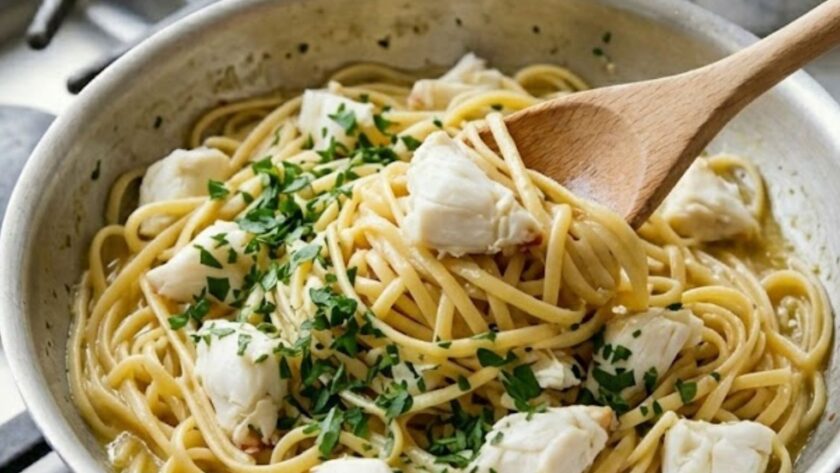
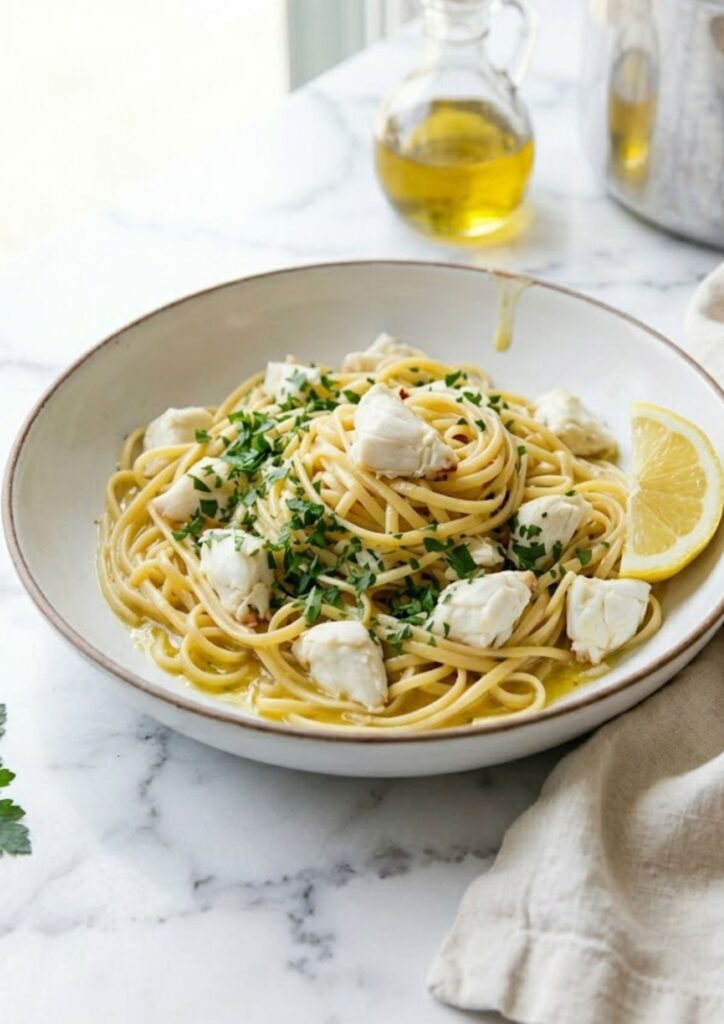
Imen Michael Symon’s Crab Pasta is a masterclass in minimalism. By focusing on high-quality ingredients—sweet, fresh crab and a vibrant garlic-infused oil—you create a dish that feels luxurious despite coming together in less than 20 minutes. The secret here is letting the pasta finish cooking directly in the sauce, allowing every strand to soak up those aromatic oils.
The first time I made this, I drained the pasta entirely and tossed it in the pan, resulting in a dry, stuck-together mess. Now, I always use tongs to pull the pasta straight from the boiling water into the skillet. That little bit of clingy pasta water, combined with the olive oil, creates a silky, emulsified sauce that coats everything perfectly.
If you do nothing else, don’t skimp on the quality of your olive oil. Since this sauce is just oil, garlic, and crab, a grassy, high-quality extra-virgin olive oil will transform the entire dish.
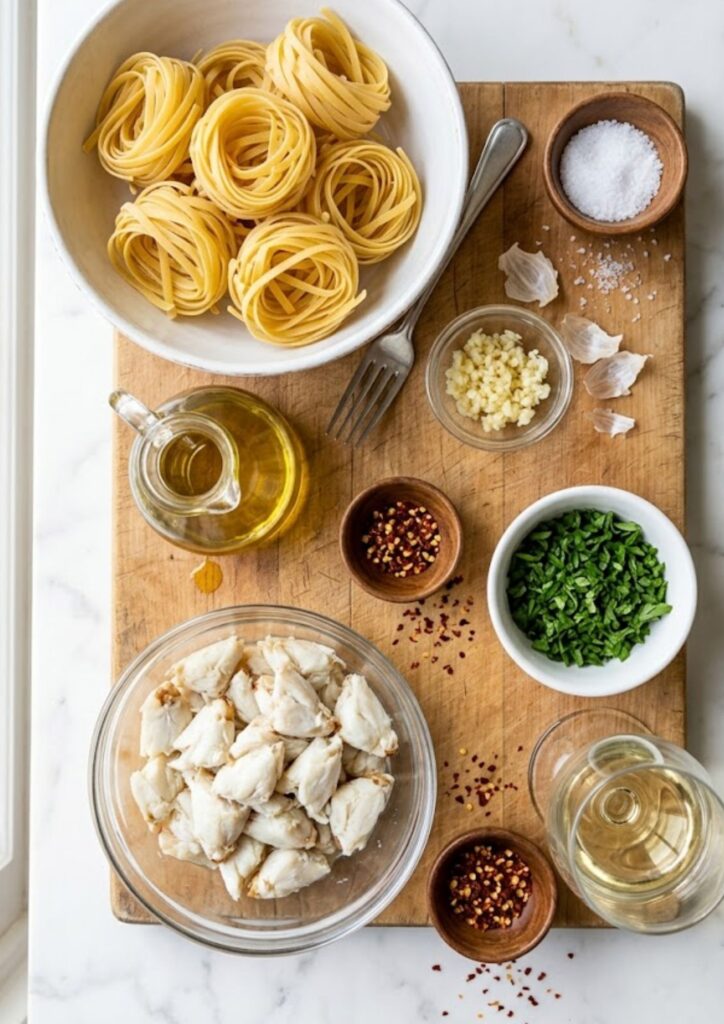
Michael Symon Crab Pasta Ingredients
- 1 lb (450g) dried pasta (linguine or spaghetti work best)
- 1/2 cup (120ml) high-quality extra-virgin olive oil
- 4–6 cloves garlic, very finely minced
- 1/2 tsp (or to taste) red pepper flakes
- 1/2 cup dry white wine (like Pinot Grigio or Sauvignon Blanc)
- 8–10 oz (250–300g) fresh lump crab meat (picked over for shells)
- 1/2 cup fresh Italian parsley, finely chopped
- Kosher salt, to taste
How To Make Michael Symon Crab Pasta
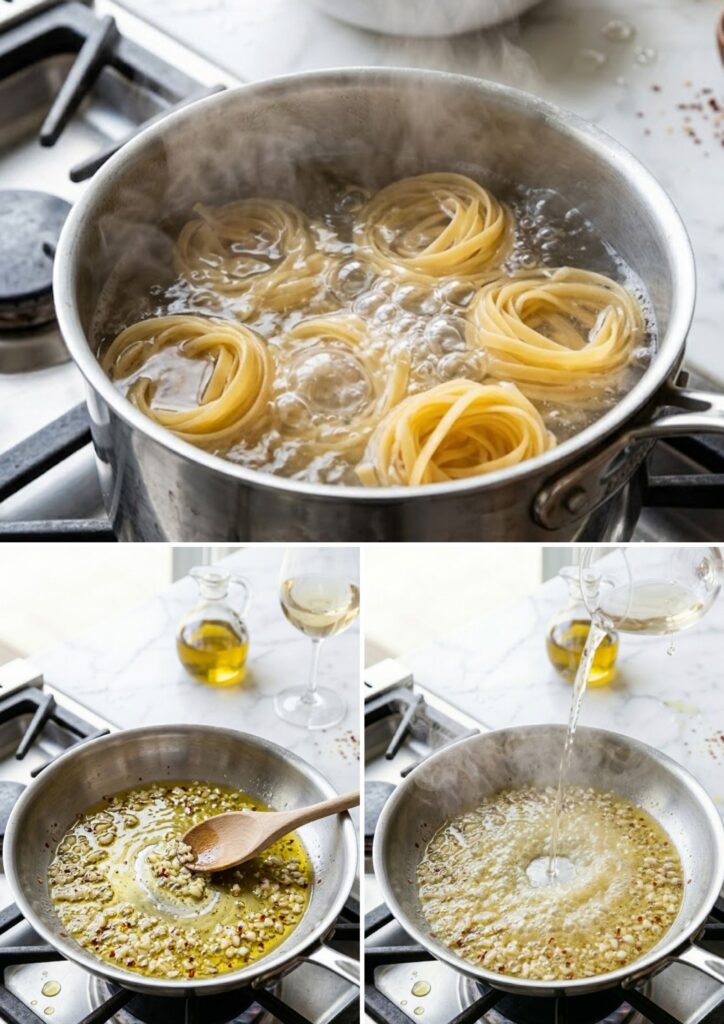
- 1. Boil the Pasta: Bring a large pot of heavily salted water to a boil. Cook the pasta for 2 minutes less than the package instructions suggest—you want it very firm, as it will finish cooking in the skillet.
- 2. Infuse the Oil: While the pasta cooks, heat the olive oil in a large skillet over medium-low heat. Add the minced garlic and red pepper flakes. Sauté gently for 2–3 minutes; the garlic should become fragrant and soft, but never brown.
- 3. Deglaze: Pour in the white wine. Let it simmer for a minute to reduce slightly, ensuring the heat is low enough that it doesn’t evaporate completely.
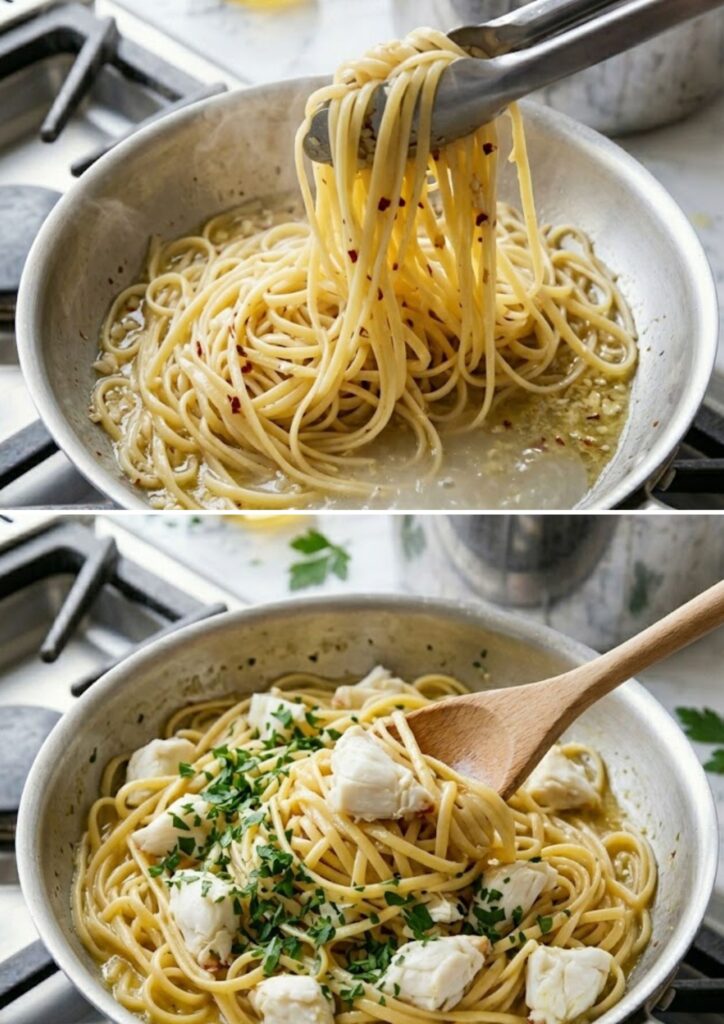
- 4. Finish in the Skillet: Using tongs, transfer the undercooked pasta directly from the boiling water into the skillet. Add a splash of the starchy pasta water. Toss vigorously for 1–2 minutes; the pasta will finish cooking and the oil/water/wine will emulsify into a light sauce.
- 5. Add the Crab: Gently fold in the fresh crab meat and chopped parsley. Stir only enough to combine—you want to keep the crab in nice, large chunks rather than shredding it.
- 6. Adjust and Serve: Check the consistency. If it looks dry, add another splash of pasta water. Taste and add salt if necessary. Serve immediately in warm bowls.
Recipe Tips
- Use “dressed” crab: If you can find it, using high-quality lump or “dressed” crab meat that comes in larger pieces makes for a much better presentation and texture.
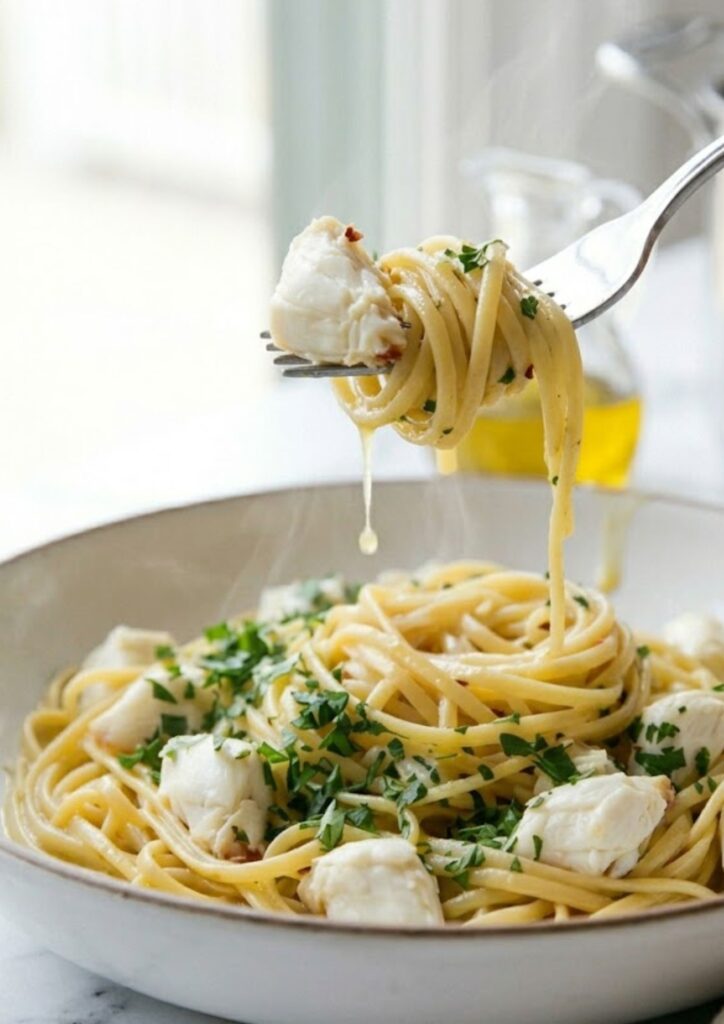
- The “Tongs” Trick: Pulling the pasta directly from the water into the skillet is essential. The starch on the exterior of the wet pasta acts as a binder for the olive oil, creating that elusive “creamy” restaurant texture.
- Don’t over-cook the crab: Crab meat is already cooked. Adding it at the very last second ensures it stays sweet and tender rather than becoming rubbery or dry.
What To Serve With Michael Symon Crab Pasta
- Vegetables: A bright salad of arugula, shaved fennel, and lemon vinaigrette cuts right through the richness of the olive oil.
- Bread: A warm, crusty baguette is essential for mopping up any leftover garlic-infused oil at the bottom of the bowl.
- Wine: Serve with the same crisp white wine you used in the sauce.
How To Store Michael Symon Crab Pasta
- Fridge: This dish is best eaten fresh. If you must store it, keep it in an airtight container for up to 1 day.
- Reheat: Gently warm in a skillet over low heat with a teaspoon of olive oil and a splash of water, stirring constantly. Do not microwave, as the crab will toughen instantly.
Michael Symon Crab Pasta Nutrition Facts (Estimated per serving)
| Nutrient | Amount |
| Calories | 550 kcal |
| Protein | 24g |
| Fat | 22g |
| Carbohydrates | 62g |
| Sodium | 420mg |
FAQs
Can I use canned crab for my Michael Symon Crab Pasta?
You can, but fresh lump crab meat offers a significant upgrade in sweetness and texture. If you use canned, make sure to drain it thoroughly and pick through it carefully for shell fragments.
My sauce is too oily. What happened?
You likely used too much olive oil or didn’t use enough pasta water. The “sauce” in this dish is an emulsion of oil and starchy pasta water—if it feels oily, toss in another 1/4 cup of the pasta cooking water and keep stirring!
Is this Michael Symon Crab Pasta spicy?
The red pepper flakes provide a warm background heat, not a “spicy” burn. If you prefer no heat at all, you can omit them entirely.
Can I add lemon to my Michael Symon Crab Pasta?
While not in the original recipe, many people enjoy a squeeze of fresh lemon juice at the very end to brighten the flavors of the crab.
More Michael Symon Recipe:

Michael Symon Crab Pasta
Description
Michael Symon’s Crab Pasta is a masterclass in “less is more.” This dish relies on high-quality ingredients and technique rather than heavy creams or complex sauces. By emulsifying starchy pasta water with extra-virgin olive oil, garlic, and white wine, you create a silky, translucent glaze that coats the noodles without overshadowing the delicate sweetness of the fresh lump crab meat. It’s a sophisticated, restaurant-quality meal that comes together in the time it takes to boil a pot of water.
Ingredients
Instructions
- Boil the Pasta: Bring a large pot of heavily salted water to a boil. Cook the pasta for 2 minutes less than the package instructions suggest—you want it very firm, as it will finish cooking in the skillet.
- Infuse the Oil: While the pasta cooks, heat the olive oil in a large skillet over medium-low heat. Add the minced garlic and red pepper flakes. Sauté gently for 2–3 minutes; the garlic should become fragrant and soft, but never brown.
- Deglaze: Pour in the white wine. Let it simmer for a minute to reduce slightly, ensuring the heat is low enough that it doesn’t evaporate completely.
- Finish in the Skillet: Using tongs, transfer the undercooked pasta directly from the boiling water into the skillet. Add a splash of the starchy pasta water. Toss vigorously for 1–2 minutes; the pasta will finish cooking and the oil/water/wine will emulsify into a light sauce.
- Add the Crab: Gently fold in the fresh crab meat and chopped parsley. Stir only enough to combine—you want to keep the crab in nice, large chunks rather than shredding it.
- Adjust and Serve: Check the consistency. If it looks dry, add another splash of pasta water. Taste and add salt if necessary. Serve immediately in warm bowls.
Notes
-
Use “dressed” crab: If you can find it, using high-quality lump or “dressed” crab meat that comes in larger pieces makes for a much better presentation and texture.
The “Tongs” Trick: Pulling the pasta directly from the water into the skillet is essential. The starch on the exterior of the wet pasta acts as a binder for the olive oil, creating that elusive “creamy” restaurant texture.
Don’t over-cook the crab: Crab meat is already cooked. Adding it at the very last second ensures it stays sweet and tender rather than becoming rubbery or dry.
