 Imen
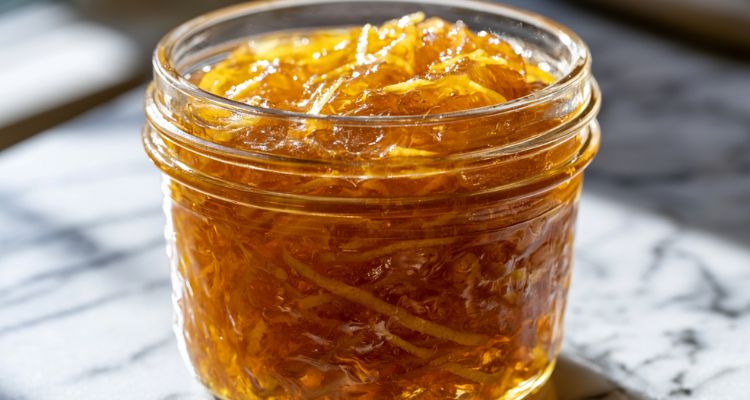
Imen Ina Garten Meyer Lemon Marmalade is a small-batch citrus preserve made from just Meyer lemons, granulated sugar, and cold water. It serves 12 and comes together in about 90 minutes. The flavor is sweet and bright with just enough edge from the peel to keep it interesting.
Ina has always championed the reheating technique from her friend Anna Pump: once the marmalade has sat for several hours, you warm it again so it thickens to a glossy, almost syrup-like consistency. Most recipes skip this step and end up with a spread that loosens in the jar. That second simmer is what separates a good result from a great one.
The blanching step matters more than people expect. Boiling the lemon slices for two to three minutes before they go into the sugar draws out the harshest bitterness from the pith. Skip it and the final marmalade has a sharp, metallic edge that sugar alone cannot cover.

Ina Garten Meyer Lemon Marmalade
Description
This three-ingredient marmalade uses a mix of sliced whole lemons and hand-cut segments to build both body and bright citrus flavor in a single pot. It makes 1½ cups and stores in the fridge for up to two weeks.
Ingredients
Instructions
- Juice the remaining lemon. You should have about ¼ cup juice.
- Scrub the 7 Meyer lemons and trim the ends. Cut 4 of the lemons into eighths from tip to stem (peel, pith and all), remove the seeds, and cut each wedge crosswise into very thin (⅛-inch thick) slices. Set aside. Cut off the peel and pith from 2 of the remaining lemons, then slice the segments free from the membranes over a bowl, letting segments and juice fall in. Discard the membranes, peel, and pith.
- Bring a small saucepan of water to a boil over medium-high heat. Add the sliced lemons, return to a boil, and cook for 2 to 3 minutes. Drain, pat dry, and set aside.
- In the same saucepan, bring the 1 cup cold water, 2 cups granulated sugar, lemon juice, lemon segments, and lemon slices to a boil. Reduce to low, skim any foam from the surface, and simmer until thickened, 40 to 60 minutes.
- Test with the wrinkle method: drop a small spoonful on a cold plate, let it cool briefly, and nudge it. If it wrinkles, it’s ready. Spoon into sterilized jars and cool completely.
FAQs
Why do Meyer lemons work better than regular lemons here?
Meyer lemons are a natural hybrid of a standard lemon and a mandarin orange, which makes them noticeably sweeter and less acidic than regular lemons. Their pith is also thinner, so it contributes far less bitterness even before blanching. If you can only find regular lemons, replace half with mandarin oranges to get closer to that floral, gentle flavor.
How do you know when the marmalade has set properly?
The wrinkle test is the classic method: spoon a small amount onto a cold plate, wait thirty seconds, then push it with your finger. If the surface wrinkles rather than flowing back, the pectin has set. A more reliable backup is temperature: 217°F to 220°F on an instant-read thermometer gives you a soft set at the lower end and a firmer one at the higher end.
What is the reheating technique and why does it help?
Once the jars have cooled and sat for several hours, the marmalade can look softer than expected. Gently reheating it on the stovetop for a few minutes tightens the consistency to a glossy, syrup-like texture. This works because pectin continues to bond as the mixture cools, and the second heat encourages those bonds to firm up further.
Can you use the lemon seeds in this recipe?
The seeds are actually a natural pectin source. If you want to boost the set without cooking longer, tie the seeds in a small square of cheesecloth and drop them into the pot during the simmer. Remove the bundle before jarring. It’s a useful backup if your Meyer lemons seem low on juice or if the marmalade is slow to thicken.
How do you serve Meyer lemon marmalade beyond toast?
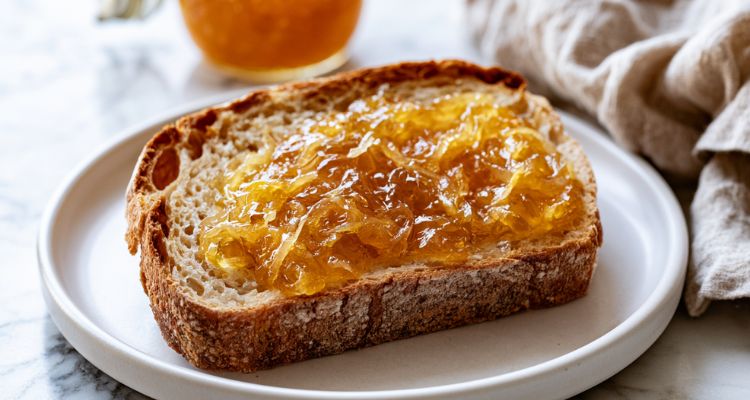
Spread it over warm scones or stir a spoonful into plain yogurt for a sharp citrus note at breakfast. It also works well as a glaze brushed onto the last few minutes of cooking, much like these mustard pork chops benefit from a tangy finish. The acidity cuts through fat in a way that rounds out the whole plate.
