 Claire Dawson
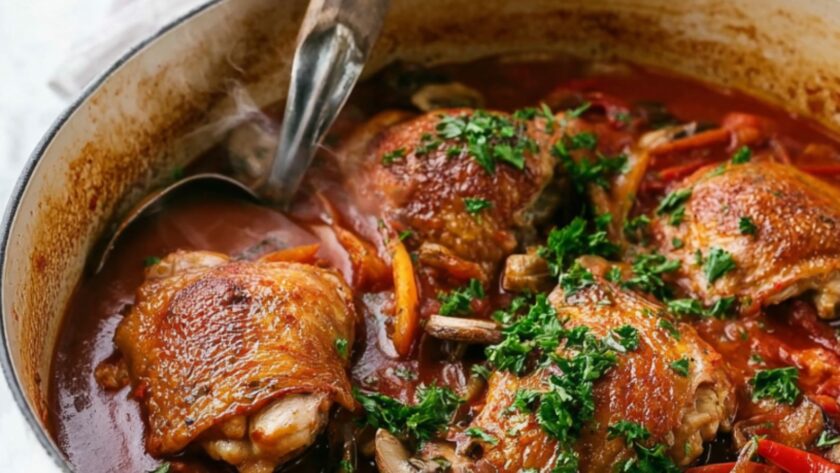
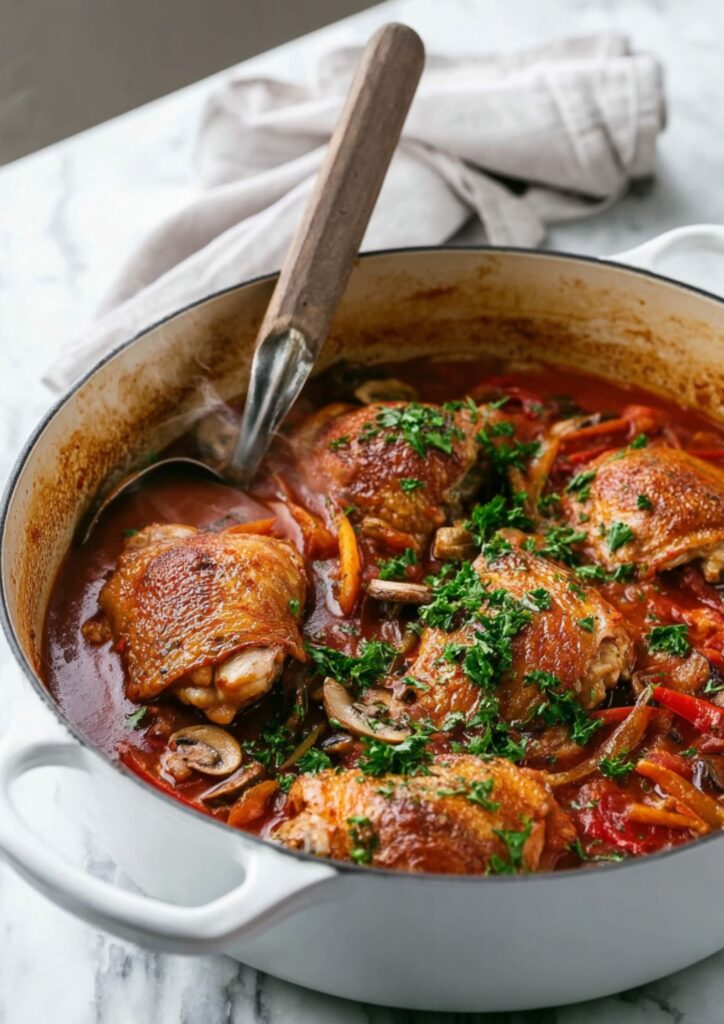
 Ina Garten Chicken Cacciatore is a rustic Italian dinner that features tender chicken braised in a rich wine and tomato sauce. This hearty meal uses cremini mushrooms and dry white wine to create a deep savory flavor that’s better than any restaurant version.
Ina Garten’s approach here is all about the sear on the chicken skin before any liquid touches the pan. Most recipes tell you to just toss everything in, but this one is better because browning the meat first creates a crust that stays firm during the braise. This prevents the chicken from looking pale or feeling rubbery once it’s spent time simmering in the tomatoes.
If you do nothing else, make sure you use a dry white wine that you’d actually enjoy drinking on its own. That’s the difference between a sauce that tastes bright and one that has a harsh, metallic aftertaste. I’ve found that a Pinot Grigio or a crisp Sauvignon Blanc works best because the acidity helps the fat from the chicken skin dissolve into the vegetables.
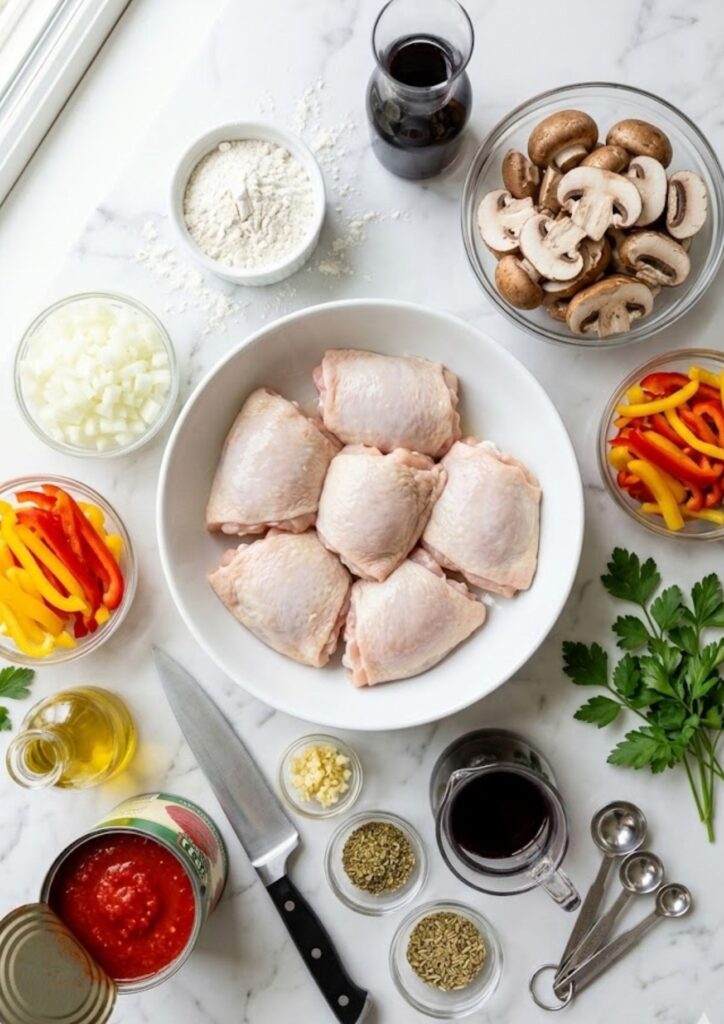
Ina Garten Chicken Cacciatore Ingredients
For the Chicken:
- 1 (3 1/2-pound/1.6kg) chicken, cut into 8 pieces
- 2 teaspoons kosher salt
- 1 teaspoon black pepper
- 1/4 cup (60ml) extra virgin olive oil
For the Sauce:
- 1 cup (125g) yellow onion, chopped
- 1 cup (100g) celery, chopped
- 1 pound (450g) cremini mushrooms, stems removed and sliced
- 2 cloves garlic, minced
- 1 cup (240ml) dry white wine
- 1 (28-ounce/800g) can crushed tomatoes
- 1 teaspoon dried oregano
- 1/4 cup (10g) fresh flat-leaf parsley, chopped
How To Make Ina Garten Chicken Cacciatore
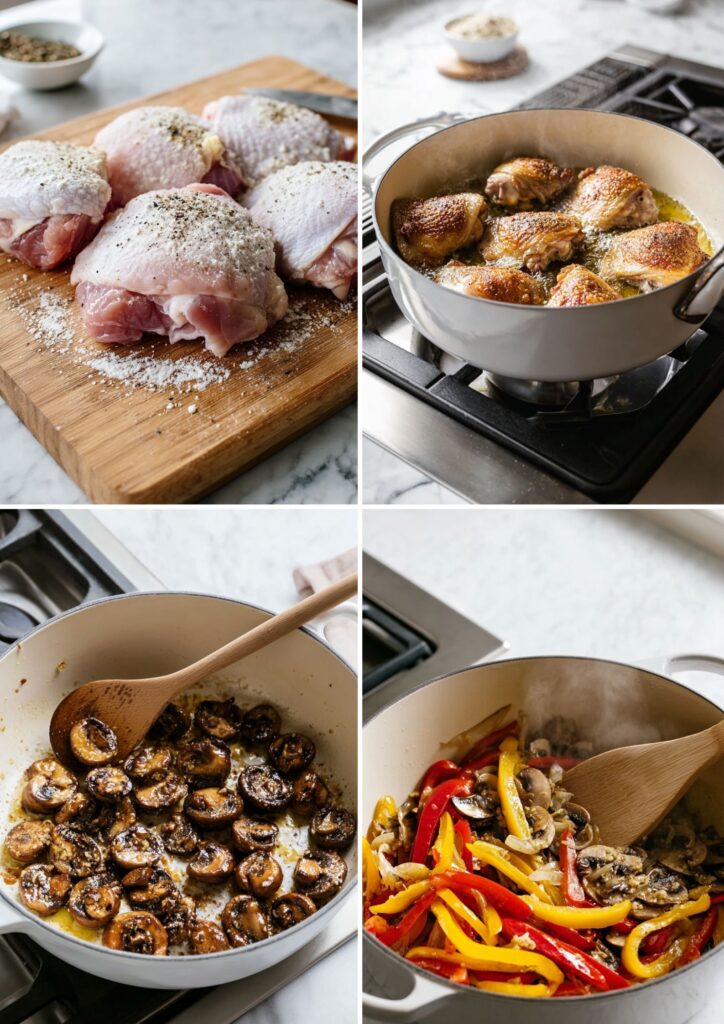
- 1. Season the meat: Pat the chicken pieces completely dry with paper towels and sprinkle both sides with the salt and pepper. Removing the surface moisture is the only way to get a hard sear rather than just steaming the meat in the pan.
- 2. Brown the chicken: Heat the olive oil in a large heavy-bottomed pot over medium heat and lay the chicken in skin-side down. Cook for about 5 minutes per side until the skin is golden and crisp, then move the pieces to a clean plate.
- 3. Soften the vegetables: Toss the onions, carrots, and celery into the same pot with the leftover chicken fat and cook for 10 minutes. Stir in the mushrooms and garlic, then continue cooking until the vegetables look see-through and the mushrooms have released their juices.
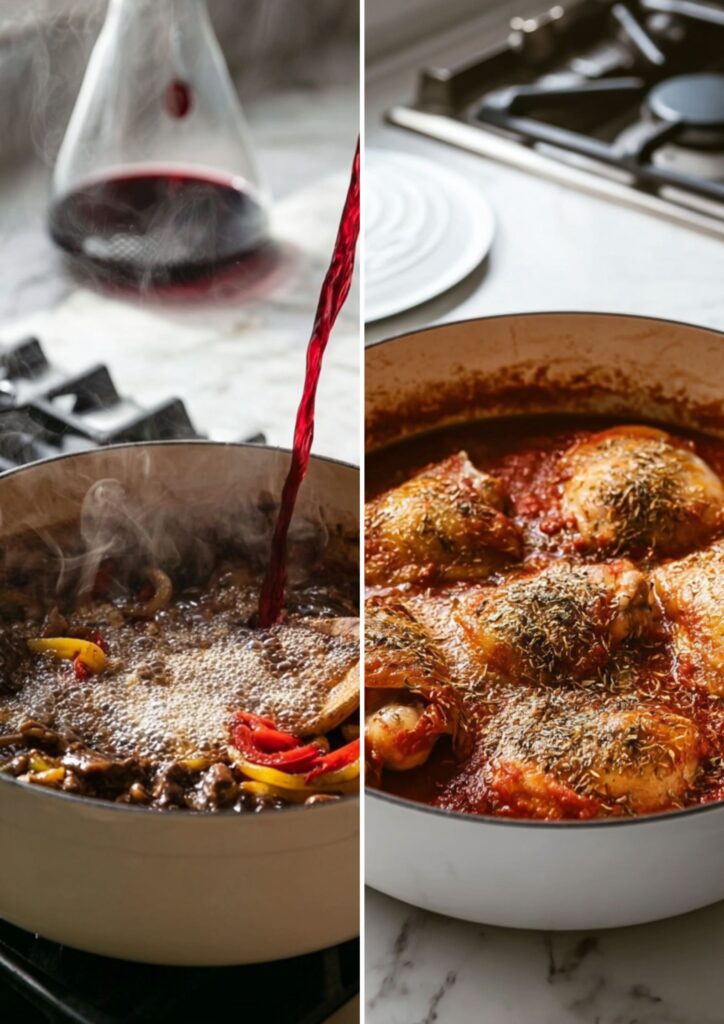
- 4. Deglaze the pan: Pour in the white wine and use a wooden spoon to scrape up the dark brown bits stuck to the bottom of the pot. Those bits are concentrated flavor from the seared chicken and are what make the finished sauce taste so complex.
Don’t rush this step or the sauce will end up thin and lacking depth. Let the wine simmer for a few minutes until it reduces by about half, which concentrates the flavor and cooks off the raw alcohol bite.
- 5. Simmer the stew: Stir in the crushed tomatoes and oregano, then tuck the browned chicken pieces back into the sauce. Cover the pot and let it cook low and slow for 30 minutes until the meat is tender and pulling away from the bone.
- 6. Garnish and rest: Stir in the fresh parsley and let the pot sit off the heat for 5 minutes before you dish it out. This brief rest lets the sauce thicken slightly so it clings to the meat instead of running all over the plate.
Recipe Tips
- Don’t crowd the pot: If the chicken pieces are touching each other while you’re browning them, they’ll trap steam and the skin won’t get crispy. Work in two batches if your pan isn’t wide enough to give every piece an inch of space.
- Use fresh herbs at the end: Dried oregano is great for the long simmer because it can handle the heat, but parsley loses its flavor quickly. Adding the fresh greens right before serving provides a bright hit that cuts through the heavy tomato sauce.
- Prep the mushrooms carefully: Wipe them clean with a damp paper towel instead of rinsing them under the tap. Mushrooms act like sponges and will absorb water, which prevents them from browning properly in the chicken fat.
- Check for doneness with a fork: The chicken is ready when it feels soft and the juices run clear when you poke the thickest part. If the meat still feels springy or tough, give it another 10 minutes under the lid.
- Choose the right tomatoes: Crushed tomatoes give this dish a thick, jam-like texture that’s traditional for a cacciatore. If you use whole peeled tomatoes, make sure to crush them by hand first so you don’t end up with giant watery chunks in the sauce.
- Trim the excess fat: While you want some chicken fat for the vegetables to cook in, too much will make the sauce look greasy. If there’s a thick yellow layer on top of the sauce at the end, use a large spoon to skim it off.
What To Serve With Chicken Cacciatore
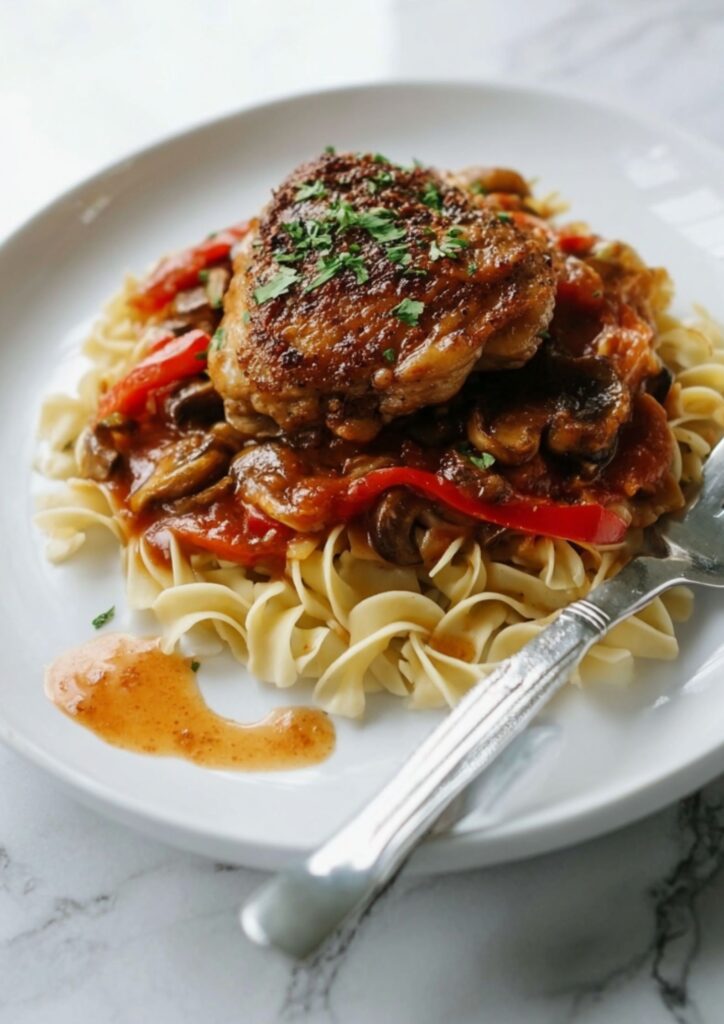
A pile of buttered egg noodles or some creamy polenta is the traditional way to soak up all that extra tomato and wine sauce. You can also serve it over a thick slice of toasted sourdough bread that’s been rubbed with a raw garlic clove.
Roasted green beans or a simple Caesar salad provide a nice crunch to go along with the soft braised meat. If you want more vegetables, some sautéed spinach with a squeeze of lemon juice helps balance the richness of the chicken.
How To Store Chicken Cacciatore
- Fridge: Keep the leftovers in an airtight container for up to 4 days. This is one of those dishes that actually tastes better the next day because the spices have more time to penetrate the meat.
- Reheat: Place the chicken and sauce in a skillet over low heat and cover with a lid until the meat is warmed through. If the sauce has thickened too much in the fridge, add a splash of water or chicken broth to loosen it up.
- Freeze: This recipe freezes beautifully for up to 3 months in a heavy-duty freezer bag. Thaw it in the refrigerator overnight before reheating it on the stove so the texture of the chicken stays tender.
Ina Garten Chicken Cacciatore Nutrition Facts
Per serving (1 of 6):
- Calories: 480 kcal
- Protein: 32g
- Fat: 28g
- Carbohydrates: 18g
- Sugar: 9g
- Sodium: 920mg
FAQs
Can I use boneless chicken thighs for the Ina Garten Chicken Cacciatore?
Yes, you can use boneless meat, but the cooking time will be about ten minutes shorter. Bone-in chicken is usually preferred for a braise because the bones add more flavor to the sauce and keep the meat from drying out.
What can I use instead of white wine in Ina Garten Chicken Cacciatore??
If you don’t want to use alcohol, you can swap the wine for an equal amount of chicken broth with a tablespoon of lemon juice added. This gives you the same liquid volume and acidity without the wine flavor.
Why is my cacciatore sauce so thin?
This usually happens if the vegetables weren’t cooked down enough or if the lid was kept on for the entire time. Try simmering the sauce without the lid for the last ten minutes to let some of the moisture evaporate.
Can I make the Ina Garten Chicken Cacciatore in a slow cooker?
Yes, you should still brown the chicken and soften the vegetables in a pan first for the best flavor. Move everything to the slow cooker and cook on low for six hours or high for three hours.
Try More Ina Garten Recipes:
- Beef Chili Recipe
- Manhattan Clam Chowder
- Shrimp And Grits
- Turkey Bolognese
- Chicken Scarpariello
- Turkey Chili Recipe
- Curried Chicken Salad

Ina Garten Chicken Cacciatore
Description
Ina Garten’s Chicken Cacciatore from the Barefoot Contessa cookbook is one of the best-ever Italian chicken cacciatore recipes. This easy Chicken Cacciatore is made with chicken thighs and breasts, tomatoes, onions, bell peppers, garlic, herbs, and white wine. This easy chicken dish takes about 1 hour and 15 minutes of cooking and can serve about 4 to 6 people. Additionally, this Simple Chicken Cacciatore is keto-friendly and to make it gluten-free, replace the all-purpose flour with a gluten-free flour alternative.
Ingredients
For the Chicken:
For the Sauce
Instructions
- Season the meat: Pat the chicken pieces completely dry with paper towels and sprinkle both sides with the salt and pepper. Removing the surface moisture is the only way to get a hard sear rather than just steaming the meat in the pan.
- Brown the chicken: Heat the olive oil in a large heavy-bottomed pot over medium heat and lay the chicken in skin-side down. Cook for about 5 minutes per side until the skin is golden and crisp, then move the pieces to a clean plate.
- Soften the vegetables: Toss the onions, carrots, and celery into the same pot with the leftover chicken fat and cook for 10 minutes. Stir in the mushrooms and garlic, then continue cooking until the vegetables look see-through and the mushrooms have released their juices.
- Deglaze the pan: Pour in the white wine and use a wooden spoon to scrape up the dark brown bits stuck to the bottom of the pot. Those bits are concentrated flavor from the seared chicken and are what make the finished sauce taste so complex.
- Simmer the stew: Stir in the crushed tomatoes and oregano, then tuck the browned chicken pieces back into the sauce. Cover the pot and let it cook low and slow for 30 minutes until the meat is tender and pulling away from the bone.
- Garnish and rest: Stir in the fresh parsley and let the pot sit off the heat for 5 minutes before you dish it out. This brief rest lets the sauce thicken slightly so it clings to the meat instead of running all over the plate.
Don’t rush this step or the sauce will end up thin and lacking depth. Let the wine simmer for a few minutes until it reduces by about half, which concentrates the flavor and cooks off the raw alcohol bite.
Notes
-
Don’t crowd the pot: If the chicken pieces are touching each other while you’re browning them, they’ll trap steam and the skin won’t get crispy. Work in two batches if your pan isn’t wide enough to give every piece an inch of space.
Use fresh herbs at the end: Dried oregano is great for the long simmer because it can handle the heat, but parsley loses its flavor quickly. Adding the fresh greens right before serving provides a bright hit that cuts through the heavy tomato sauce.
Prep the mushrooms carefully: Wipe them clean with a damp paper towel instead of rinsing them under the tap. Mushrooms act like sponges and will absorb water, which prevents them from browning properly in the chicken fat.
Check for doneness with a fork: The chicken is ready when it feels soft and the juices run clear when you poke the thickest part. If the meat still feels springy or tough, give it another 10 minutes under the lid.
Choose the right tomatoes: Crushed tomatoes give this dish a thick, jam-like texture that’s traditional for a cacciatore. If you use whole peeled tomatoes, make sure to crush them by hand first so you don’t end up with giant watery chunks in the sauce.
Trim the excess fat: While you want some chicken fat for the vegetables to cook in, too much will make the sauce look greasy. If there’s a thick yellow layer on top of the sauce at the end, use a large spoon to skim it off.