 Imen
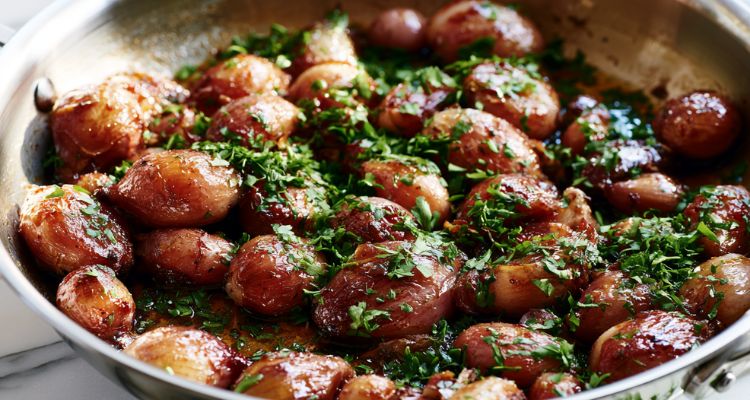
Imen Ina Garten Caramelized Shallots is a stovetop-to-oven side dish made with whole peeled shallots, unsalted butter, sugar, and red wine vinegar. It serves six and takes about 40 minutes from start to finish. The shallots turn sweet, sticky, and deeply golden by the time they come out of the oven.
The recipe comes from Ina Garten’s 2004 cookbook Barefoot in Paris, and what sets her version apart is the two-stage cooking method. She starts the shallots on the stovetop in butter and sugar to begin browning, then finishes them in a 400°F oven so the heat wraps around each one evenly. That handoff is what separates truly tender shallots from ones that brown outside but stay firm inside.
Keeping the roots intact is the detail most people overlook. The root end holds the layers together as the shallots soften and the vinegar reduces around them. Trim the roots cleanly off and the outer layers peel away during roasting, so you lose the shape entirely.

Ina Garten Caramelized Shallots
Description
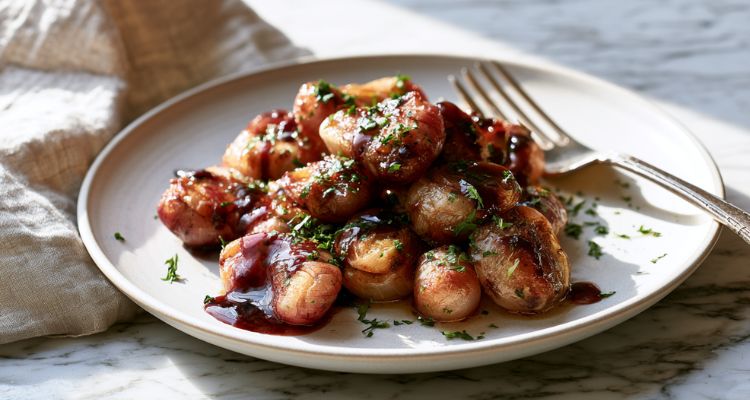
Whole shallots slow-roasted until sweet, tender, and deeply golden. A simple side dish that works beautifully with any roasted meat or main.
Ingredients
Instructions
- Preheat the oven to 400°F. Melt the butter in a 12-inch ovenproof sauté pan over medium heat, add the shallots and sugar, and toss to coat.
- Cook over medium heat for 10 minutes, tossing occasionally, until the shallots begin to brown on the outside.
- Add the red wine vinegar, salt, and pepper and toss well to coat everything in the pan.
- Transfer the pan to the oven and roast for 15 to 30 minutes, depending on the size of the shallots, until they are fully tender.
- Season to taste, scatter the chopped parsley over the top, and serve hot.
FAQs
How small should the shallots be for this recipe?
Medium shallots, roughly golf-ball size, give the best result here. Anything larger takes the full 30 minutes in the oven and risks overbrowning before the centre softens. Sort your shallots before you start and pull aside any oversized ones to halve lengthwise, which brings them in line with the rest.
Why does red wine vinegar work better than balsamic in this dish?
Red wine vinegar is sharp and thin, so it reduces quickly in the hot pan and coats the shallots without turning syrupy. Balsamic is already sweet and thick, which tips the whole dish too far into sweetness and masks the slight tang that balances the butter and sugar. Stick with red wine vinegar and the flavour stays bright rather than jammy.
Can these shallots be made ahead?
Yes, up to a full day ahead. Roast them completely, let them cool, and store covered in the fridge in the cooking pan. Reheat in a 350°F oven for about 10 minutes, adding a small splash of water to the pan so the reduced glaze loosens rather than scorches. They hold their shape well through reheating.
What should I do if the glaze looks like it is burning on the stovetop?
Lower the heat immediately and add a tablespoon of water to the pan. The sugar and butter can catch fast on a high flame before the 10 minutes are up. The goal at this stage is just to begin browning, not to fully caramelize. The oven does the deeper work, so pulling back on stovetop heat costs you nothing.
What works well on the plate alongside these shallots?
These are sweet and savoury, so they sit best next to something with a sharper edge. A platter of mustard-crusted roasted potatoes makes a strong pairing because the whole-grain mustard cuts through the sweetness cleanly. Set both on the table and they balance each other without competing.
Can I use this recipe with pearl onions instead of shallots?
Pearl onions work but the flavour is noticeably blunter. Shallots have a mild, slightly garlicky sweetness that deepens when roasted, while pearl onions stay more one-dimensional. If you do substitute, blanch the pearl onions for 90 seconds first to loosen the skins, then proceed exactly as the recipe states and check for tenderness at the 20-minute mark.
