 Claire Dawson
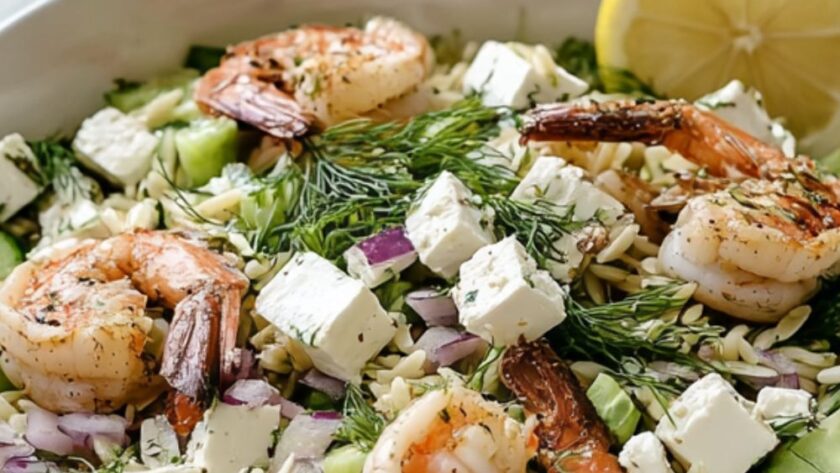
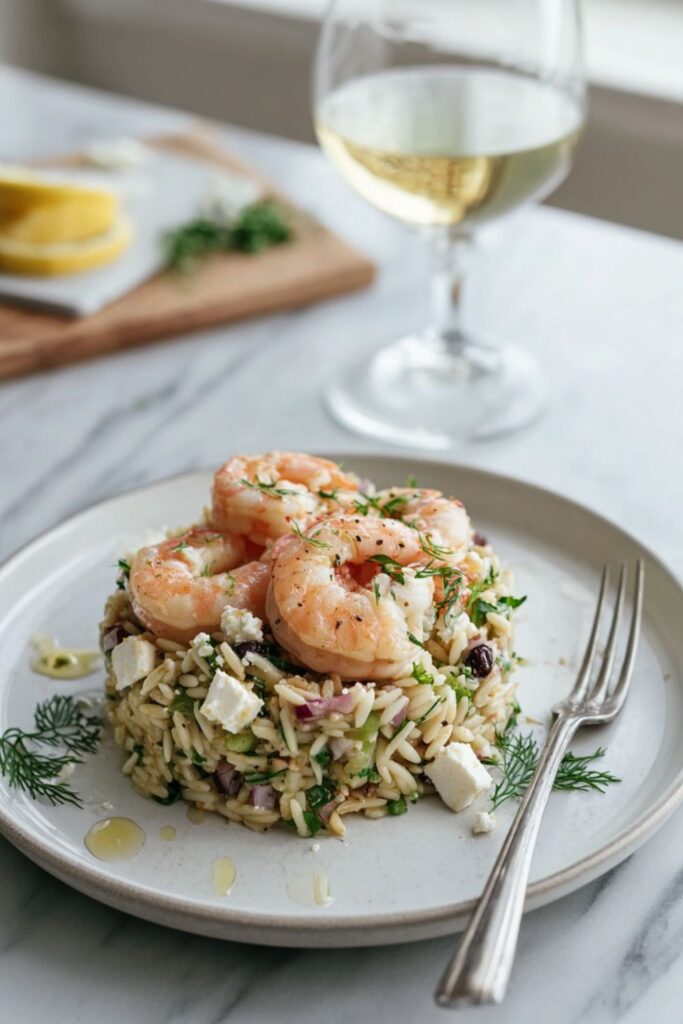
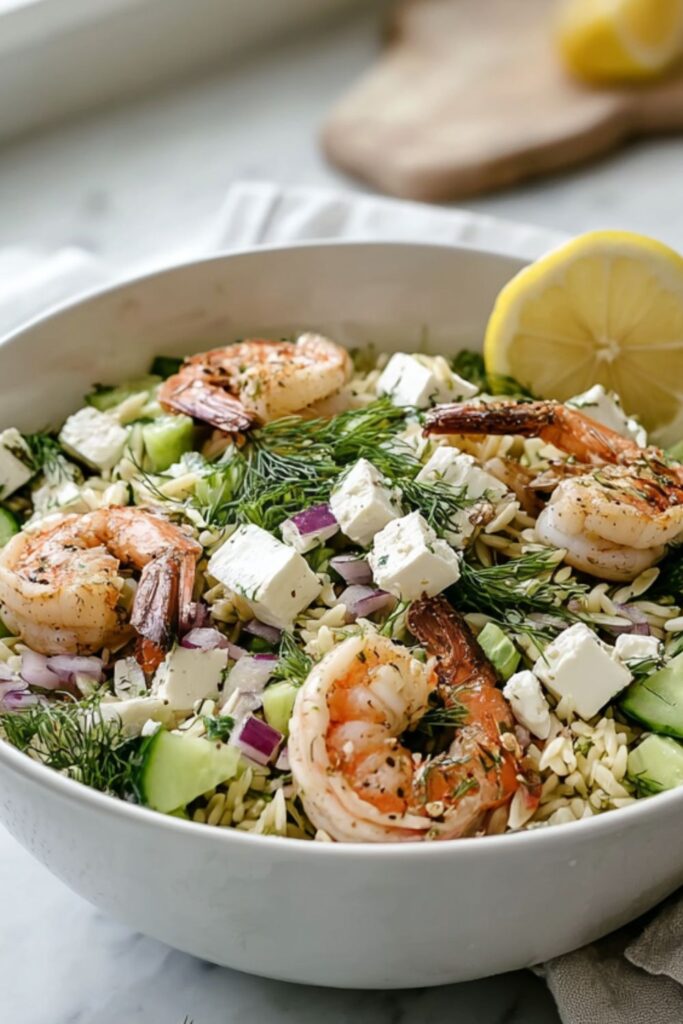
 Barefoot Contessa Shrimp Orzo Salad is a bright Mediterranean seafood lunch that is great for entertaining. This refreshing pasta dish combines roasted shrimp and salty feta with a massive amount of fresh dill, parsley, and lemon.
Approach G: I’ve tried a few versions of pasta salad and this one from Ina Garten is the one I keep going back to because she seasons the orzo while it’s still steaming. Most recipes wait until the pasta is cold to add the dressing, but doing it early means the grains soak up the lemon and oil instead of just being coated by them.
The red onion and hothouse cucumber give this a crunch that most seafood salads are missing. It’s a project that involves a lot of chopping, but the result is a massive bowl of food that looks like it came from a high-end deli. I made this for a garden party last July and people were asking for the recipe before they’d even finished their first scoop.
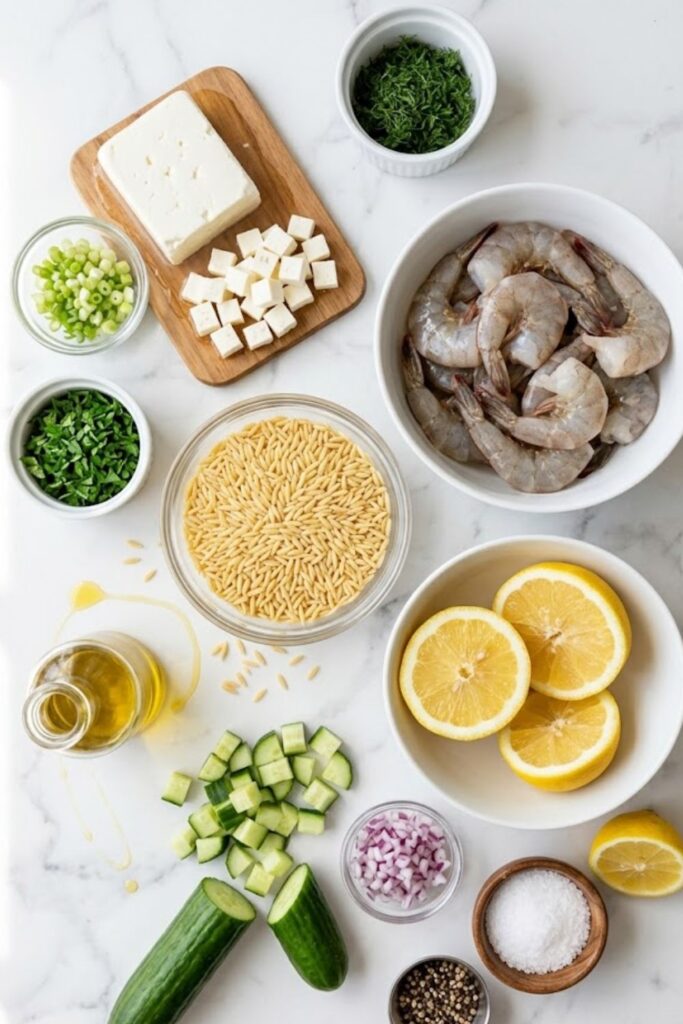
Barefoot Contessa Shrimp Orzo Salad Ingredients
For the Orzo and Dressing:
- 3/4 pound (340g) orzo pasta
- 1/2 cup (120ml) freshly squeezed lemon juice
- 1/2 cup (120ml) good olive oil
- 2 tsp kosher salt
- 1 tsp freshly ground black pepper
For the Shrimp:
- 2 pounds (900g) shrimp (16 to 18 count), peeled and deveined
- 2 tbsp olive oil
- 1/2 tsp kosher salt
- 1/2 tsp freshly ground black pepper
For the Salad Mix:
- 3/4 pound (340g) good feta cheese, large diced
- 1 cup scallions, minced (white and green parts)
- 1 cup fresh dill, chopped
- 1 cup fresh flat-leaf parsley, chopped
- 1 hothouse cucumber, unpeeled, seeded, and medium-diced
- 1/2 cup red onion, small-diced
How To Make Barefoot Contessa Shrimp Orzo Salad
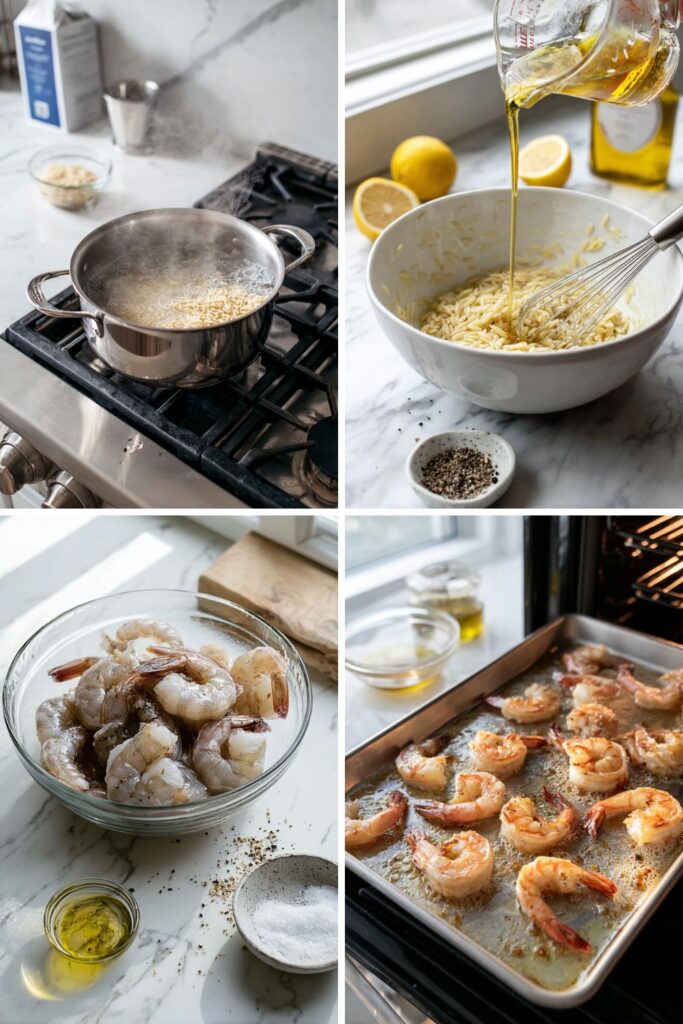
- 1. Boil the pasta: Fill a large pot with water and add a tablespoon of salt and a splash of oil. Once it hits a rolling boil, drop in the orzo and cook for 9 to 11 minutes until it’s firm to the bite.
- 2. Dress the hot orzo: Drain the pasta and dump it into a large mixing bowl while it’s still hot. Whisk the lemon juice, 1/2 cup olive oil, salt, and pepper together, then pour it over the pasta and stir so every grain is wet.
- 3. Prep the shrimp: Toss the peeled shrimp in a separate bowl with a bit of oil, salt, and pepper. Let them sit for about 10 minutes on the counter so the seasoning can penetrate the meat before you cook them.
- 4. Roast the shrimp: Spread the shrimp on a sheet pan in a single layer and roast at 200°C (400°F) for about 6 to 8 minutes. You’ll know they’re done when they turn pink and firm, but don’t let them go too long or they’ll get rubbery.
Roasted shrimp have a much deeper flavor than boiled ones. By cooking them on a flat pan, the moisture evaporates slightly, concentrating the sweetness of the seafood which stands up better against the sharp feta.
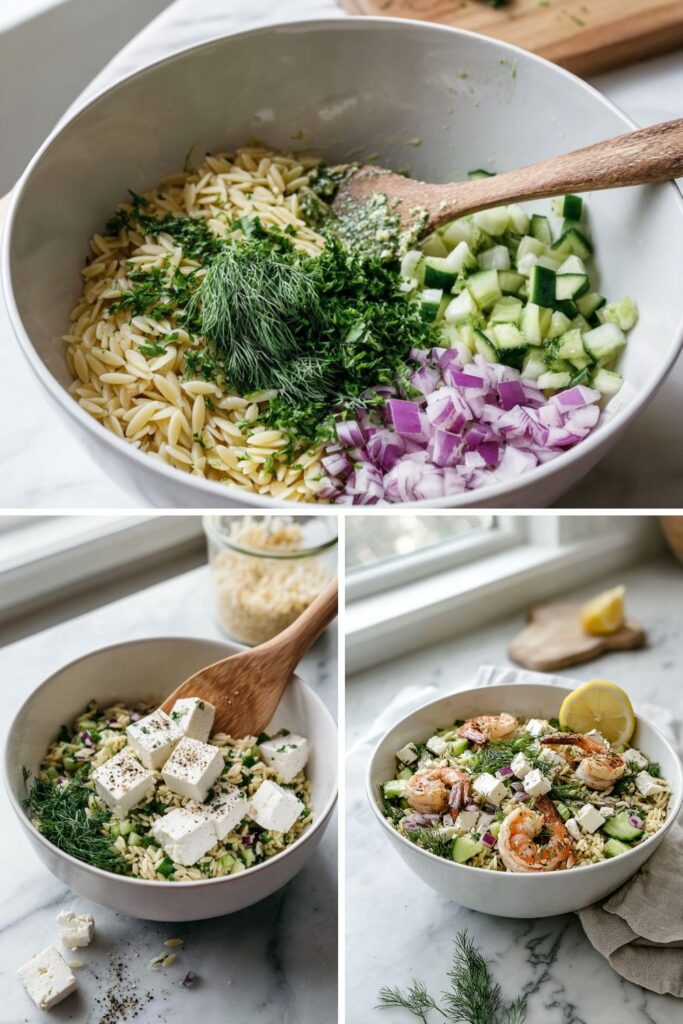
- 5. Cool the components: Let the orzo and the shrimp sit until they reach room temperature. If you add the herbs and cheese while the pasta is still hot, the greens will wilt and the feta will melt into a messy paste.
- 6. Combine everything: Add the cooled shrimp to the orzo bowl along with the diced feta, scallions, dill, and parsley. Fold in the cucumber and red onion gently so you don’t break up the cheese cubes.
- 7. Final check: Give the salad a final stir and taste it. You might need one last squeeze of lemon or a pinch of salt to make the flavors pop right before you put it on the table.
Recipe Tips
- Buy the right cucumber: Make sure you get a hothouse cucumber, often sold in plastic wrap, because the skin is thin and doesn’t need peeling. If you use a regular garden cucumber, the thick skin and large seeds will make the salad watery and bitter.
- Use a lot of herbs: A full cup of dill and a full cup of parsley might seem like too much, but it’s what gives this dish its green, fresh look. Make sure they’re completely dry before you chop them so they don’t turn into a dark green mush.
- Don’t overcook the orzo: Since the pasta sits in lemon juice and oil, it will continue to soften as it marinates. Drain it the second it’s cooked through so it stays distinct and doesn’t turn into a clump.
- Choose high-quality feta: Buy a block of feta that’s sold in brine and dice it yourself rather than buying the pre-crumbled tubs. The block version is much creamier and won’t vanish into the pasta when you stir the salad.
- Let the flavors marry: If you have the time, let the finished salad sit for about thirty minutes before serving. This gives the red onion time to mellow out and the herbs time to flavor the pasta.
- Size the shrimp correctly: Using large shrimp (16-18 count) makes the dish feel like a main course rather than just a side. If you use tiny salad shrimp, they tend to get lost among the cucumber and cheese chunks.
What To Serve With Barefoot Contessa Shrimp Orzo Salad
A chilled bottle of crisp white wine or a dry rosé is the perfect drink for this meal. The acidity in the wine mimics the lemon dressing and makes the feta taste even better.
If you want more on the table, a platter of roasted red peppers or some grilled artichoke hearts fits the Mediterranean theme. You could also serve some crusty pita bread on the side for anyone who wants a bit more crunch.
How To Store Barefoot Contessa Shrimp Orzo Salad
- Fridge: Store this in a glass container for up to two days. The salad actually holds up well, but the shrimp are best when eaten within the first 48 hours for the best texture.
- Reheat: You shouldn’t reheat this dish; it’s meant to be served cold or at room temperature. If it’s been in the fridge, take it out 20 minutes before eating so the olive oil can liquefy and the flavors can open up.
- Freeze: Don’t try to freeze this salad. The cucumber and herbs will turn to slime when they thaw, and the orzo will become unpleasantly soft and grainy.
Barefoot Contessa Shrimp Orzo Salad Nutrition Facts
Per serving (1 of 6):
- Calories: 520 kcal
- Protein: 34g
- Fat: 24g
- Carbohydrates: 42g
- Sugar: 4g
- Sodium: 1100mg
FAQs
Can I make Barefoot Contessa Shrimp Orzo Salad a day in advance?
You can prep the orzo and shrimp a day early, but don’t add the fresh herbs and cucumber until the day you plan to serve it. This keeps the greens bright and ensures the cucumber doesn’t release too much water into the pasta.
What can I use instead of orzo in my Barefoot Contessa Shrimp Orzo Salad?
If you can’t find orzo, any very small pasta shape like ditalini or even Israeli couscous will work. Just make sure to adjust your boiling time according to the package directions for that specific shape.
Is it okay to leave the shrimp tails on?
It’s better to remove the tails for a salad so your guests don’t have to pick through the pasta with their fingers. It makes the whole experience of eating the salad much cleaner and easier.
How do I stop the orzo from sticking together?
The lemon and oil dressing is what prevents clumping, so make sure you pour it over the pasta immediately after draining. If you let the plain orzo sit in the colander for even five minutes, it will turn into a solid brick.
Can I use dried herbs instead of fresh in my Barefoot Contessa Shrimp Orzo Salad?
No, you really need fresh dill and parsley for this recipe to work. Dried herbs are too concentrated and dusty for a fresh salad, and you wouldn’t get that beautiful green color that makes the dish look so good.
Try More Recipes:

Barefoot Contessa Shrimp Orzo Salad
Description
The Barefoot Contessa’s Shrimp Orzo Salad is a vibrant, Mediterranean-inspired dish that practically screams summer. By tossing the hot orzo directly in a punchy lemon and olive oil dressing, the pasta absorbs maximum flavor. Paired with sweet, oven-roasted shrimp, crisp hothouse cucumbers, salty chunks of block feta, and massive handfuls of fresh dill and parsley, it is an elegant, refreshing meal that works just as beautifully for a weeknight dinner as it does for an upscale picnic.
Ingredients
For the Orzo and Dressing:
For the Shrimp:
For the Salad Mix:
Instructions
- Boil the pasta: Fill a large pot with water and add a tablespoon of salt and a splash of oil. Once it hits a rolling boil, drop in the orzo and cook for 9 to 11 minutes until it’s firm to the bite.
- Dress the hot orzo: Drain the pasta and dump it into a large mixing bowl while it’s still hot. Whisk the lemon juice, 1/2 cup olive oil, salt, and pepper together, then pour it over the pasta and stir so every grain is wet.
- Prep the shrimp: Toss the peeled shrimp in a separate bowl with a bit of oil, salt, and pepper. Let them sit for about 10 minutes on the counter so the seasoning can penetrate the meat before you cook them.
- Roast the shrimp: Spread the shrimp on a sheet pan in a single layer and roast at 200°C (400°F) for about 6 to 8 minutes. You’ll know they’re done when they turn pink and firm, but don’t let them go too long or they’ll get rubbery.
- 5. Cool the components: Let the orzo and the shrimp sit until they reach room temperature. If you add the herbs and cheese while the pasta is still hot, the greens will wilt and the feta will melt into a messy paste.
- Combine everything: Add the cooled shrimp to the orzo bowl along with the diced feta, scallions, dill, and parsley. Fold in the cucumber and red onion gently so you don’t break up the cheese cubes.
- Final check: Give the salad a final stir and taste it. You might need one last squeeze of lemon or a pinch of salt to make the flavors pop right before you put it on the table.
Roasted shrimp have a much deeper flavor than boiled ones. By cooking them on a flat pan, the moisture evaporates slightly, concentrating the sweetness of the seafood which stands up better against the sharp feta.
Notes
-
Buy the right cucumber: Make sure you get a hothouse cucumber, often sold in plastic wrap, because the skin is thin and doesn’t need peeling. If you use a regular garden cucumber, the thick skin and large seeds will make the salad watery and bitter.
Use a lot of herbs: A full cup of dill and a full cup of parsley might seem like too much, but it’s what gives this dish its green, fresh look. Make sure they’re completely dry before you chop them so they don’t turn into a dark green mush.
Don’t overcook the orzo: Since the pasta sits in lemon juice and oil, it will continue to soften as it marinates. Drain it the second it’s cooked through so it stays distinct and doesn’t turn into a clump.
Choose high-quality feta: Buy a block of feta that’s sold in brine and dice it yourself rather than buying the pre-crumbled tubs. The block version is much creamier and won’t vanish into the pasta when you stir the salad.
Let the flavors marry: If you have the time, let the finished salad sit for about thirty minutes before serving. This gives the red onion time to mellow out and the herbs time to flavor the pasta.
Size the shrimp correctly: Using large shrimp (16-18 count) makes the dish feel like a main course rather than just a side. If you use tiny salad shrimp, they tend to get lost among the cucumber and cheese chunks.