 Claire Dawson
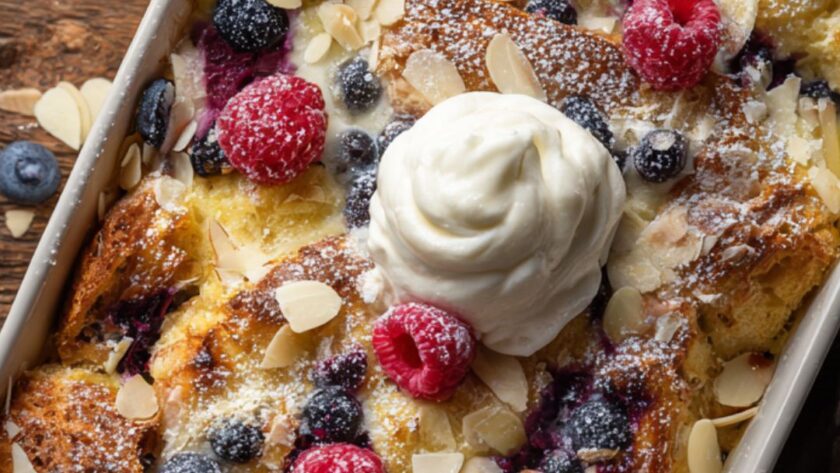
 Ree Drummond’s white chocolate bread pudding layers store-bought croissants in a rich white chocolate custard with fresh berries, orange zest, and toasted almonds, then bakes until golden and puffed in about an hour.
This recipe is from thepioneerwoman.com, where it’s published as White Chocolate Croissant Bread Pudding. It builds a from-scratch white chocolate custard by melting chips directly into hot half-and-half, then pours the whole thing over croissants with fresh raspberries and blueberries.
The 30-minute soak before baking is the step you cannot rush. Croissants are flaky and air-filled, so they need that full half hour to absorb the custard all the way through. Skip it and you get dry patches floating in loose custard instead of one cohesive pudding.

Pioneer Woman White Chocolate Bread Pudding
Description
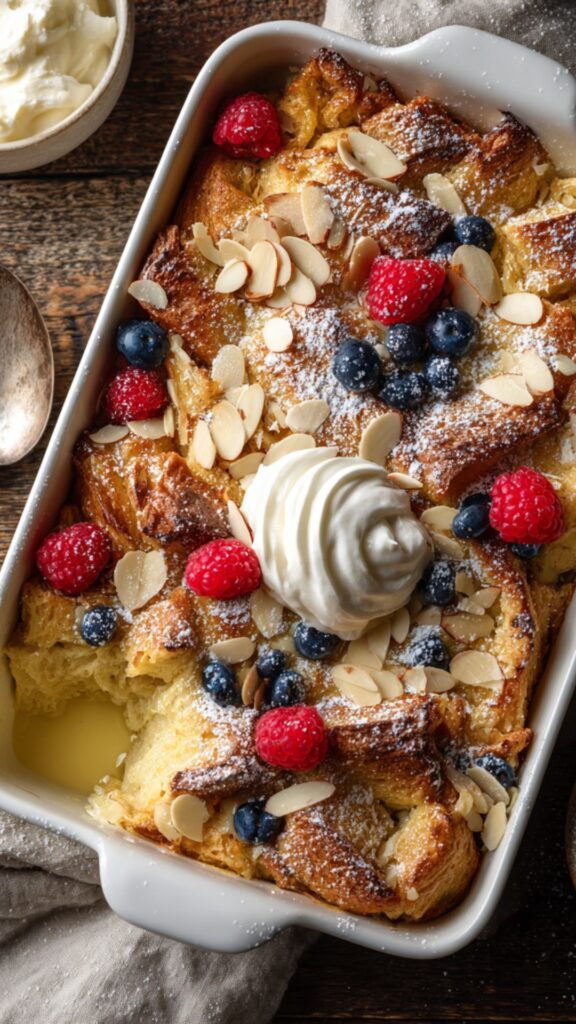
Summary: Buttery bakery croissants soaked in orange-scented white chocolate custard, layered with fresh raspberries and blueberries, then baked under a scattering of sliced almonds until puffed and golden. A make-ahead brunch centerpiece that feeds a crowd.
Ingredients
White chocolate custard:
Assembly:
Instructions
- Preheat the oven. Set it to 325F (165C).
- Melt the white chocolate. Place white chocolate chips in a large heatproof bowl. Heat the half-and-half in a medium saucepan over medium heat until steaming but not boiling. Pour the hot half-and-half over the chips and let it sit for 2 minutes. Whisk until the chocolate is fully melted and the mixture is smooth.
- Build the custard. Whisk eggs, sugar, orange zest, and salt in a large bowl until well combined. Gradually pour the warm white chocolate mixture into the eggs while whisking constantly so the eggs temper without scrambling. Stir in the vanilla extract.
- Layer the baking dish. Spray a 13×9 inch (3-quart) baking dish with nonstick cooking spray. Cut each croissant into thirds. Arrange the pieces in the dish and sprinkle half the raspberries and half the blueberries over them. Pour the white chocolate custard evenly over everything. Sprinkle the sliced almonds on top.
- Soak the croissants. Let the assembled dish stand at room temperature for 30 minutes so the croissants absorb the custard fully.
- Bake covered. Cover the dish tightly with aluminum foil and bake until the edges are set but the center still jiggles slightly, 40 to 45 minutes.
- Bake uncovered. Remove the foil and continue baking until golden brown and slightly puffed, 15 to 20 minutes more.
- Rest and serve. Let the pudding rest 5 minutes. Top with the remaining fresh berries, dust with powdered sugar, and serve warm with sweetened whipped cream.
Notes
- Two 4 oz chopped white chocolate bars work in place of chips.
- Make ahead: assemble the night before, refrigerate, then bake covered for 1 hour (to account for fridge chill) before uncovering for the final 15-20 minutes. Do not let it sit longer than one night or the croissants lose their shape.
- Store leftovers covered in the fridge for up to 3 days. Reheat individual portions in a 300F (150C) oven for 10-15 minutes. The texture softens with each reheat but still tastes good.
FAQs
Why melt the white chocolate into the half-and-half instead of scattering chips in the dish?
Melting the chips into hot half-and-half creates a smooth, uniform custard where every bite tastes like white chocolate. If you just toss chips into the baking dish, they clump in random spots and some pieces get no white chocolate flavor at all.
The melting step also thickens the custard base slightly, which helps it cling to the croissant pieces during the soak. Thicker custard means fewer dry patches after baking.
Why grocery store croissants instead of brioche or French bread?
Croissants have layers of laminated butter that melt during baking and create pockets of richness throughout the pudding. French bread absorbs custard fine but gives you a denser, more uniform texture without those buttery streaks.
The recipe calls for soft bakery croissants because they collapse into the custard more easily during the 30-minute soak. Firmer artisan croissants hold their shape too well and leave you with dry centers that the custard never reaches.
What does the orange zest do, and can you leave it out?
The orange zest cuts through the sweetness of the white chocolate with a bright citrus note that keeps the pudding from tasting flat. White chocolate on its own can read as one-note sugary, so the zest gives your palate something to contrast against.
You can skip it if you dislike orange, but add 1/2 teaspoon of almond extract or swap in lemon zest instead. Without any citrus or secondary flavor, the pudding leans very sweet with nothing to balance it.
Why bake covered first and then uncovered?
The foil traps steam during the first 40-45 minutes so the custard sets gently and evenly from edge to center. Without it, the top browns and crisps before the middle cooks through, leaving you with a crunchy shell over raw custard.
Removing the foil for the final 15-20 minutes lets the surface turn golden and slightly puffed. That contrast between the crispy caramelized top and the soft custardy interior is what separates real bread pudding from soggy bread in cream.
Can you use frozen berries instead of fresh?
Frozen berries release extra liquid as they thaw, which can make the custard watery in spots and stain the pudding purple-grey. If fresh are not available, fold frozen ones in without thawing and add 5 minutes to the covered baking time so the extra moisture cooks off.
Keep the finishing berries fresh no matter what. The ones you sprinkle on after baking are there for color and a burst of cool fruit against the warm pudding. Thawed frozen berries turn mushy and dull on top.