 Claire Dawson
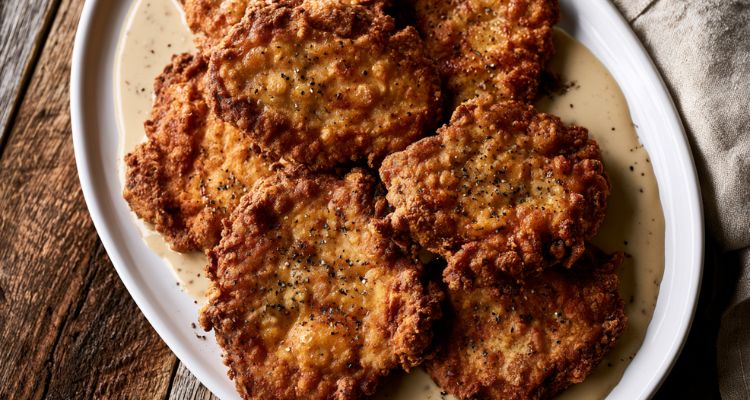
 Pioneer Woman Turkey Cutlets are buttermilk-marinated, seasoned turkey cutlets fried golden in a cast-iron skillet and served with a rich cream gravy made from turkey stock. The whole dish takes about an hour and a half.
Ree shared this as Chicken Fried Turkey on her official website, framing it as a way to break out of a holiday dinner rut. She takes the same breading and frying technique from her chicken fried steak and applies it to thin boneless turkey cutlets smothered in a stock-based cream gravy.
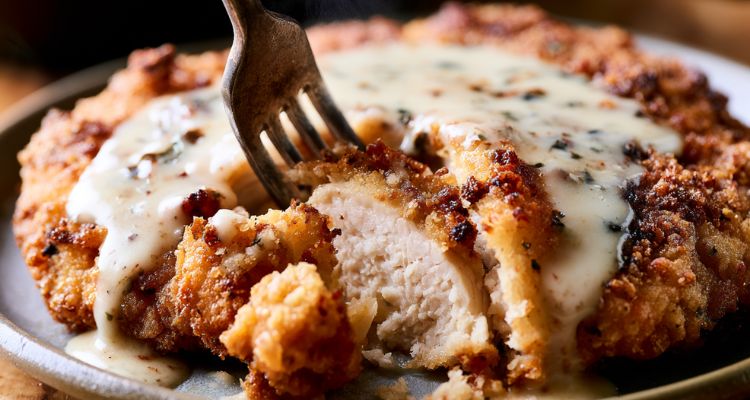
Splash three tablespoons of the buttermilk marinade into the flour dredge before coating the cutlets. Those wet spots create a pebbly, uneven texture in the flour that fries up into the craggy, extra-crispy crust instead of a flat, smooth shell that turns soggy under gravy.

Pioneer Woman Turkey Cutlets
Description
Thin turkey cutlets soaked in spiced buttermilk, coated in a pebbled seasoned flour, and fried until shattering-crisp. A silky cream gravy with grated onion and a touch of Dijon brings it all together.
Ingredients
Turkey
Creamy Gravy
Instructions
- Mix the poultry seasoning, salt, garlic powder, black pepper, and cayenne in a small bowl.
- Whisk the buttermilk, hot sauce, egg, and 2 tablespoons of the spice mixture in a medium bowl until smooth. Add the turkey cutlets, cover, and refrigerate for at least 30 minutes or up to 4 hours.
- Remove the turkey from the fridge 10 minutes before frying so it loses the deep chill.
- Stir the flour, cornstarch, baking powder, the remaining spice mixture, and 3 tablespoons of the buttermilk marinade together in a shallow bowl until the mixture looks pebbly with small clumps.
- Dredge each cutlet through the flour mixture, pressing firmly so the coating sticks, then shake off the excess and set on a plate.
- Heat 1 inch (2.5cm) of vegetable oil in a large cast-iron skillet or Dutch oven over medium-high heat until it reaches 350F (180C).
- Preheat the oven to 200F (95C) and set a wire rack over a rimmed baking sheet.
- Fry the cutlets in batches without crowding, 1 to 2 minutes per side, until golden brown and the internal temperature reads 165F (74C). Transfer to the wire rack, sprinkle with salt, and keep warm in the oven while you fry the rest.
- Melt the butter in a medium stainless steel skillet over medium heat, add the grated onion, and cook until lightly golden and tender, 3 to 4 minutes.
- Sprinkle the flour over the butter and onion, then whisk constantly until the flour smells toasty and turns lightly golden, about 2 minutes.
- Pour in 3 cups (710ml) of the warm stock gradually, whisking to break up any clumps, then add the salt and pepper and bring to a gentle simmer.
- Cook until smooth and thickened, about 3 minutes, then whisk in the heavy cream and Dijon mustard if using. Thin with remaining stock if needed and adjust seasoning.
- Serve the cutlets on plates with the warm gravy spooned over the top and a final crack of black pepper.
FAQs
Why add marinade into the flour dredge instead of keeping them separate?
Those three tablespoons of wet buttermilk create small clumps in the dry flour, which is exactly what you want. The uneven, pebbly texture fries into ridges and crags that stay crunchy even after you pour gravy over the cutlets.
A smooth, uniform coating fries flat and turns soggy fast once any liquid hits it. The clumps are the whole reason this crust holds up on the plate instead of going limp under the gravy.
Why marinate for only 30 minutes and not overnight?
Turkey cutlets are thin, so the buttermilk and spices penetrate the meat quickly. Thirty minutes gives you tender, well-seasoned cutlets without the acid in the buttermilk breaking down the surface too much.
Going past four hours risks mushy texture on the outside of each cutlet, which makes the dredge slip off during frying. The short soak is a feature, not a shortcut.
Can you bake these instead of frying?
You can, but the crust will not be the same. Place dredged cutlets on a wire rack over a baking sheet, spray with oil, and bake at 425F (220C) for about 15 minutes, flipping once halfway through.
The result is closer to a crispy baked cutlet than true chicken fried turkey. You lose the shattering crunch that comes from hot oil contact, so if texture matters to you, frying is the way to go.
Why grate the onion for the gravy instead of dicing it?
Grated onion melts into the roux and disappears completely, giving you flavor without visible pieces in a smooth gravy. Diced onion would leave chunks that change the silky texture Ree is going for.
Use the large holes on a box grater and work quickly because grated onion releases a lot of juice. That extra liquid actually helps the roux cook more evenly before you add the stock.
Why warm the stock before adding it to the roux?
Cold liquid dropped into a hot roux causes the flour to seize into lumps that are hard to whisk out. Warm stock blends in gradually and keeps the temperature steady, so the gravy thickens smoothly without any pockets of raw flour.
Ree mentions this as a specific tip for the recipe. Heat the stock in a saucepan or microwave until warm to the touch before you start building the gravy, and pour it in a slow, steady stream while whisking constantly.