 Claire Dawson
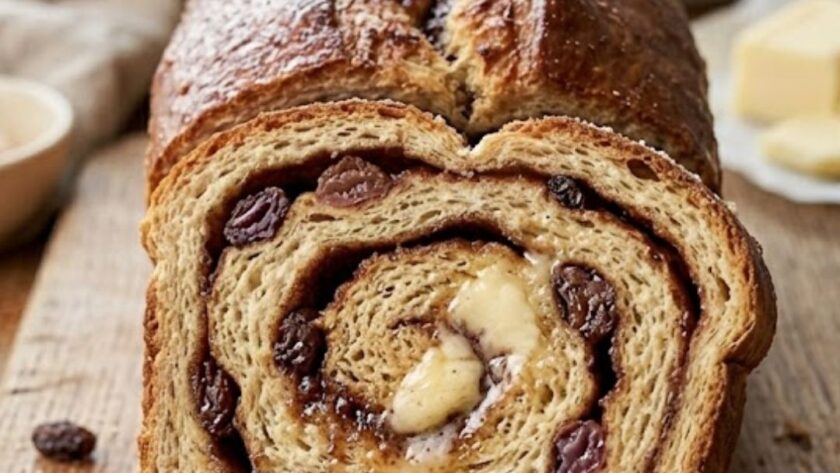
 Pioneer Woman cinnamon raisin bread is a soft, homemade loaf swirled with brown sugar and cinnamon and studded with juicy raisins, made with eggs, flour, and yeast. It takes about 2 hours and 30 minutes including one rise and shaping.
This recipe comes directly from Ree Drummond on thepioneerwoman.com, where she calls cinnamon raisin her toast of choice since childhood. She developed this version to be adaptable, noting you can use dairy or non-dairy milk and swap butter for neutral oil depending on dietary needs.
Roll the dough as tightly as you can when shaping the loaf, because a loose roll creates air gaps where the cinnamon filling separates from the bread during baking. Ree also stresses checking the internal temperature with a thermometer: the center must reach 190F to 200F (88C to 93C) or the middle stays gummy.

Pioneer Woman Cinnamon Raisin Bread
Description
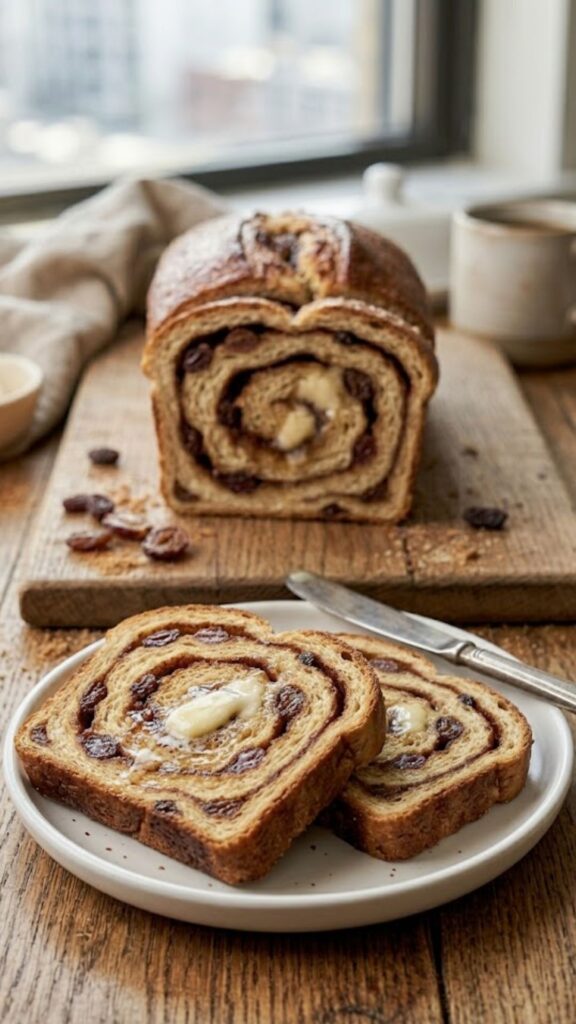
A from-scratch yeasted loaf loaded with raisins right in the dough and a thick spiral of brown sugar cinnamon filling through every slice. The crumb is soft and slightly sticky from the enriched dough, and slices beautifully for toast or French toast once fully cooled.
Ingredients
For the dough:
For the cinnamon filling:
Instructions
- Bloom the yeast. Combine the warm milk, 2 tablespoons brown sugar, and yeast in a bowl or measuring cup. Let sit for 10 minutes until foamy, which confirms the yeast is active and ready.
- Mix the wet ingredients. Pour the yeast mixture into the bowl of a stand mixer. Add the oil (or melted butter) and eggs, then whisk to combine.
- Build the dough. Add the flour and salt to the wet ingredients. Use the dough hook or a spatula to roughly combine into a shaggy dough. Add the raisins, then knead with the dough hook on medium-low speed for 10 minutes. The dough will be sticky, but resist adding more flour because extra flour makes the bread dense.
- First rise. Remove the dough hook and cover the bowl with plastic wrap. Let the dough rise for 1 hour in a warm spot until doubled in size.
- Shape the loaf. Dust your countertop as lightly as possible and stretch the dough into a rectangle about 9 by 18 inches. Stir together the filling brown sugar, cinnamon, and melted butter, then spread the mixture evenly over the dough.
- Roll and seal. Starting at the far long edge, roll the dough toward you as tightly as you can. Place the roll seam-side down in a greased 9×5 inch loaf pan.
- Second rise. Cover with plastic wrap and let rise for 30 minutes. Preheat oven to 375F (190C) during this time.
- Bake. Bake for 40 to 50 minutes until the crust is golden brown and the inside reads 190F to 200F (88C to 93C) with a thermometer.
- Cool completely. Let the bread cool on a wire rack before slicing. Cutting into a warm loaf compresses the crumb and smears the cinnamon swirl.
FAQs
Why does Ree say to resist adding more flour even though the dough is sticky?
A sticky dough is what gives this bread its soft, tender crumb. Adding extra flour tightens the gluten network and produces a dense, dry loaf instead of the pillowy texture you want for sandwich-style bread.
Trust the 10 minutes of kneading to bring the dough together. It will still cling to your fingers slightly after kneading, and that is exactly right. Ree flags this specifically because the instinct to dump in more flour is strong, but fighting it makes all the difference.
Why use brown sugar in both the dough and the filling instead of white?
Brown sugar adds molasses depth that white sugar cannot. In the dough it creates a slightly malty, warm sweetness that complements the raisins. In the filling it caramelizes during baking and turns the cinnamon swirl sticky and rich.
Ree notes that 2 tablespoons in the dough keeps things subtle. If you want a sweeter loaf, she suggests doubling the dough sugar to 4 tablespoons. The filling amount stays the same either way.
Why does Ree recommend checking the internal temperature with a thermometer?
A golden crust does not guarantee the center is done. Cinnamon raisin bread is thick, enriched with eggs and fat, and the sugary filling creates a dense swirl that takes longer to bake through than plain bread.
The target is 190F to 200F (88C to 93C) at the center. Below that range the middle stays gummy and doughy even though the outside looks perfect. An instant-read thermometer inserted into the thickest part takes the guesswork out completely.
Can you use oil instead of butter in this recipe?
Yes, Ree designed this recipe to work both ways. Neutral oils like grapeseed, canola, or vegetable oil can replace the butter in the dough and in the filling for a dairy-lighter version. You can also swap cow’s milk for almond, soy, or rice milk.
The texture stays soft either way, though butter adds a richer flavor and the filling holds together slightly better with melted butter than with oil. Choose based on your dietary needs or preference.
How should you store this bread since it has no preservatives?
Ree is honest that this bread only keeps a few days at room temperature because there are no preservatives. Wrap it tightly in plastic wrap or store in a zip-top bag once completely cooled.
For longer storage, slice the loaf first and freeze individual slices in a freezer bag. Frozen slices go straight into the toaster without thawing, which is the best way to enjoy this bread weeks after baking it.