 Mohamed Shili
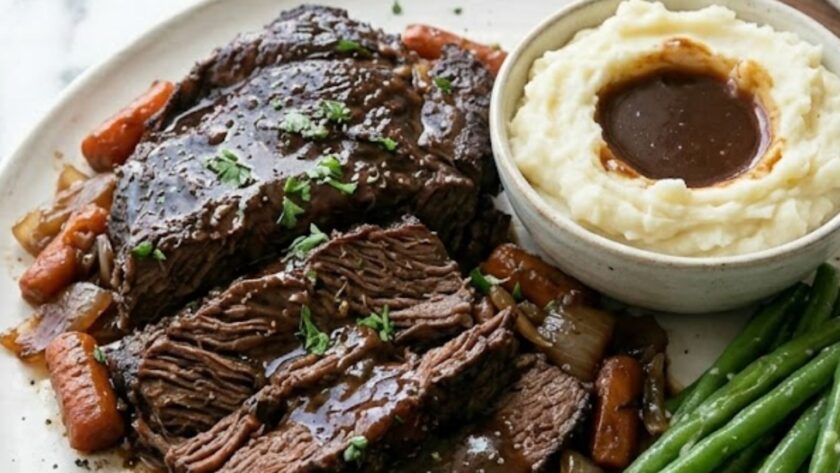
 Julia Child’s Pot Roast (or Bœuf à la Mode) is a masterclass in French home cooking. Unlike quicker American versions, this recipe relies on a very long, very low simmer to break down the tough fibers of a chuck roast, transforming it into a succulent, fork-tender masterpiece. It’s the ultimate “set it and forget it” Sunday dinner.
Approach B: If you do nothing else, make sure you pat the beef bone-dry with paper towels before searing. If the surface of the meat is damp, it will steam in the oil rather than crusting. You want a deep, dark mahogany brown on every side; that crust is where the “fond” comes from, which eventually creates that rich, velvety wine sauce Julia is famous for.
The red wine is doing more work than you’d think here. It acts as a natural tenderizer, with the acidity slowly dissolving the connective tissues in the beef over four hours. I’ve found that using a dry, full-bodied wine like a Burgundy or a Cabernet Sauvignon mimics the traditional flavors of a French bistro. It’s the kind of meal that makes your whole house smell like a cozy kitchen in Provence.
Julia Child’s Pot Roast Ingredients
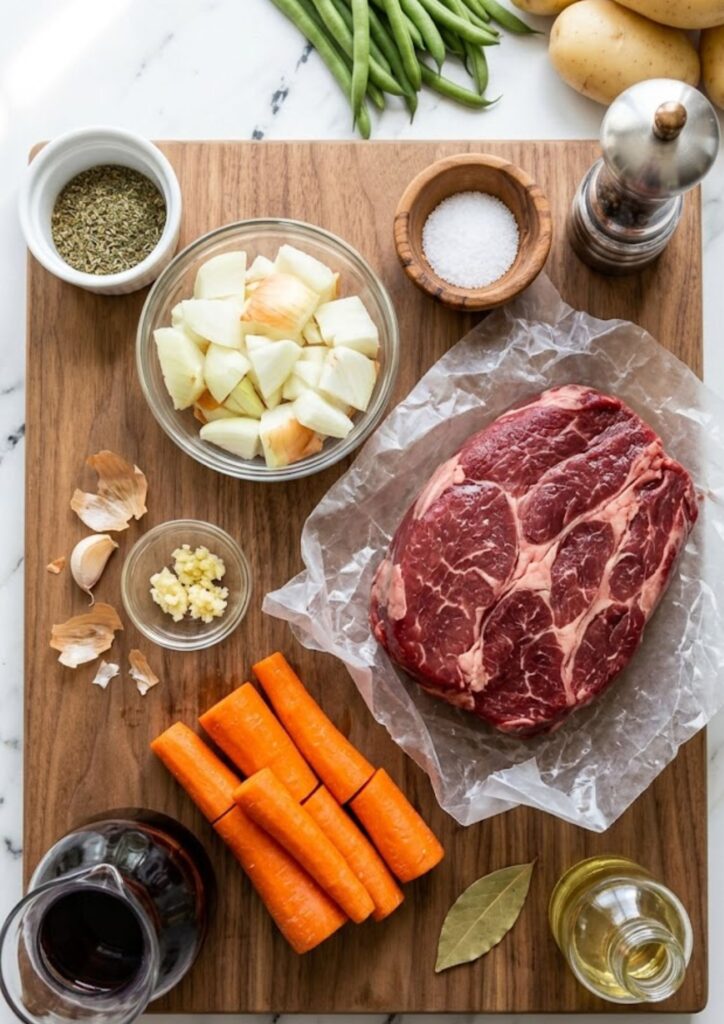
- 1 chuck roast (3 to 4 lbs / 1.4 to 1.8kg)
- 2 tbsp neutral oil (like grapeseed or vegetable)
- Kosher salt and freshly ground black pepper, to taste
- 1 tsp Italian seasoning (dried oregano, thyme, rosemary)
- 1 large onion, chopped
- 2 cloves garlic, minced
- 4 large carrots, peeled and cut into 2-inch chunks
- 1/2 cup (120ml) dry red wine
- 1 bay leaf
- For Serving: Steamed green beans and boiled or mashed potatoes
How To Make Julia Child’s Pot Roast
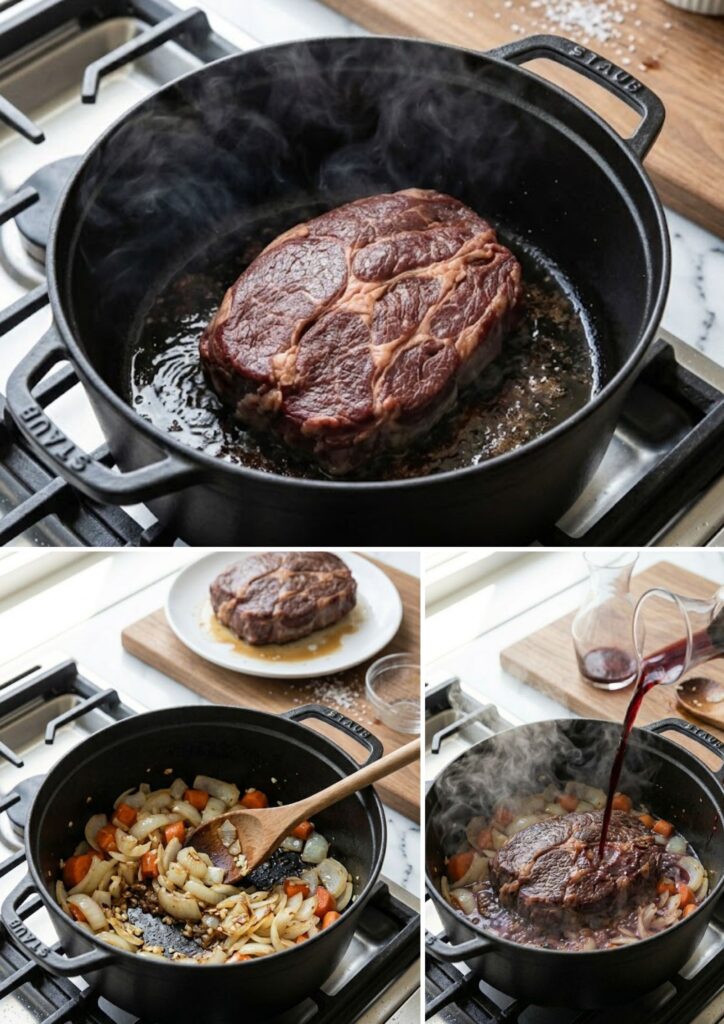
- 1. Season and Brown: Pat the roast dry. Generously rub with salt, pepper, and Italian seasoning. Heat the oil in a Dutch oven over medium-high heat. Sear the meat for 3–4 minutes per side. Don’t crowd the pan or move the meat too much; let that dark crust form before flipping. Remove the roast to a plate.
- 2. Sauté the Aromatics: In the same pot, add the onions. Cook for 5–10 minutes until they are soft and beginning to caramelize. Stir in the garlic and carrots, cooking for just a minute until fragrant.
- 3. Deglaze and Assemble: Place the browned roast back into the pot on top of the vegetables. Pour in the red wine, scraping the bottom of the pan to release the flavorful brown bits. Add the bay leaf.
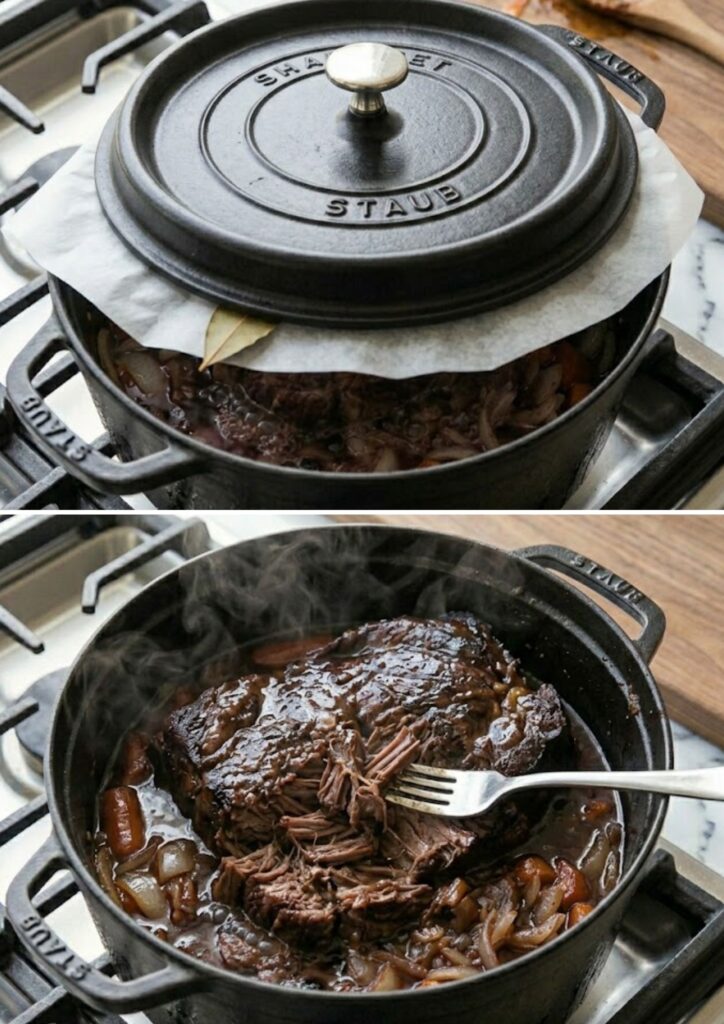
- 4. The Slow Simmer: Cover the pot with a tight-fitting lid.
- Stovetop: Turn the heat to the lowest possible setting to maintain a bare simmer.
- Oven (Julia’s Preferred Method): Start at 175°C (350°F) for 15 minutes to get the pot hot, then drop to 120°C (250°F) for one hour. Finally, reduce to 107°C (225°F) for the remainder of the time.
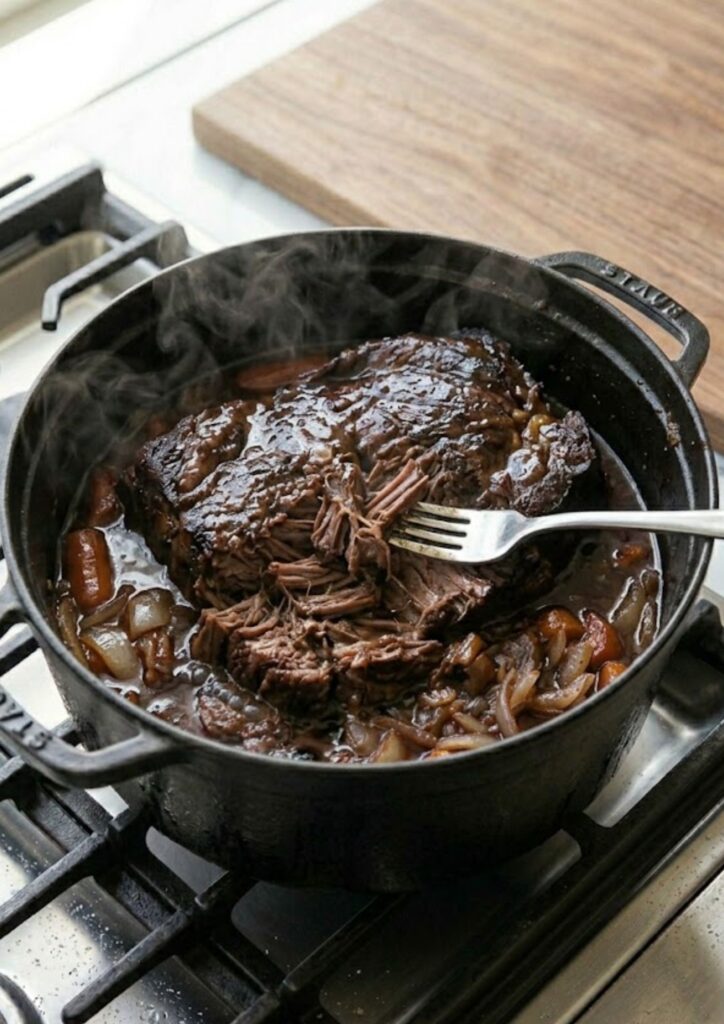
- 5. Cook Until Tender: Let the roast braise for 3 1/2 to 4 1/2 hours. The meat is done when it yields easily to a fork and “falls apart” with minimal pressure.
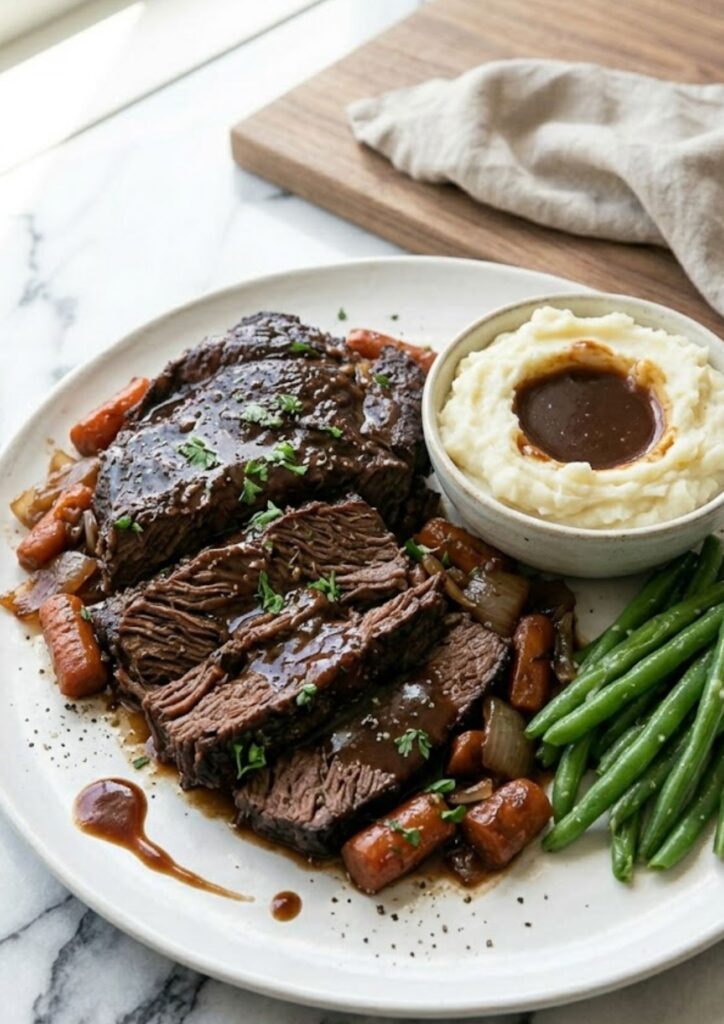
- 6. Serve: Remove the bay leaf. Serve slices of the beef alongside the soft carrots, spooning the wine reduction over the top. Pair with potatoes and green beans.
Recipe Tips
- The “Low and Slow” Rule: If the liquid is boiling rapidly, the meat will turn out stringy and tough. You want to see only one or two bubbles breaking the surface every few seconds.
- Tight Seal: If your Dutch oven lid isn’t perfectly tight, place a piece of parchment paper or foil over the pot before putting the lid on. This traps the moisture so the roast doesn’t dry out.
- Wine Quality: Use a wine you would actually drink. Julia famously said, “If you wouldn’t drink it, don’t cook with it.” A cheap, “cooking wine” will make the sauce taste salty and metallic.
- Make it Ahead: Like most stews, this tastes even better the next day. Chill the whole pot overnight; the fat will solidify on top, making it easy to remove before reheating.
What To Serve With Julia Childs Pot Roast
- Garlic Mashed Potatoes: The perfect vessel for catching every drop of the wine sauce.
- Buttered Green Beans: A bright, snappy contrast to the rich, soft beef.
- Crusty Baguette: Essential for deglazing your own plate at the end of the meal.
How To Store Julia Childs Pot Roast
- Fridge: Store in the cooking liquid in an airtight container for up to 4 days.
- Reheat: Warm it up slowly in a covered saucepan over medium-low heat. If the sauce has thickened into a jelly (that’s the natural gelatin!), it will melt back into a silk sauce as it heats.
- Freezer: This freezes beautifully for up to 3 months. Thaw in the fridge for 24 hours before reheating.
Julia Child’s Pot Roast Nutrition Facts
Per serving (estimated for 6 servings):
| Nutrient | Amount |
| Calories | 520 kcal |
| Protein | 44g |
| Total Fat | 32g |
| Carbs | 9g |
| Sodium | 640mg |
FAQs
Why does Julia Child suggest such a low temperature (225°F / 107°C)?
Chuck roast is full of tough connective tissue called collagen. If you cook it at a high temperature, the muscle fibers shrink and squeeze out all their moisture, leaving the meat dry and “woody.” At a very low, gentle simmer, that collagen slowly melts into gelatin, which coats the fibers and gives the beef its legendary succulent, “melt-in-your-mouth” texture.
Do I need to add more liquid to my Julia Child’s Pot Roast?
It’s a common instinct to want to cover the roast in broth, but Julia’s method is a “dry-braise.” Between the half-cup of wine and the natural juices released by the beef and onions, there will be plenty of liquid to create a concentrated, flavorful sauce. Adding too much water or stock will “boil” the meat rather than braise it, diluting the rich flavor.
Can I make this Julia Child’s Pot Roast in a slow cooker?
Yes, but don’t skip the searing step! Brown the meat and the onions in a skillet first, then transfer everything to the slow cooker. Cook on Low for 8 to 10 hours. The slow cooker mimics the low-temperature oven environment perfectly.
What kind of red wine is best for Julia Child’s Pot Roast?
Julia would recommend a young, dry red with good body, like a Beaujolais, Cotes du Rhone, or a Bordeaux. Avoid sweet wines or “cooking wines” from the grocery store, which are loaded with salt and lack the complexity needed for a French sauce.
Try More Recipes:

Julia Childs Pot Roast
Description
Julia Child’s Pot Roast is a masterclass in the magic of “low and slow” cooking. By taking a tough, inexpensive cut of beef like chuck roast and treating it with a heavy sear, a flavor-packed vegetable base, and a slow braise in dry red wine, it transforms into an incredibly tender, melt-in-your-mouth masterpiece. It is the ultimate Sunday dinner, filling the house with savory, intoxicating aromas and yielding a deeply rich, built-in pan gravy.
Ingredients
Instructions
- Season and Brown: Pat the roast dry. Generously rub with salt, pepper, and Italian seasoning. Heat the oil in a Dutch oven over medium-high heat. Sear the meat for 3–4 minutes per side. Don’t crowd the pan or move the meat too much; let that dark crust form before flipping. Remove the roast to a plate.
- Sauté the Aromatics: In the same pot, add the onions. Cook for 5–10 minutes until they are soft and beginning to caramelize. Stir in the garlic and carrots, cooking for just a minute until fragrant.
- Deglaze and Assemble: Place the browned roast back into the pot on top of the vegetables. Pour in the red wine, scraping the bottom of the pan to release the flavorful brown bits. Add the bay leaf.
- The Slow Simmer: Cover the pot with a tight-fitting lid.
- Cook Until Tender: Let the roast braise for 3 1/2 to 4 1/2 hours. The meat is done when it yields easily to a fork and “falls apart” with minimal pressure.
- Serve: Remove the bay leaf. Serve slices of the beef alongside the soft carrots, spooning the wine reduction over the top. Pair with potatoes and green beans.
Stovetop: Turn the heat to the lowest possible setting to maintain a bare simmer.Oven (Julia’s Preferred Method): Start at 175°C (350°F) for 15 minutes to get the pot hot, then drop to 120°C (250°F) for one hour. Finally, reduce to 107°C (225°F) for the remainder of the time.
Notes
-
The “Low and Slow” Rule: If the liquid is boiling rapidly, the meat will turn out stringy and tough. You want to see only one or two bubbles breaking the surface every few seconds.
Tight Seal: If your Dutch oven lid isn’t perfectly tight, place a piece of parchment paper or foil over the pot before putting the lid on. This traps the moisture so the roast doesn’t dry out.
Wine Quality: Use a wine you would actually drink. Julia famously said, “If you wouldn’t drink it, don’t cook with it.” A cheap, “cooking wine” will make the sauce taste salty and metallic.
Make it Ahead: Like most stews, this tastes even better the next day. Chill the whole pot overnight; the fat will solidify on top, making it easy to remove before reheating.
