
 Mohamed Shili
 Julia Child’s Braised Sauerkraut is a masterclass in balancing bold, rustic flavors. This isn’t just cabbage from a jar; it is a velvety, savory side dish where the sharp acidity of Polish or German-style sauerkraut is mellowed by smoky bacon, sweet caramelized onions, and the earthy punch of caraway seeds.
If you do nothing else, rinse the sauerkraut briefly if it is incredibly salty, but always reserve that brine. That’s the difference between a dish that is one-dimensionally sour and one with a complex, fermented tang. I’ve found that using a 50/50 mix of brine and water gives you total control over the “zip” of the final dish. If you throw away the brine immediately, you lose the very essence of the flavor profile.
The two tablespoons of flour are doing more work than you’d think here. Unlike a traditional sauté, this braise uses flour to create a light, silky “ligature” that binds the fats from the bacon and pork lard to the cabbage strands. I didn’t expect the granulated sugar to matter that much, but it’s the secret to the “Agrodolce” (sour and sweet) effect that makes this the perfect partner for heavy, fatty meats like roast pork or bratwurst.
Julia Child Braised Sauerkraut Ingredients
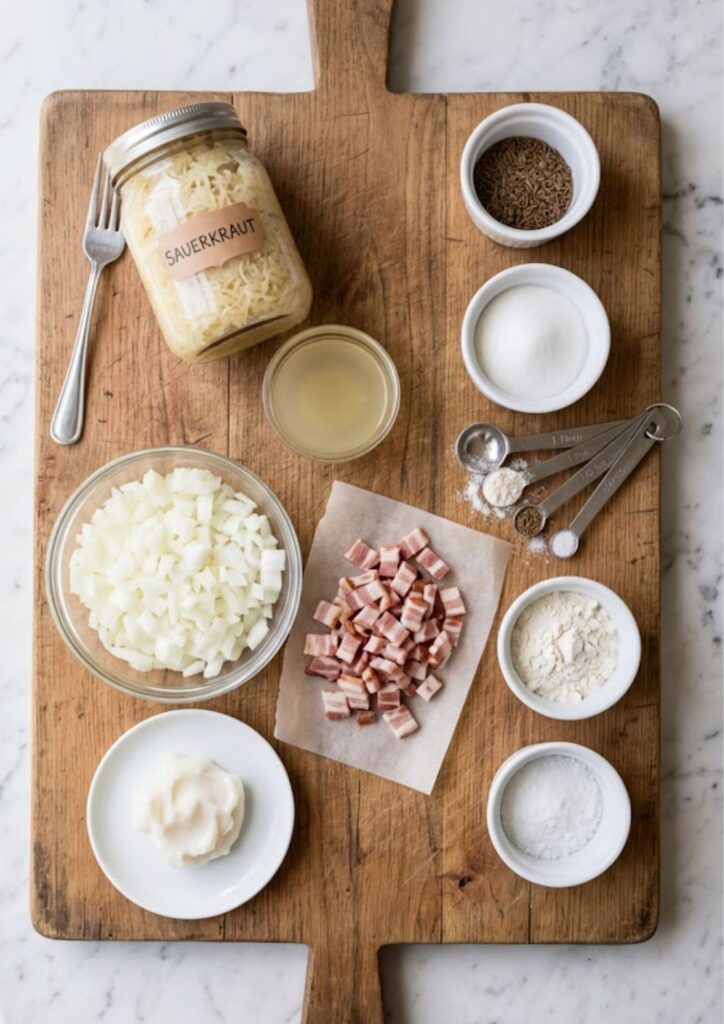
- 1 pound (450g) sauerkraut (Polish or German-style), drained (reserve brine)
- 2 medium onions, finely chopped (about 2 cups)
- 3 ounces (85g) smoked bacon, diced
- 1 tablespoon pork lard (or canola/sunflower oil)
- 1 teaspoon caraway seeds, ground or crushed
- 2 tablespoons granulated sugar (adjust to your taste)
- 2 tablespoons all-purpose flour
- Salt, to taste
- ½ cup liquid (reserved brine, water, or a mix of both)
How To Make Julia Child Braised Sauerkraut
- 1. Prepare the ingredients: Drain the sauerkraut over a bowl to catch the brine. If the kraut tastes intensely sour, give it a quick cold water rinse. Chop your onions finely and dice the bacon into small, uniform cubes.
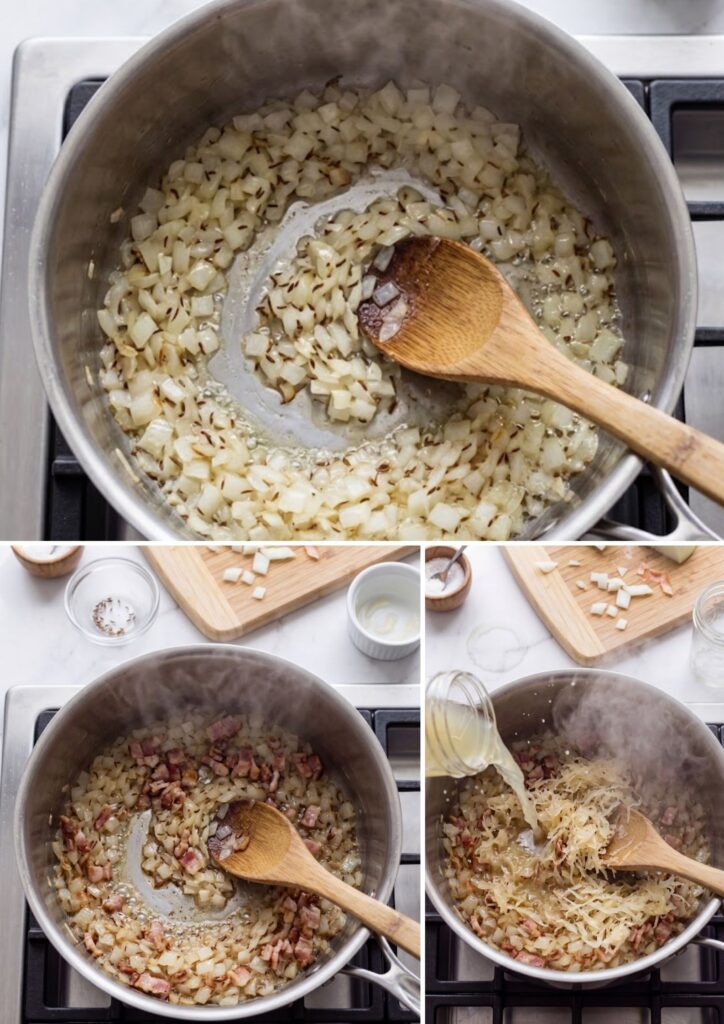
- 2. Sauté the onions: In a large, heavy-bottomed saucepan or Dutch oven, melt the pork lard over medium heat. Add the onions and cook for 5–8 minutes, stirring occasionally, until they are soft and translucent. Stir in the crushed caraway seeds during the last minute to wake up their oils.
- 3. Add the bacon: Add the diced bacon to the pan. Cook for about 5 minutes, stirring often, until the bacon fat has rendered and the bits are starting to turn golden and slightly crispy.
- 4. Stir in the sauerkraut: Add the drained sauerkraut to the pan, tossing it with the onions and bacon fat. Pour in ½ cup of your reserved brine if you like it tangy, or use water if you prefer a milder finish.
- 5. Braise the mixture: Turn the heat down to low, cover the pan tightly, and simmer for 15 minutes. This slow steam allows the smoky bacon and caraway flavors to penetrate deep into the cabbage fibers.
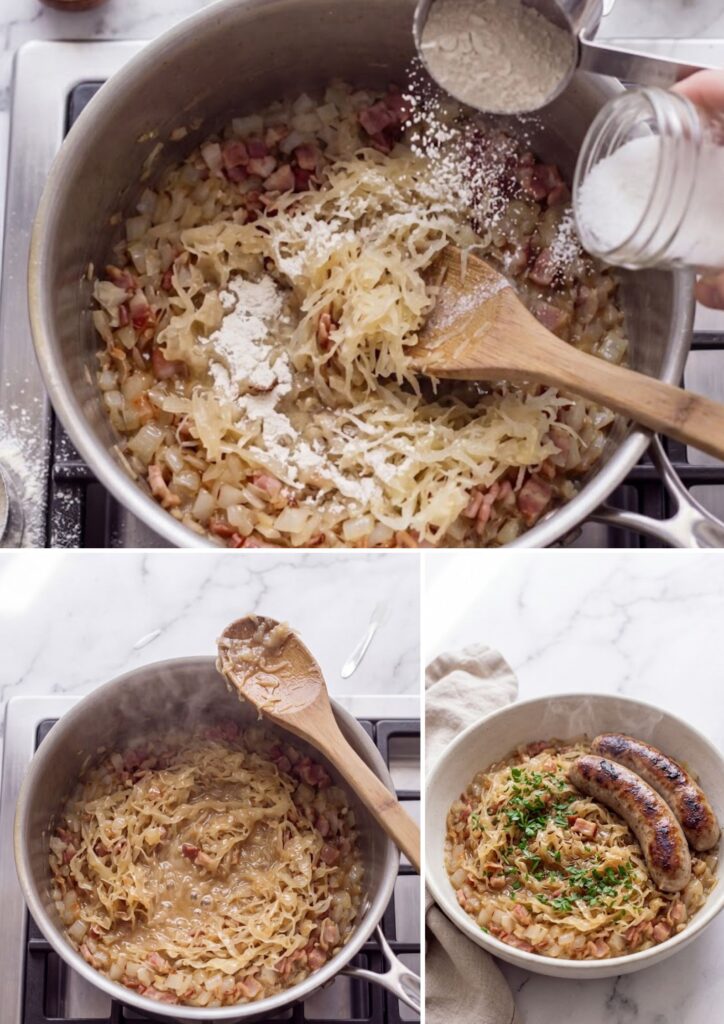
- 6. Add sugar and flour: Remove the lid. Stir in the sugar and then sprinkle the flour evenly over the top. Stir vigorously to incorporate. Cook uncovered on low heat for another 15 minutes. The flour will thicken the remaining juices into a glossy, translucent sauce that clings to the kraut.
- 7. Season and serve: Taste the mixture. If it’s too sharp, add another teaspoon of sugar; if it needs depth, add a pinch of salt. Serve warm.
Recipe Tips
- Crush the caraway: Don’t just throw the whole seeds in. Give them a quick pulse in a spice grinder or a whack with a mortar and pestle. This releases the essential oils and prevents guests from biting into a “soapy” whole seed.
- Use Pork Lard if possible: While oil works, pork lard provides an authentic, silky mouthfeel that vegetable oils simply cannot replicate. It’s the traditional French/German way to prepare this dish.
- The “Gloss” Factor: If the kraut looks a bit dry after adding the flour, add one extra tablespoon of water or white wine. You want the finished dish to look shiny and moist, not pasty.
- Don’t skip the sugar: Even if you don’t like “sweet” food, the sugar is chemically necessary to balance the high acidity of the fermentation. It acts as a seasoning, not a sweetener.
What To Serve With Julia Child Braised Sauerkraut
This is the ultimate partner for smoked sausages (Kielbasa or Bratwurst) and roasted pork loin. It also works beautifully as a bed for pan-seared pork chops or as a sophisticated topping for a gourmet hot dog or Reuben sandwich.

How To Store Julia Child Braised Sauerkraut
- Fridge: This dish is actually better the next day. Store in an airtight container for up to 5 days.
- Reheat: Warm it up in a small saucepan over low heat with a splash of water or apple juice to loosen the sauce.
- Freeze: This freezes remarkably well for up to 3 months. The texture of the sauerkraut actually softens further upon thawing, which many people prefer.
Julia Child Braised Sauerkraut Nutrition Facts
Estimated per serving (approx. ½ cup):
- Calories: 165 kcal
- Protein: 4g
- Fat: 11g
- Carbohydrates: 14g
- Sodium: 680mg (varies by brine use)
FAQs
Can I use a different type of meat for my Julia Child Braised Sauerkraut?
Yes! If you don’t have bacon, smoked ham hocks or pancetta work beautifully. If you want a vegetarian version, skip the bacon and use a smoked salt or a drop of liquid smoke to mimic that flavor.
My sauerkraut is too sour; what do I do?
If you’ve already started cooking and it’s overwhelming, add a grated small apple to the braise. The natural sugars and pectin in the apple will mellow the acidity significantly.
Is caraway necessary for Julia Child Braised Sauerkraut?
It is traditional, but if you truly hate the flavor, you can substitute it with fennel seeds or simply leave it out and add more black pepper for a different kind of “bite.”

Try More Recipes:

Julia Child Braised Sauerkraut
Description
This Julia Child classic transforms humble fermented cabbage into a silky, sophisticated side dish. Unlike raw sauerkraut, this braised version is mellowed by slow-cooking with smoky bacon, aromatic caraway, and a touch of sugar to balance the acidity. The addition of a light flour dusting at the end creates a delicate, glossy binder that ensures the flavors cling to every ribbon of cabbage, making it the quintessential companion for roasted meats.
Ingredients
Instructions
- Prepare the ingredients: Drain the sauerkraut over a bowl to catch the brine. If the kraut tastes intensely sour, give it a quick cold water rinse. Chop your onions finely and dice the bacon into small, uniform cubes.
- Sauté the onions: In a large, heavy-bottomed saucepan or Dutch oven, melt the pork lard over medium heat. Add the onions and cook for 5–8 minutes, stirring occasionally, until they are soft and translucent. Stir in the crushed caraway seeds during the last minute to wake up their oils.
- Add the bacon: Add the diced bacon to the pan. Cook for about 5 minutes, stirring often, until the bacon fat has rendered and the bits are starting to turn golden and slightly crispy.
- Stir in the sauerkraut: Add the drained sauerkraut to the pan, tossing it with the onions and bacon fat. Pour in ½ cup of your reserved brine if you like it tangy, or use water if you prefer a milder finish.
- Braise the mixture: Turn the heat down to low, cover the pan tightly, and simmer for 15 minutes. This slow steam allows the smoky bacon and caraway flavors to penetrate deep into the cabbage fibers.
- Add sugar and flour: Remove the lid. Stir in the sugar and then sprinkle the flour evenly over the top. Stir vigorously to incorporate. Cook uncovered on low heat for another 15 minutes. The flour will thicken the remaining juices into a glossy, translucent sauce that clings to the kraut.
- Season and serve: Taste the mixture. If it’s too sharp, add another teaspoon of sugar; if it needs depth, add a pinch of salt. Serve warm.
Notes
-
Crush the caraway: Don’t just throw the whole seeds in. Give them a quick pulse in a spice grinder or a whack with a mortar and pestle. This releases the essential oils and prevents guests from biting into a “soapy” whole seed.
Use Pork Lard if possible: While oil works, pork lard provides an authentic, silky mouthfeel that vegetable oils simply cannot replicate. It’s the traditional French/German way to prepare this dish.
The “Gloss” Factor: If the kraut looks a bit dry after adding the flour, add one extra tablespoon of water or white wine. You want the finished dish to look shiny and moist, not pasty.
Don’t skip the sugar: Even if you don’t like “sweet” food, the sugar is chemically necessary to balance the high acidity of the fermentation. It acts as a seasoning, not a sweetener.
