
 Mohamed Shili
 Julia Child Baking With Scones is a classic American breakfast that’s flaky and rich. Cold butter and whole milk create a tender crumb that’s sturdy enough for thick layers of jam or clotted cream.
Approach C: This is one of those recipes that looks harder than it is. The whole thing comes down to how you handle the butter. If you keep the fats cold and don’t overwork the dough, you’ll get that high rise and flaky texture every single time.
I learned the hard way that using warm butter makes these turn out like flat, greasy cookies instead of tall scones. The cold bits of butter release steam in the hot oven, which is what actually lifts the dough. It’s a satisfying process once you see those golden tops peeking through the oven door.
Julia Child Baking With Scones Ingredients
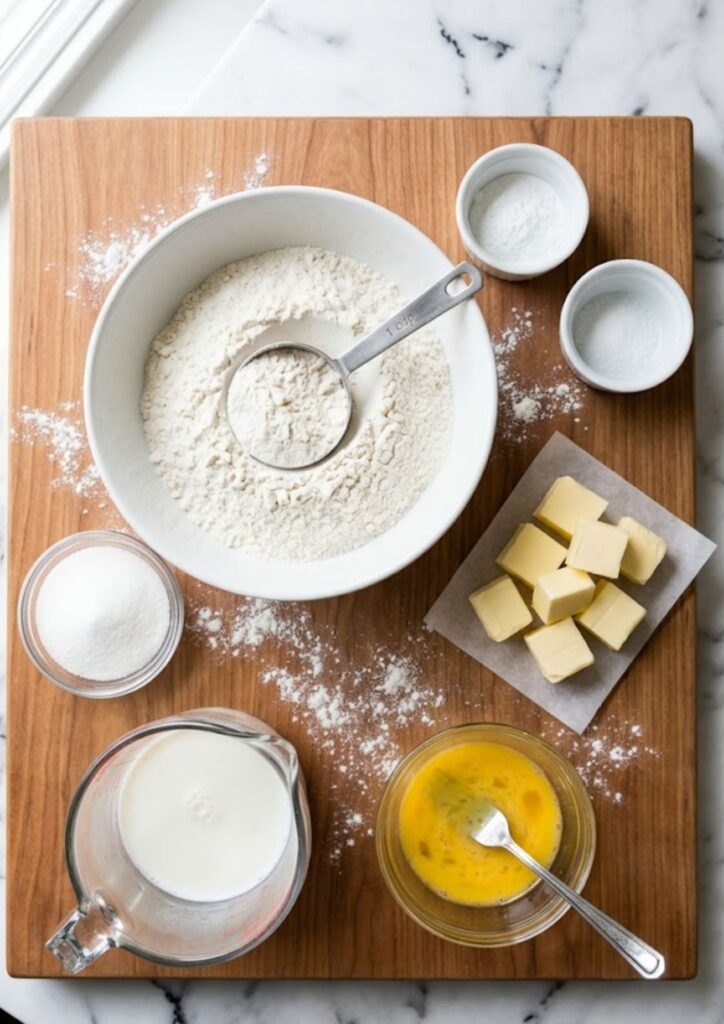
- 3 cups (360g) all-purpose flour, plus extra for kneading
- 1/2 cup (100g) granulated sugar
- 5 teaspoons baking powder
- 1/2 teaspoon salt
- 3/4 cup (170g) unsalted butter, cold
- 1 cup (240ml) whole milk
- 1 large egg, beaten
How To Make Julia Child Baking With Scones
- 1. Preheat the oven: Set the rack to the center position and heat the oven to 200°C (400°F). Lightly grease a large baking sheet or line it with a piece of parchment paper so the bottoms don’t stick.
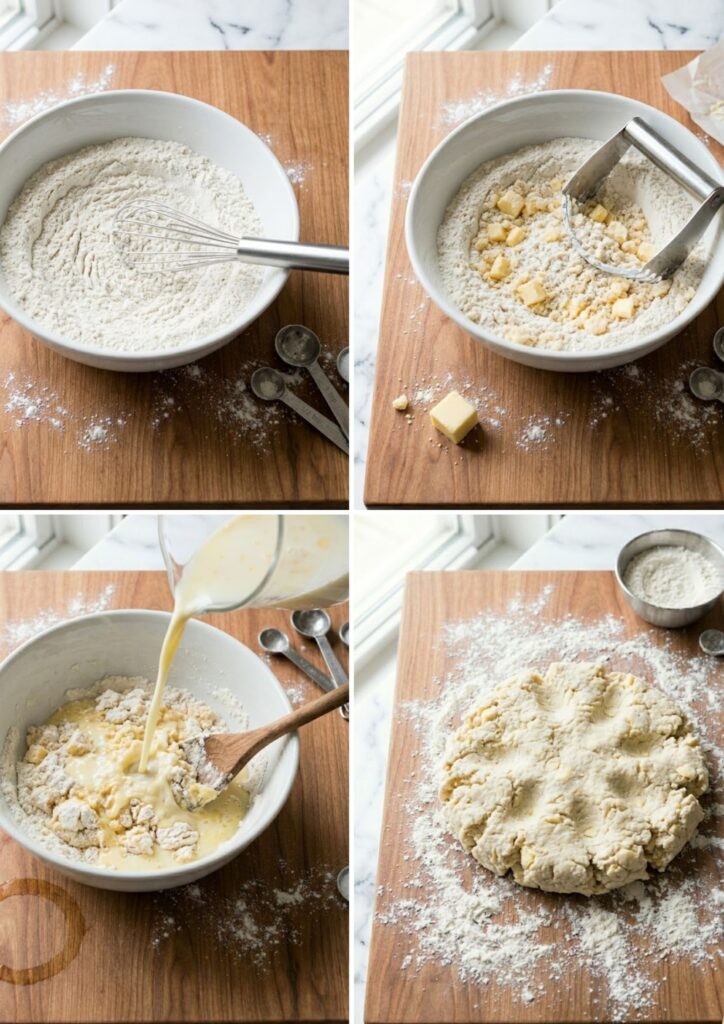
- 2. Mix dry ingredients: In a wide mixing bowl, whisk together the flour, sugar, baking powder, and salt. Make sure the baking powder is spread evenly through the flour so the scones rise at the same rate.
- 3. Cut in the butter: Use a pastry cutter or two knives to chop the cold butter into the flour until the mixture looks like coarse crumbs. You want to see small, pea-sized chunks of fat still visible in the bowl.
- If the butter starts to feel soft or oily, put the whole bowl in the fridge for ten minutes. Keeping those fat chunks solid is the only way to get a flaky interior.
- 4. Add wet ingredients: Whisk the milk and egg together in a separate jug, then gradually pour it into the flour while stirring gently. Stop the second the flour is moistened and a shaggy dough starts to form.
- 5. Shape the dough: Turn the mixture out onto a floured counter and knead it gently about 5 or 6 times just to bring it together. Pat the dough down into a circle that’s about 1/2-inch thick.
- 6. Cut and place on a baking sheet: Use a sharp knife to slice the round into 8 even wedges, like a pizza. Move them to your prepared tray, leaving at least two inches of space between each piece.
- 7. Bake: Slide the tray into the oven and bake for 15 minutes or until the tops turn a light golden brown. Let them sit on the hot pan for a few minutes to finish setting before you move them to a rack.
Don’t open the oven door too early to check on them. A sudden drop in temperature can cause the scones to slump before the structure has a chance to firm up.
Recipe Tips
- Keep everything cold: Use milk and eggs straight from the fridge and don’t take the butter out until the exact moment you’re ready to chop it into the flour.
- Avoid over-mixing: The more you stir and knead, the more gluten you develop, which makes a tough scone. Stop stirring as soon as the dry white streaks of flour disappear.
- Use a sharp knife: When cutting your wedges, press straight down rather than sawing back and forth. A clean cut allows the layers to expand upward without getting pinched shut.
- Check your baking powder: Scones rely entirely on the powder for lift, so make sure yours hasn’t expired or they’ll stay dense and heavy.
- Dust with sugar: For an extra crunch on top, brush the tops with a tiny bit of extra milk and sprinkle on some granulated sugar right before they go into the oven.
- Measure flour correctly: Use a spoon to fill your measuring cup and level it off with a knife. Packing the flour down into the cup will lead to dry, crumbly dough.

What To Serve With Julia Child Baking With Scones
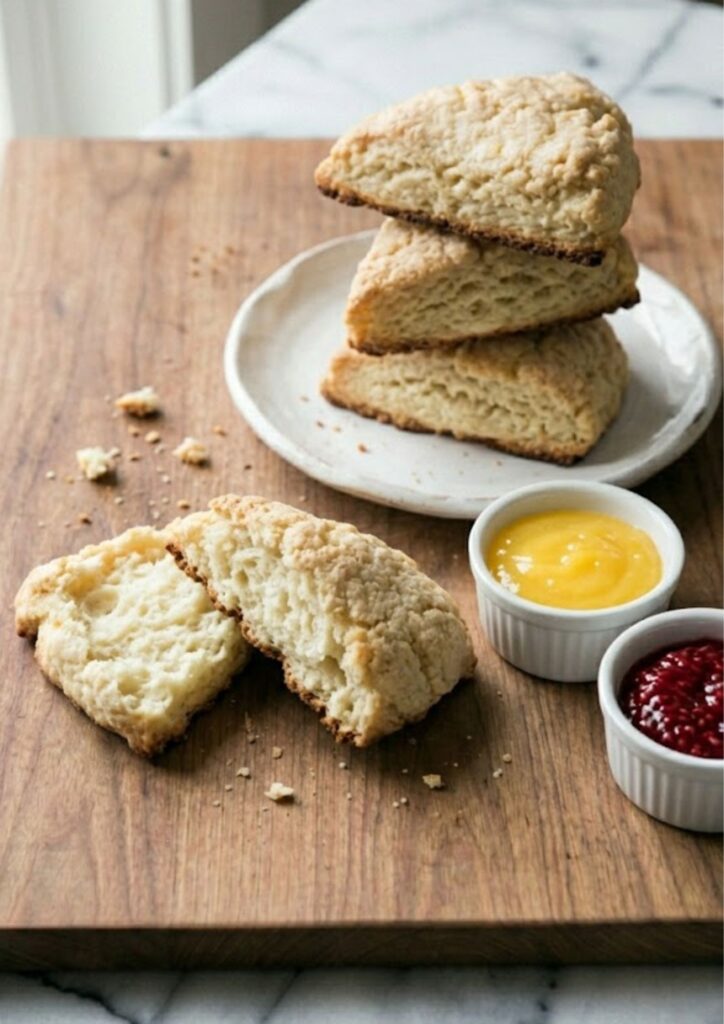
A dollop of lemon curd or raspberry preserves is the traditional way to eat these. The tartness of the fruit helps balance the heavy, buttery taste of the baked dough.
If you’re serving these for a brunch, a side of fresh berries or sliced peaches works well. A hot cup of Earl Grey tea or a strong latte is all you really need to finish it off.

How To Store Julia Child Baking With Scones
- Fridge: These are best eaten the day they’re made, but you can keep them in an airtight container at room temperature for 2 days. I don’t recommend the fridge as it can make the edges lose their crispness.
- Reheat: The oven is the best tool for bringing these back to life. Put them in at 150°C (300°F) for about 5 minutes until they’re warm through. A microwave will make them soft and rubbery, so avoid it if you can.
- Freeze: Wrap the unbaked wedges in plastic and freeze them on a tray. You can bake them straight from the freezer, just add an extra three or four minutes to the total cooking time.
Julia Child Baking With Scones Nutrition Facts
Per serving (1 scone):
- Calories: 390 kcal
- Protein: 6g
- Fat: 19g
- Carbohydrates: 48g
- Sugar: 14g
- Sodium: 380mg
FAQs
Can I use salted butter for Julia Child Baking With Scones?
Yes, you can swap it in, but you should leave out the extra half-teaspoon of salt mentioned in the dry ingredients. This keeps the final flavor from being too savory for a breakfast treat.
Why didn’t my scones rise very high?
The most likely reason is that the butter got too warm during the mixing process. If the fat melts into the flour before it hits the oven, you lose the steam pockets that create the lift.
Can I add dried fruit to the Julia Child Baking With Scones recipe?
You can definitely toss in a handful of raisins or dried cranberries. Add them to the bowl right after you’ve cut in the butter but before you pour in the milk.
Should the dough be sticky?
It should be slightly tacky to the touch but not so wet that it clings to your fingers in big clumps. If it feels too gooey to handle, dust a little more flour on your hands and the counter.
Can I make the dough ahead of time?
You can prep the dough and cut it into wedges the night before. Keep them on the baking sheet covered in the fridge so they stay cold and ready to pop in the oven for breakfast.
Try More Recipes:


Julia Child Baking With Scones
Description
These classic Julia Child-inspired scones are the perfect blank canvas for your favorite jams, curds, and spreads. By cutting ice-cold butter into the dry ingredients and using a gentle hand to bring the dough together, you create a beautifully tender and flaky pastry. Baked in a hot oven until golden brown, they are a quintessential, fuss-free addition to any weekend brunch or elegant afternoon tea.
Ingredients
Instructions
- Preheat the oven: Set the rack to the center position and heat the oven to 200°C (400°F). Lightly grease a large baking sheet or line it with a piece of parchment paper so the bottoms don’t stick.
- Mix dry ingredients: In a wide mixing bowl, whisk together the flour, sugar, baking powder, and salt. Make sure the baking powder is spread evenly through the flour so the scones rise at the same rate.
- Cut in the butter: Use a pastry cutter or two knives to chop the cold butter into the flour until the mixture looks like coarse crumbs. You want to see small, pea-sized chunks of fat still visible in the bowl.
- Add wet ingredients: Whisk the milk and egg together in a separate jug, then gradually pour it into the flour while stirring gently. Stop the second the flour is moistened and a shaggy dough starts to form.
- Shape the dough: Turn the mixture out onto a floured counter and knead it gently about 5 or 6 times just to bring it together. Pat the dough down into a circle that’s about 1/2-inch thick.
- Cut and place on a baking sheet: Use a sharp knife to slice the round into 8 even wedges, like a pizza. Move them to your prepared tray, leaving at least two inches of space between each piece.
- Bake: Slide the tray into the oven and bake for 15 minutes or until the tops turn a light golden brown. Let them sit on the hot pan for a few minutes to finish setting before you move them to a rack.
If the butter starts to feel soft or oily, put the whole bowl in the fridge for ten minutes. Keeping those fat chunks solid is the only way to get a flaky interior.
Don’t open the oven door too early to check on them. A sudden drop in temperature can cause the scones to slump before the structure has a chance to firm up.
Notes
-
Keep everything cold: Use milk and eggs straight from the fridge and don’t take the butter out until the exact moment you’re ready to chop it into the flour.
Avoid over-mixing: The more you stir and knead, the more gluten you develop, which makes a tough scone. Stop stirring as soon as the dry white streaks of flour disappear.
Use a sharp knife: When cutting your wedges, press straight down rather than sawing back and forth. A clean cut allows the layers to expand upward without getting pinched shut.
Check your baking powder: Scones rely entirely on the powder for lift, so make sure yours hasn’t expired or they’ll stay dense and heavy.
Dust with sugar: For an extra crunch on top, brush the tops with a tiny bit of extra milk and sprinkle on some granulated sugar right before they go into the oven.
Measure flour correctly: Use a spoon to fill your measuring cup and level it off with a knife. Packing the flour down into the cup will lead to dry, crumbly dough.
