 Imen
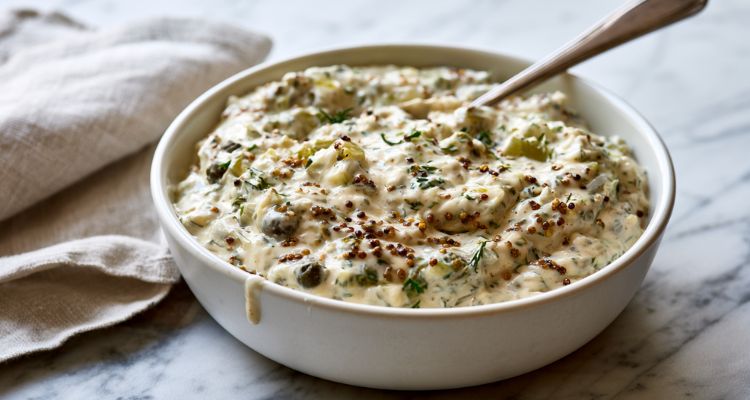
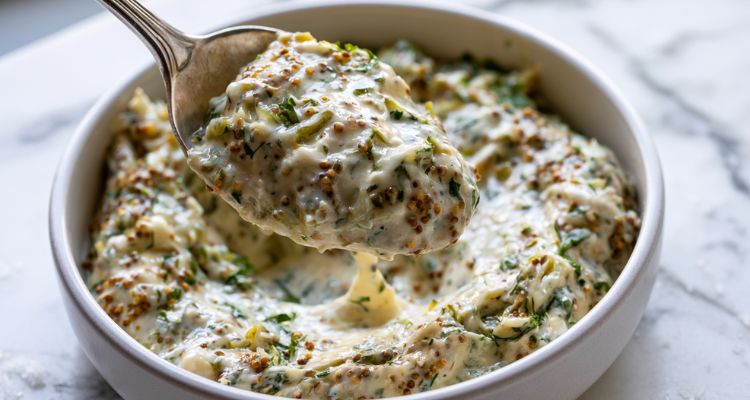
Imen Ina Garten Tartar Sauce is a five-minute, no-cook condiment that tastes brighter and sharper than anything from a jar. It uses Champagne vinegar and whole capers instead of the usual lemon and relish, which gives it a clean tang that cuts right through fried fish. The texture stays slightly chunky, so every bite has a little snap of cornichon or caper against the creamy base.
This recipe appeared on the Barefoot Contessa episode called “Good Catch,” where she served it alongside her homemade fish and chips. She pulses everything in a mini food processor just a few times, because she wants the sauce to have body and small pieces you can actually taste, not a smooth puree that disappears on the plate.
You get that sharp vinegar note first, then a gentle mustard warmth that lingers without heat. The capers add tiny bursts of salt that wake up every forkful of fish, and the whole thing comes together before the oil is even hot enough to fry.

Ina Garten Tartar Sauce
Description
A quick no-cook tartar sauce that uses Champagne vinegar, capers, and coarse mustard for a sharp, chunky condiment with real texture, perfect alongside fried seafood.
Instructions
- Place the mayonnaise, diced pickles, Champagne vinegar, capers, coarse-grained mustard, salt, and pepper into a food processor or mini chopper fitted with a steel blade.
- Pulse several times until the pickles are finely chopped and all the ingredients are well combined, but not pureed. You want small, visible pieces throughout the sauce for texture.
- Taste the sauce and adjust the salt and pepper if needed. Serve immediately or chill in the refrigerator until ready to use.
FAQs
Why does Ina Garten use Champagne vinegar instead of lemon juice in her tartar sauce?
Champagne vinegar gives a softer, rounder acidity that blends into the mayonnaise without making it thin or watery. Lemon juice can overpower the capers and pickles, but the vinegar sits in the background and lifts everything evenly. If you cannot find Champagne vinegar, white wine vinegar works the same way. Try this tangy approach with her Crab Cakes too, since the vinegar-based sauce complements crabmeat just as well.
Can I make this tartar sauce without a food processor?
You absolutely can, and Ina has mentioned that hand-chopping works fine if your knife is sharp. Just dice the pickles and capers as small as possible, then stir everything together in a bowl until the mayonnaise is evenly seasoned. The texture will be slightly more rustic, with bigger pieces of cornichon throughout, which some people actually prefer.
What type of pickles work best for this recipe?
Cornichons are the first choice because they are small, firm, and tart without any sweetness getting in the way. Standard dill pickles work too, but you should avoid bread-and-butter or sweet pickles since the sugar changes the balance of the sauce entirely. The pickles need to contrast with the rich mayonnaise, not compete with the vinegar for tartness.
How long does homemade tartar sauce last in the refrigerator?
It keeps well in a sealed container for up to five days, and many people find the flavour actually improves after a few hours because the vinegar and mustard have time to meld into the mayonnaise. After day five the capers and pickles start to release too much liquid, so the sauce becomes thin. You can stir it together with her Salmon Cakes for a weeknight dinner that comes together in under an hour.
Why does she pulse the food processor instead of running it continuously?
Pulsing keeps the sauce chunky, which is the whole point of homemade tartar sauce over the store-bought kind. Running the processor continuously would turn everything into a smooth puree and you would lose the small pieces of caper and pickle that give each bite texture. Three to five short pulses is usually enough to chop and combine without going too far.
What are the best dishes to serve with this tartar sauce?
It was designed for fish and chips, but the vinegar and caper flavours make it a natural fit for any fried or grilled seafood. It is especially good alongside Seafood Casserole where a cold, sharp sauce balances the richness of the gratin. You can also spoon it over simple pan-seared fish fillets or use it as a dipping sauce for roasted shrimp.
