
 Claire Dawson
 Gordon Ramsay’s Eggs Benedict is the gold standard of British-American brunch. This recipe focuses on a “cheat” hollandaise that is foolproof and a poaching technique that ensures restaurant-quality results every time. It’s the ultimate balance of salty bacon, buttery muffins, and that iconic, velvety citrus sauce.
Approach B: If you do nothing else, make sure your water is at a gentle simmer, not a rolling boil, when you drop the eggs. If the water is too aggressive, it will tear the delicate whites apart into a “spiderweb” mess. Gordon’s whirlpool technique is the secret here; it wraps the white around the yolk like a blanket, keeping everything neat and tidy.
The vinegar is doing more work than you’d think here. It doesn’t affect the flavor, but it helps the egg proteins coagulate faster, which is your best insurance policy against the eggs spreading out in the pan. I’ve found that using the blender for the hollandaise isn’t just a shortcut—it actually creates a more stable emulsion than whisking by hand, meaning your sauce won’t “split” while you’re toasting the muffins.
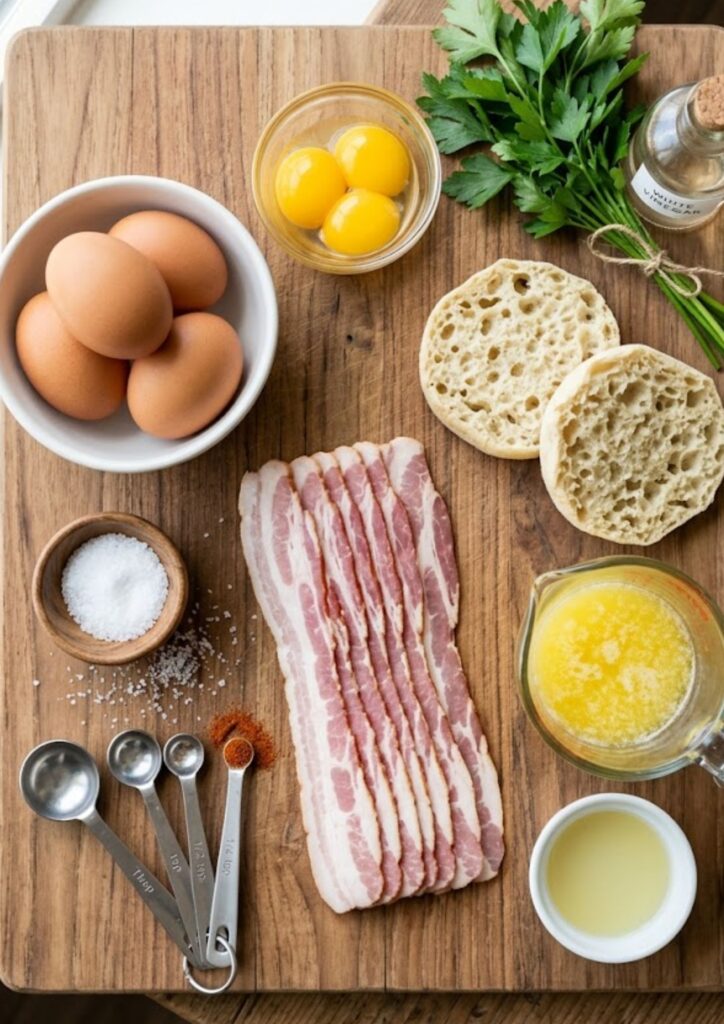
Gordon Ramsay’s Eggs Benedict Ingredients
For the Hollandaise:
- 10 tbsp unsalted butter, melted and hot
- 3 large egg yolks
- 1 tbsp lemon juice
- ½ tsp kosher salt
- Dash of cayenne pepper or Tabasco
For Assembly:
- 8 slices bacon (back bacon or streaky)
- 4 large eggs (as fresh as possible)
- 2 tsp white or rice vinegar
- 2 English muffins, halved
- Butter (for toasting)
- 2 tbsp chopped fresh parsley
How To Make Gordon Ramsay’s Eggs Benedict
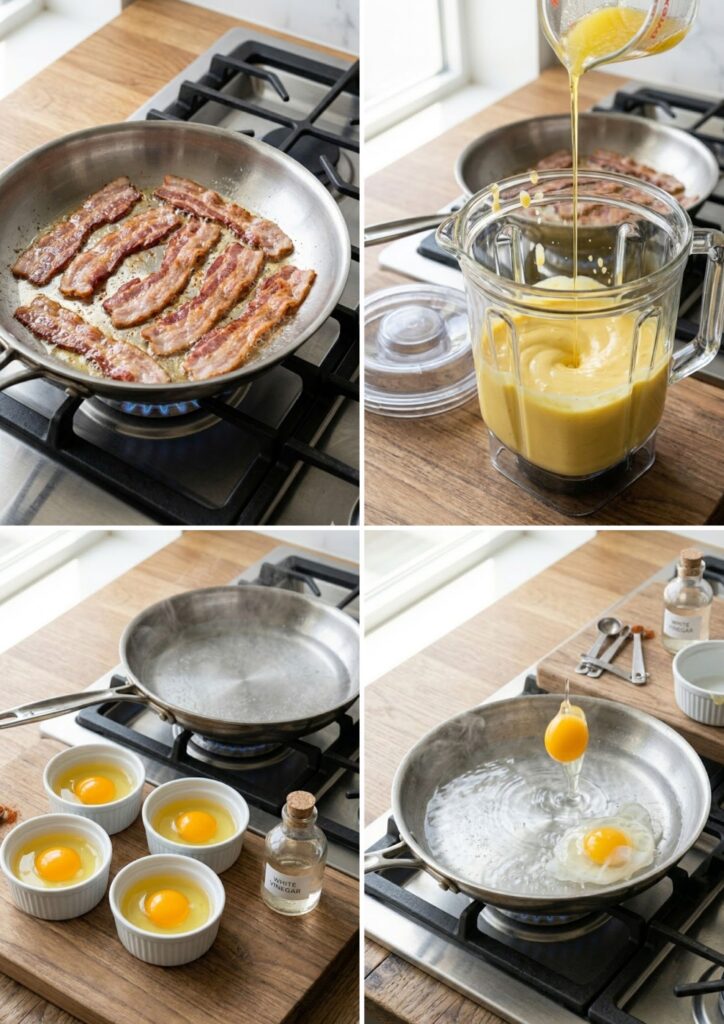
- 1. Cook the Bacon: Place bacon in a cold skillet and turn the heat to medium. Starting cold allows the fat to render out slowly, resulting in much crispier bacon. Cook until golden, then drain on paper towels.
- 2. Blend the Hollandaise: Place egg yolks, lemon juice, salt, and cayenne in a blender. Pulse for 5 seconds. With the motor running on its lowest setting, slowly drizzle in the hot melted butter in a thin, steady stream. The heat from the butter “cooks” the yolks while the blades emulsify them into a thick sauce. Keep this in a warm spot (like near the stove).
- 3. Prepare the Poaching Water: Fill a wide pan with water and add the vinegar. Bring it to a simmer. Crack each egg into its own small ramekin first—this makes it much easier to drop them into the water precisely.
- 4. The Whirlpool Method: Use a spoon to create a gentle whirlpool in the center of the simmering water. Drop an egg into the eye of the storm. The motion will help the whites wrap around the yolk. Cook for about 4 minutes for a classic runny yolk.
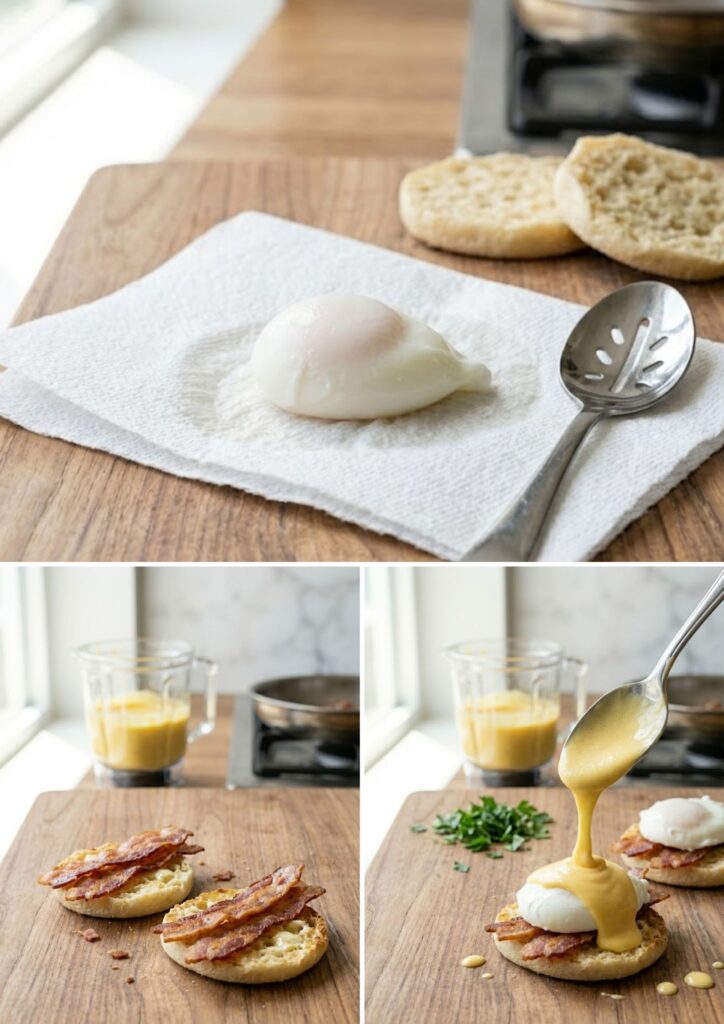
- 5. Toast and Assemble: Toast the English muffins and butter them generously. Lay two slices of bacon on each muffin half, followed by a poached egg (dab the bottom of the egg on a paper towel first so you don’t get a soggy muffin).
- 6. The Finish: Spoon a generous amount of warm hollandaise over the eggs. Garnish with parsley and a touch more cayenne if you like a bit of heat.
Recipe Tips
- Freshness is Key: The fresher the eggs, the stronger the proteins in the whites. If your eggs are older, the whites will be watery and harder to poach neatly.
- Warm the Blender: Before making the hollandaise, rinse your blender jar with hot water. This prevents the cold glass or plastic from cooling down the butter too quickly, which can cause the sauce to break.
- Don’t Salt the Water: Never add salt to your poaching water. Salt breaks down egg whites, making them wispy. Save the seasoning for the finished dish.
- The “Dab” Technique: Always rest your poached egg on a piece of kitchen paper for two seconds after removing it from the water. This removes excess moisture so the hollandaise stays thick and doesn’t run off the egg.
What To Serve With Gordon Ramsay’s Eggs Benedict Recipe
- Roasted Tomatoes: A few vine-ripened tomatoes roasted with olive oil add a nice acidity.
- Asparagus: Gordon often serves his with blanched asparagus tips for a bit of green crunch.
- Champagne or Mimosas: The high acidity in sparkling wine cuts through the richness of the hollandaise perfectly.

How To Store Gordon Ramsay’s Eggs Benedict Recipe
- Hollandaise: This sauce does not store or reheat well as it will split. It is best made fresh and eaten immediately.
- Poached Eggs: You can actually poach eggs ahead of time! Store them in a bowl of cold water in the fridge for up to 24 hours. To reheat, just drop them into hot (not boiling) water for 1 minute.
Gordon Ramsay’s Eggs Benedict Nutrition Facts
Per serving (2 halves):
| Nutrient | Amount |
| Calories | 710 kcal |
| Protein | 28g |
| Total Fat | 56g |
| Carbs | 24g |
| Sodium | 1,250mg |
FAQs
How do I prevent my eggs from becoming a “wispy mess”?
The secret is twofold: vinegar and freshness. Add about 3 tablespoons of white wine vinegar to at least 2 liters of water. The acid helps the proteins coagulate instantly. Use the freshest eggs possible; older eggs have “watery” whites that create those thin, messy threads.
What is the “vortex” method?
Gently swirl the simmering water with a spoon to create a whirlpool. Slip the egg (cracked into a ramekin first!) into the center. The momentum of the water wraps the whites around the yolk for a neat, spherical shape.
How do I know when the eggs are done?
Ramsay notes that when the eggs begin to float toward the surface, it’s a sign they are nearly ready. Gently press the yolk with your finger; it should feel like a soft mozzarella ball—firm on the outside but liquid in the middle. This usually takes 2–3 minutes.
How do I avoid a soggy muffin?
This is Ramsay’s pro-tip: Always lift the poached egg with a slotted spoon and place it onto a paper towel for a few seconds before plating. This absorbs excess water that would otherwise soak into your toasted muffin.

Try More Gordon Ramsay Recipes:
- Gordon Ramsay’s Mushroom Risotto Recipe
- Gordon Ramsay’s Pear and Saffron Chutney Recipe
- Gordon Ramsay’s Glazed Carrots Recipe

Gordon Ramsay’s Eggs Benedict Recipe
Description
Gordon Ramsay’s Eggs Benedict is a masterclass in elevating a classic breakfast without the restaurant-level stress. By utilizing a foolproof, lightning-fast blender hollandaise and perfectly rendered cold-pan bacon, this recipe takes the intimidation right out of the dish. The combination of crispy, salty bacon, a beautifully runny poached egg, and rich, buttery hollandaise piled high on a toasted English muffin makes this the undisputed king of Sunday brunch.
Ingredients
For the Hollandaise:
For Assembly:
Instructions
- Cook the Bacon: Place bacon in a cold skillet and turn the heat to medium. Starting cold allows the fat to render out slowly, resulting in much crispier bacon. Cook until golden, then drain on paper towels.
- Blend the Hollandaise: Place egg yolks, lemon juice, salt, and cayenne in a blender. Pulse for 5 seconds. With the motor running on its lowest setting, slowly drizzle in the hot melted butter in a thin, steady stream. The heat from the butter “cooks” the yolks while the blades emulsify them into a thick sauce. Keep this in a warm spot (like near the stove).
- Prepare the Poaching Water: Fill a wide pan with water and add the vinegar. Bring it to a simmer. Crack each egg into its own small ramekin first—this makes it much easier to drop them into the water precisely.
- The Whirlpool Method: Use a spoon to create a gentle whirlpool in the center of the simmering water. Drop an egg into the eye of the storm. The motion will help the whites wrap around the yolk. Cook for about 4 minutes for a classic runny yolk.
- Toast and Assemble: Toast the English muffins and butter them generously. Lay two slices of bacon on each muffin half, followed by a poached egg (dab the bottom of the egg on a paper towel first so you don’t get a soggy muffin).
- The Finish: Spoon a generous amount of warm hollandaise over the eggs. Garnish with parsley and a touch more cayenne if you like a bit of heat.
Notes
-
Freshness is Key: The fresher the eggs, the stronger the proteins in the whites. If your eggs are older, the whites will be watery and harder to poach neatly.
Warm the Blender: Before making the hollandaise, rinse your blender jar with hot water. This prevents the cold glass or plastic from cooling down the butter too quickly, which can cause the sauce to break.
Don’t Salt the Water: Never add salt to your poaching water. Salt breaks down egg whites, making them wispy. Save the seasoning for the finished dish.
The “Dab” Technique: Always rest your poached egg on a piece of kitchen paper for two seconds after removing it from the water. This removes excess moisture so the hollandaise stays thick and doesn’t run off the egg.