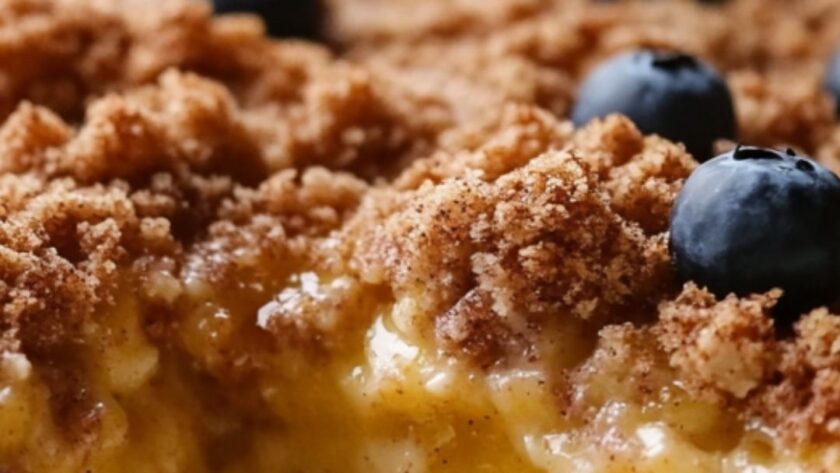
 Claire Dawson
 Pioneer Woman French Bread Casserole is a make-ahead breakfast bake loaded with cubed French bread, a vanilla egg custard, and a cinnamon-brown sugar streusel, ready in about an hour with 15 minutes of hands-on prep.
Ree published this on thepioneerwoman.com as “Baked French Toast” and on Food Network as “Cinnamon Baked French Toast.” The technique is exactly what most cooks call a French bread casserole: bread soaked in custard overnight, topped with a crumb mixture, and baked in one pan.
The overnight soak is the step you cannot rush. The bread needs hours to absorb the custard all the way through, because a short soak leaves dry pockets in the center that no amount of extra baking will fix.
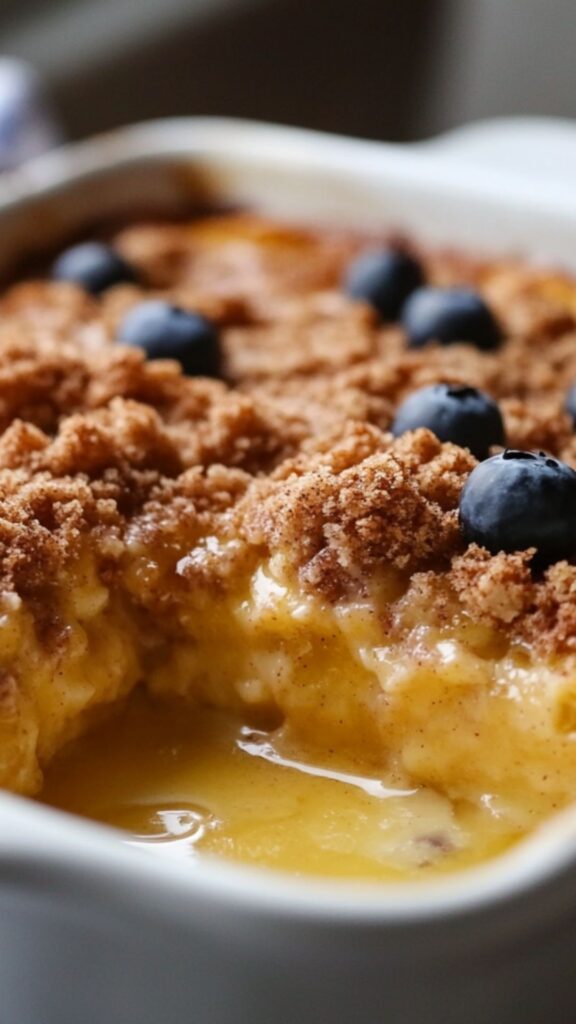

Pioneer Woman French Bread Casserole
Description
Cubed crusty bread soaks overnight in a rich egg and cream custard, then bakes under a buttery cinnamon streusel until golden and puffed. One pan feeds a full table with zero stovetop flipping.
Ingredients
For the casserole:
For the streusel topping:
For serving:
Instructions
- Grease the pan. Butter a 9×13 inch baking dish thoroughly.
- Fill with bread. Tear the loaf into rough bite-size chunks and spread them evenly across the pan.
- Make the custard. Crack the eggs into a large bowl. Whisk in the milk, cream, granulated sugar, brown sugar, and vanilla until smooth.
- Pour and soak. Pour the custard evenly over the bread, pressing any dry pieces down gently. Cover tightly with plastic wrap and refrigerate overnight, or at least 4 hours.
- Make the streusel. In a separate bowl, combine the flour, brown sugar, cinnamon, salt, and nutmeg if using. Add the cold butter pieces and cut in with a pastry cutter or fork until the mixture looks like fine pebbles. Store in a zip-top bag in the fridge until ready to bake.
- Preheat the oven. Heat the oven to 350F (180C).
- Top and bake. Remove the casserole from the fridge and sprinkle the streusel evenly over the top. Bake uncovered for 45 minutes for a softer, bread pudding texture, or a full hour for a firmer, crispier top.
- Serve warm. Scoop individual portions and top with butter, warm syrup, and fresh blueberries if using.
FAQs
Why does Ree use both granulated and brown sugar in the custard?
The granulated sugar sweetens the custard cleanly, while the brown sugar adds a caramel depth that you taste most in the soft center of the casserole. Together they create a more layered flavor than either one alone.
Dropping either sugar changes the result. All granulated makes it taste flat. All brown sugar pushes it toward sticky and one-note, so the split is worth measuring out.
Why tear the bread instead of slicing it?
Torn chunks have rough, uneven surfaces that grip the custard and hold more liquid than smooth sliced faces. Those jagged edges also crisp up under the streusel, giving you crunchy bits mixed into the softer interior.
Neat cubes or slices soak unevenly because the crust side repels liquid while the cut side absorbs it. Tearing solves that by exposing more of the bread’s open crumb to the egg mixture.
What happens if you skip the overnight soak and bake it right away?
Ree says you can bake it immediately and it will still taste good. The difference is in texture: a same-day bake has firmer bread pieces and a less custardy center because the egg mixture sits mostly around the chunks instead of inside them.
If you are short on time, give it at least 2 hours in the fridge and press the bread down into the custard every 30 minutes. Four hours gets you close to the overnight result.
Why cut the butter into the streusel cold instead of melting it?
Cold butter pieces create pockets of fat that melt during baking and leave behind crisp, flaky layers in the topping. Melted butter would turn the streusel into a paste that bakes flat and dense instead of crumbly.
Keep the butter cold until the moment you cut it in, and stop mixing when the pieces look like small pebbles. Overworking it turns the topping greasy, so a few larger crumbs are better than a fine, sandy texture.
Why bake uncovered for the entire time?
Covering the casserole traps steam and keeps the streusel from ever crisping. The uncovered bake lets moisture escape from the surface so the topping turns golden and crunchy while the center stays soft.
If the top browns too fast before the center sets, tent loosely with foil for the last 10 minutes. Start checking at 40 minutes by pressing the center gently: it should feel set but still have a slight give, not liquid.