 Imen
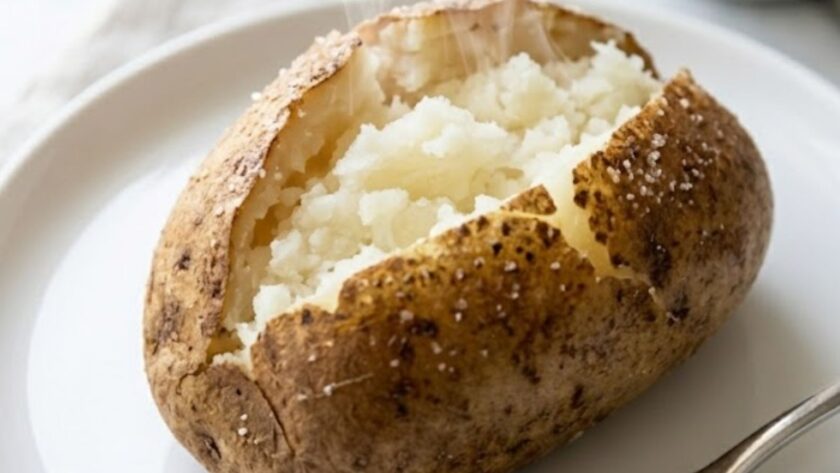
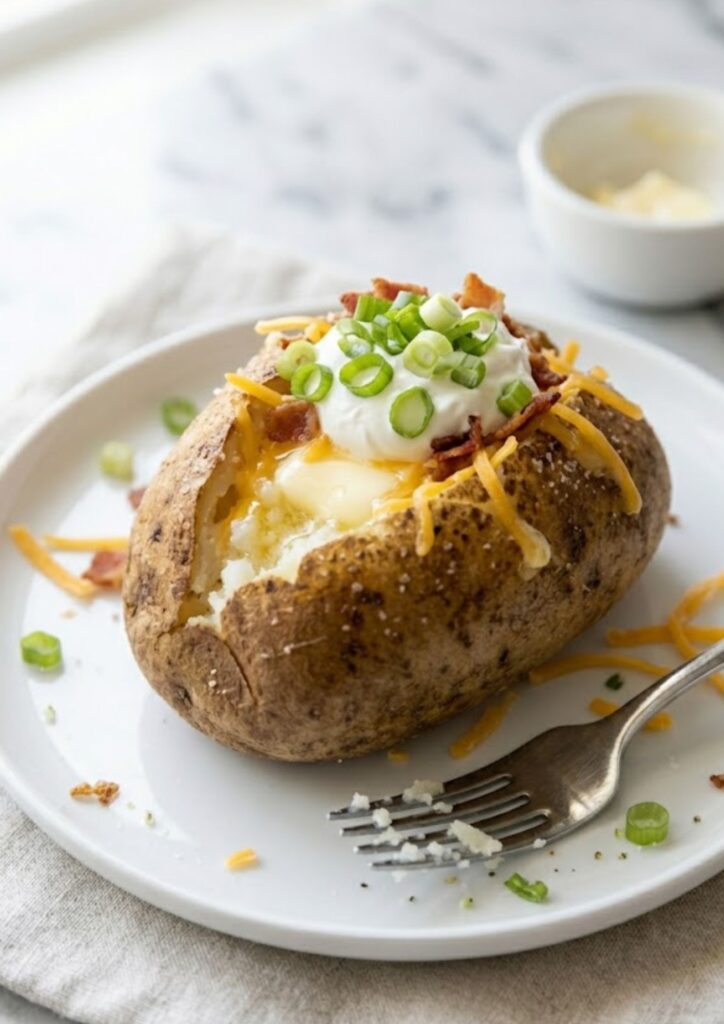
Imen Alton Brown’s approach to the Baked Potato is a masterclass in food science. While most people make the mistake of wrapping potatoes in foil—which essentially steams the skin into a soggy mess—Alton insists on placing them directly on the oven rack. This allows hot air to circulate around the entire potato, resulting in a skin that is incredibly crisp and salty, contrasted with an interior that is fluffy and light.
The first time I tried this, I was worried about the mess, but that foil-lined pan on the bottom rack catches every drop of oil. The real secret here is the internal temperature. Most people guess when a potato is done; Alton uses a thermometer to hit that 205–210°F sweet spot where the starch granules fully burst, giving you that perfect “cloud-like” texture.
If you do nothing else, poke those holes! It’s not just a myth—it allows steam to escape so the potato doesn’t build up internal pressure, ensuring the inside stays dry and fluffy rather than gummy.
Alton Brown Baked Potato Ingredients
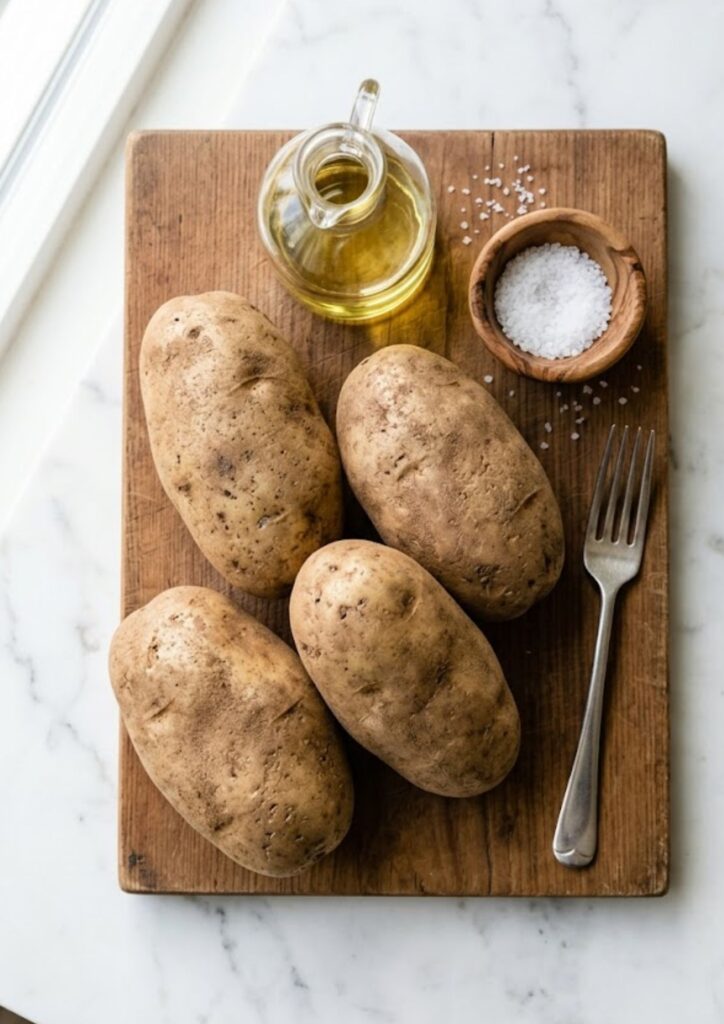
- 4 large russet potatoes (approx. 14 oz each)
- 1 tbsp canola oil (or any high-smoke point oil)
- 2 tsp kosher salt
- Optional toppings: Butter, sour cream, shredded cheddar, scallions, or bacon bits.
How To Make Alton Brown’s Baked Potato
- 1. Heat the Oven: Position one rack in the middle and one in the bottom third. Preheat to 350°F (175°C).
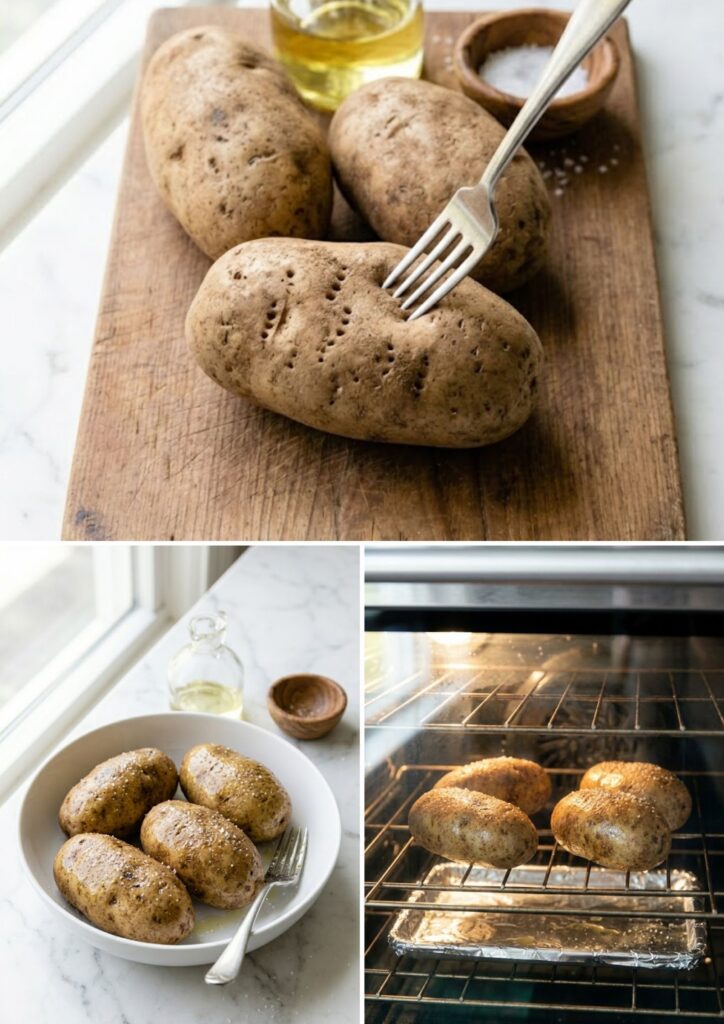
- 2. Prep the Spuds: Scrub the potatoes clean and dry them thoroughly. Use a fork to poke 8 to 12 deep holes all over each potato.
- 3. The Oil & Salt Coating: Rub the potatoes with the canola oil until lightly coated, then sprinkle the kosher salt evenly over the skin.
- 4. The Rack Method: Place the potatoes directly on the middle oven rack. Slide a foil-lined baking sheet onto the lower rack beneath them to catch any oil drips.
- 5. Bake: Cook for approximately 1 hour and 15 minutes. For technical perfection, check the internal temperature; you are looking for 205–210°F (96–99°C).
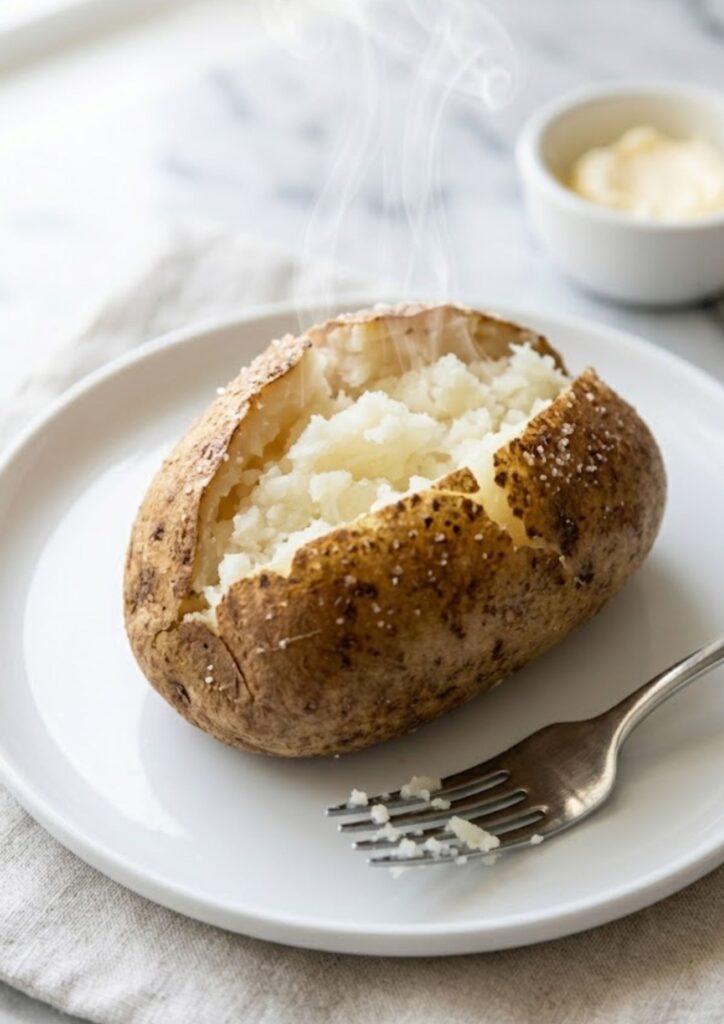
- 6. The “Fluff” Technique: Remove from the oven. Immediately use a fork to poke a line of holes across the top (this lets steam out so it doesn’t get soggy). Squeeze the ends toward the center to “blossom” the potato open. Serve immediately.
Recipe Tips for Success
- Why Russets? Russets are high-starch potatoes. Their low moisture content is exactly what you want for a fluffy interior. Waxy potatoes (like Red Bliss) will never get that “powdery” texture.
- Avoid the Foil: Wrapping in foil traps moisture. If you want a crispy, flavorful skin that tastes as good as the inside, the rack method is non-negotiable.
- The Slit vs. The Fork: Don’t use a knife to cut the potato open; use a fork. A knife “shears” the starch cells and makes the surface smooth. A fork breaks them apart unevenly, which creates more surface area for butter to melt into.
What To Serve With Alton Brown Baked Potato
- Steak: A pan-seared ribeye or Alton’s own reverses-seared steak.
- Meatloaf: The savory glaze of a classic meatloaf is the perfect companion to a buttery potato.
- Roasted Chicken: A simple lemon-herb chicken or crispy-skin chicken thighs.
Storage & Reheating Guide
- Refrigeration: Once completely cooled, wrap the potatoes in foil or place them in a container. They will last for 3 to 5 days in the fridge.
- Reheating (The Only Way): To restore the crispy skin, place the potato directly on the oven rack (or an air fryer) at 350°F (175°C) for about 15–20 minutes.
- Leftover Hack: Cold baked potatoes are perfect for making home fries. Slice them up and fry them in a skillet with a little oil and onion the next morning!
Alton Brown Baked Potato Nutrition Facts (Estimated per potato, plain)
| Nutrient | Amount |
| Calories | 310 kcal |
| Protein | 8g |
| Fat | 4g |
| Carbohydrates | 64g |
| Fiber | 7g |
| Sodium | 1,160mg |
FAQs
Can I use olive oil instead of canola?
Yes, but canola oil is preferred because it has a higher smoke point. Extra virgin olive oil can sometimes smoke or develop a bitter flavor during a long 75-minute bake.
My skin isn’t crispy. What happened?
The potatoes were likely still damp when you oiled them. Water is the enemy of crispiness! Make sure they are bone-dry before the oil hits the skin.
Can I bake these Alton Brown Baked Potato faster at a higher heat?
You can, but the skin may overcook before the center reaches that perfect 205°F. The 350°F temperature allows for a steady, even heat transfer.
Try More Recipes:

Alton Brown Baked Potato Recipe
Description
Alton Brown’s approach to the Baked Potato is purely scientific, focusing on starch gelatinization and moisture evaporation to achieve a “cloud-like” interior and a crispy, salty skin. By ditching the foil and using the rack method, he treats the potato like a precision instrument rather than a side dish.
Ingredients
Instructions
- Heat the Oven: Position one rack in the middle and one in the bottom third. Preheat to 350°F (175°C).
- Prep the Spuds: Scrub the potatoes clean and dry them thoroughly. Use a fork to poke 8 to 12 deep holes all over each potato.
- The Oil & Salt Coating: Rub the potatoes with the canola oil until lightly coated, then sprinkle the kosher salt evenly over the skin.
- The Rack Method: Place the potatoes directly on the middle oven rack. Slide a foil-lined baking sheet onto the lower rack beneath them to catch any oil drips.
- Bake: Cook for approximately 1 hour and 15 minutes. For technical perfection, check the internal temperature; you are looking for 205–210°F (96–99°C).
- The “Fluff” Technique: Remove from the oven. Immediately use a fork to poke a line of holes across the top (this lets steam out so it doesn’t get soggy). Squeeze the ends toward the center to “blossom” the potato open. Serve immediately.
Notes
-
Why Russets? Russets are high-starch potatoes. Their low moisture content is exactly what you want for a fluffy interior. Waxy potatoes (like Red Bliss) will never get that “powdery” texture.
Avoid the Foil: Wrapping in foil traps moisture. If you want a crispy, flavorful skin that tastes as good as the inside, the rack method is non-negotiable.
The Slit vs. The Fork: Don’t use a knife to cut the potato open; use a fork. A knife “shears” the starch cells and makes the surface smooth. A fork breaks them apart unevenly, which creates more surface area for butter to melt into.
