 Hamdi Saidani
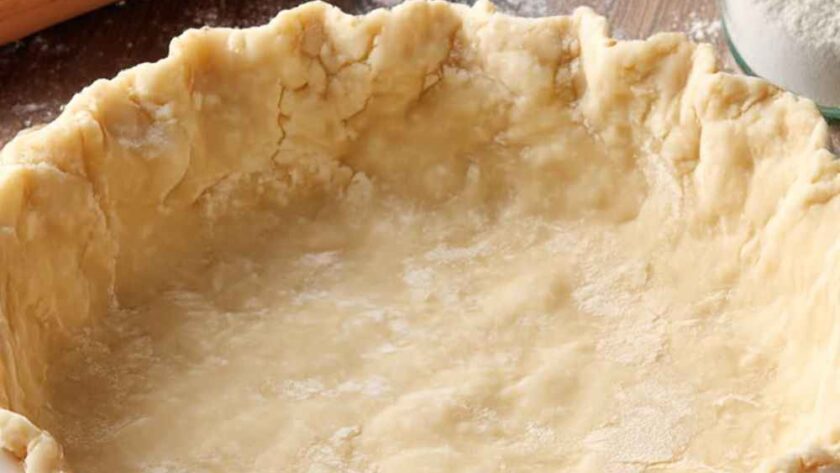
 This Pioneer Woman Pie Dough is a flaky and tender recipe, which is made with both butter and vegetable shortening. It’s a classic, foolproof recipe, ready for your favorite filling in about 45 minutes.
Pioneer Woman Pie Dough Recipe Ingredients
- 3 cups all-purpose flour, plus more for dusting
- 1 tsp. kosher salt
- 3/4 cup cold vegetable shortening, cut into pieces
- 3/4 cup (1 1/2 sticks) cold salted butter, cut into pieces
- 1 large egg
- 4 Tbsp. ice water, plus more as needed
- 1 Tbsp. distilled white vinegar
How To Make Pioneer Woman Pie Dough
- Cut in the Fats: In a large bowl, mix together the flour and salt. Add the pieces of cold shortening and cold butter. Use a pastry cutter or your fingertips to work the fats into the flour until the mixture resembles coarse crumbs with some pea-sized pieces remaining.
- Add the Liquids: In a small bowl, lightly beat the egg with a fork. Pour it into the flour mixture. Add the ice water and the vinegar. Use a fork to gently stir everything together until the dough just starts to come together and holds when pinched. If it’s too dry, add more ice water, 1 teaspoon at a time.
- Divide and Chill: Divide the dough into two equal pieces. Form each piece into a ball, then flatten it into a 1/2-inch thick disk. Place each disk in a separate zip-top bag, seal, and place them in the freezer for about 30 minutes, or in the refrigerator for at least 1 hour, until firm.
- Roll Out the Crust: When you are ready to use the dough, remove one disk from the freezer. On a generously floured surface, roll out the dough with a rolling pin into a circle that is approximately 2 inches larger than your pie plate.
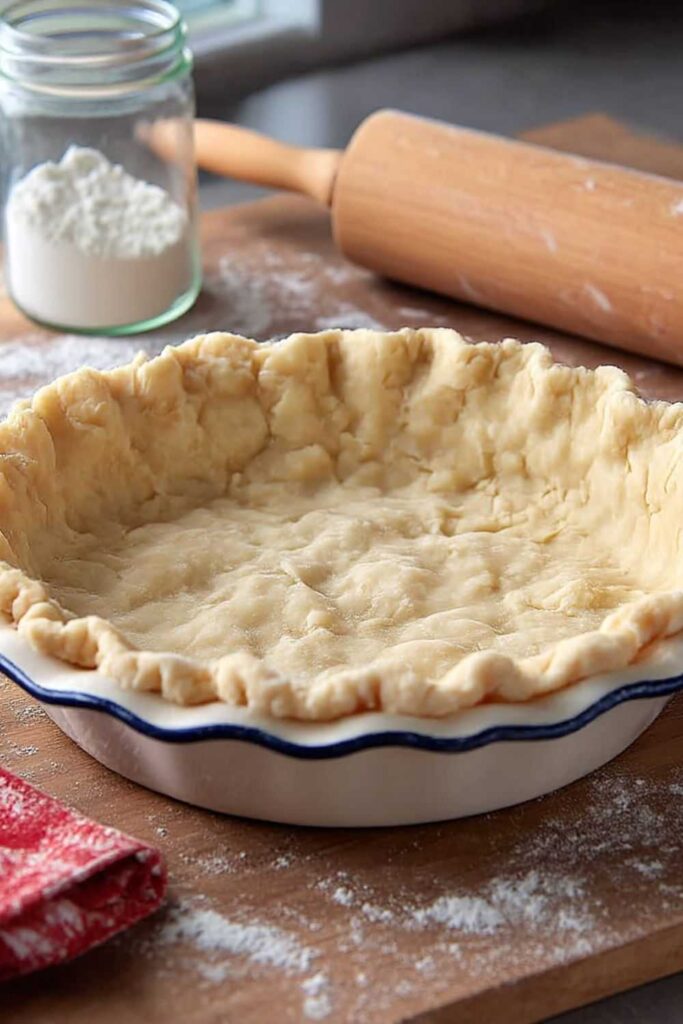
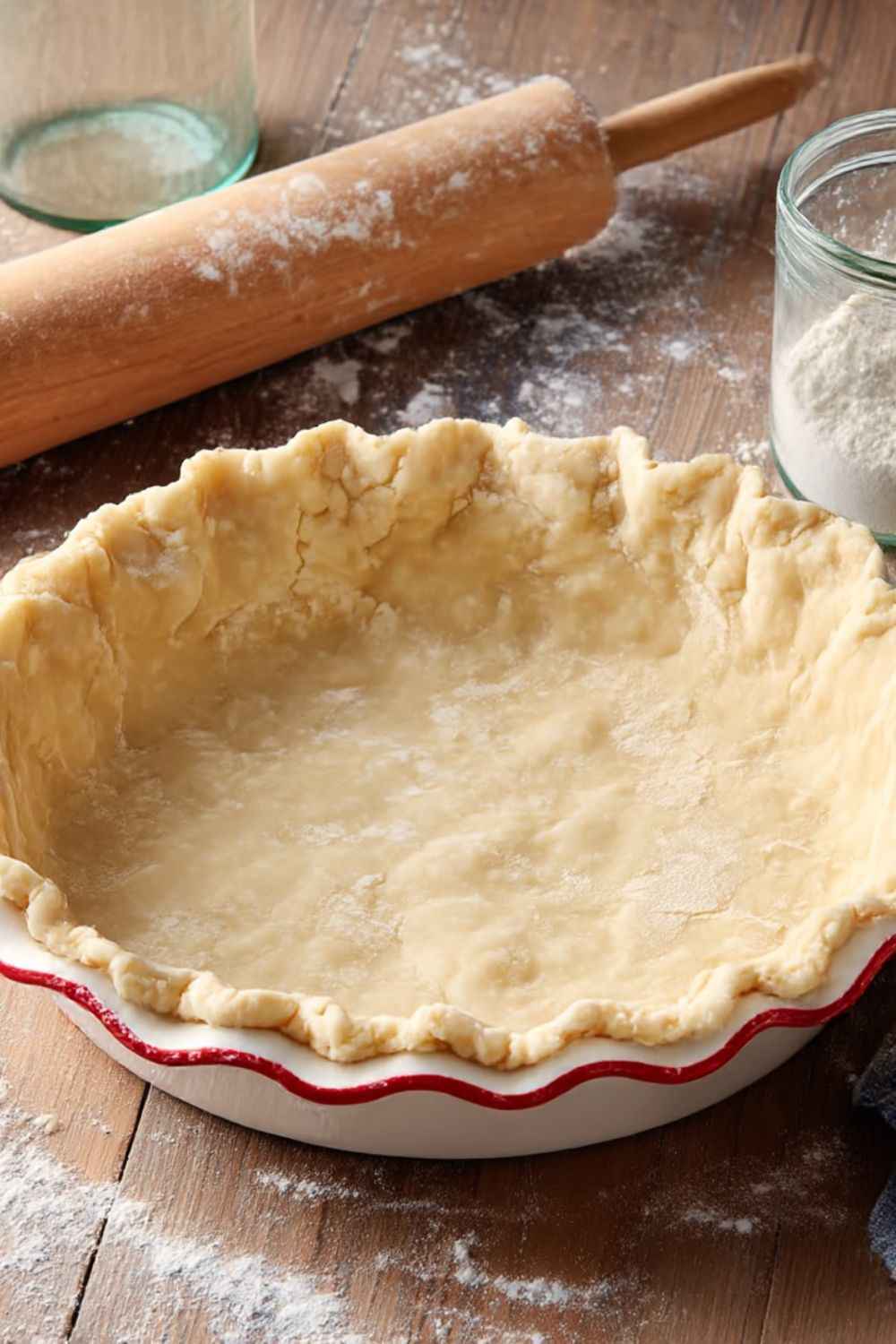
- Fit into the Pan: Carefully transfer the dough to a 9-inch pie plate. Gently lift the edges of the dough and allow it to settle snugly into the bottom and sides of the pan without stretching it. Trim any excess dough, leaving about a 1-inch overhang. Tuck this overhang under itself to create a clean edge, then crimp or flute the edges as desired. The crust is now ready to be filled or par-baked according to your pie recipe.
Recipe Tips
- How to get a super flaky crust? The secret is using very cold ingredients. Your butter, shortening, and water should be ice-cold. This ensures that the fats don’t melt into the flour, but instead create small pockets that turn into steam in the oven, resulting in flaky layers.
- Why is my pie crust tough? A tough pie crust is almost always the result of overworking the dough, especially after adding the water. Mix only until the dough just comes together. The less you handle it, the more tender it will be.
- Why use both butter and shortening? This combination gives you the best of both worlds! Shortening creates a crust that is exceptionally tender and flaky, while butter provides a rich, delicious flavor.
- Do I have to chill the dough? Yes, this step is crucial and not optional. Chilling the dough allows the gluten to relax (which prevents the crust from shrinking during baking) and firms up the fats, which makes the dough easier to roll out and results in a flakier final product.
What To Use This Pie Dough For
This is a versatile, all-purpose pie crust that is perfect for a wide variety of both sweet and savory pies. Use it to make a double-crust pie or two single-crust pies. It’s a perfect base for:
- Classic Apple Pie or Pumpkin Pie
- A summer Peach or Berry Pie
- A savory Chicken Pot Pie or Quiche
How To Store Pie Dough
- Refrigerate: Wrap the disc of dough tightly in plastic wrap. It can be stored in the refrigerator for up to 3 days before rolling out and baking.
- Freeze: For longer storage, wrap the dough disc in plastic wrap and then a layer of foil. It can be frozen for up to 3 months. Thaw it overnight in the refrigerator before using.
Pie Dough Nutrition Facts
- Serving: 1/16th of dough (for a double crust)
- Calories: 240 kcal
- Carbohydrates: 18g
- Protein: 3g
- Fat: 17g
- Saturated Fat: 8g
- Sodium: 250mg
Nutrition information is estimated and may vary based on ingredients and cooking methods used.
FAQs
Why is there vinegar in this pie dough?
The small amount of acid from the vinegar helps to tenderize the gluten strands in the flour. This is a classic trick that acts as an insurance policy to help make the crust more tender and less prone to becoming tough.
Why did my pie crust shrink in the pan?
Shrinking is almost always caused by a dough that was either overworked or not allowed to rest and chill properly before baking. Chilling the dough for at least 30-60 minutes allows the gluten to relax, which is the key to preventing the crust from shrinking away from the sides of the pan as it bakes.
Can I make this dough in a food processor?
Yes, a food processor makes it very easy. Pulse the flour, salt, and fats together until you have coarse crumbs. In a small bowl, whisk the egg, water, and vinegar, then drizzle it in while pulsing just until the dough starts to come together. Be careful not to overmix.
Try More Pioneer Woman Recipes:
- Pioneer Woman Key Lime Pie Recipe
- Pioneer Woman Pecan Pie Bars Recipe
- Pioneer Woman Peanut Butter Pie Recipe

Pioneer Woman Pie Dough Recipe
Description
A perfectly flaky and tender all-purpose pie crust made with a combination of butter for flavor and shortening for texture, making it foolproof for any sweet or savory pie.
Ingredients
Instructions
- In a large bowl, mix the flour and salt. Cut in the cold shortening and butter with a pastry blender until the mixture resembles coarse crumbs.
- In a small bowl, beat the egg, then stir in the ice water and vinegar.
- Add the liquid mixture to the flour and stir with a fork until the dough just comes together.
- Divide the dough in two, flatten each into a disk, wrap in plastic, and chill for at least 30 minutes.
- Roll out on a floured surface to use in your favorite pie recipe.
Notes
- u003cliu003eThe most important tip for a flaky crust is to use very cold butter, shortening, and ice water, and not to over-handle the dough.u003c/liu003eu003cliu003eThe most important tip for a flaky crust is to use very cold butter, shortening, and ice water, and not to over-handle the dough.u003c/liu003eu003cliu003eThe combination of butter (for flavor) and shortening (for flakiness) is the secret to this perfect, reliable pie crust.u003c/liu003eu003cliu003eDo not overwork the dough, especially after adding the water, as this will result in a tough crust.u003c/liu003e
