 Hamdi Saidani
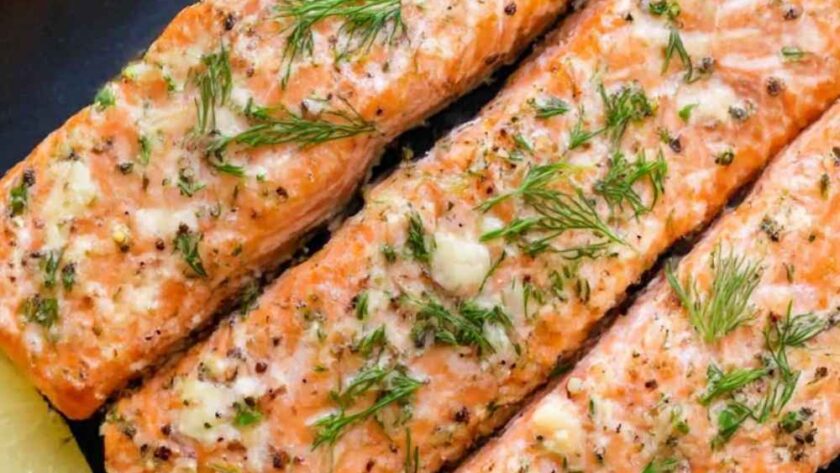
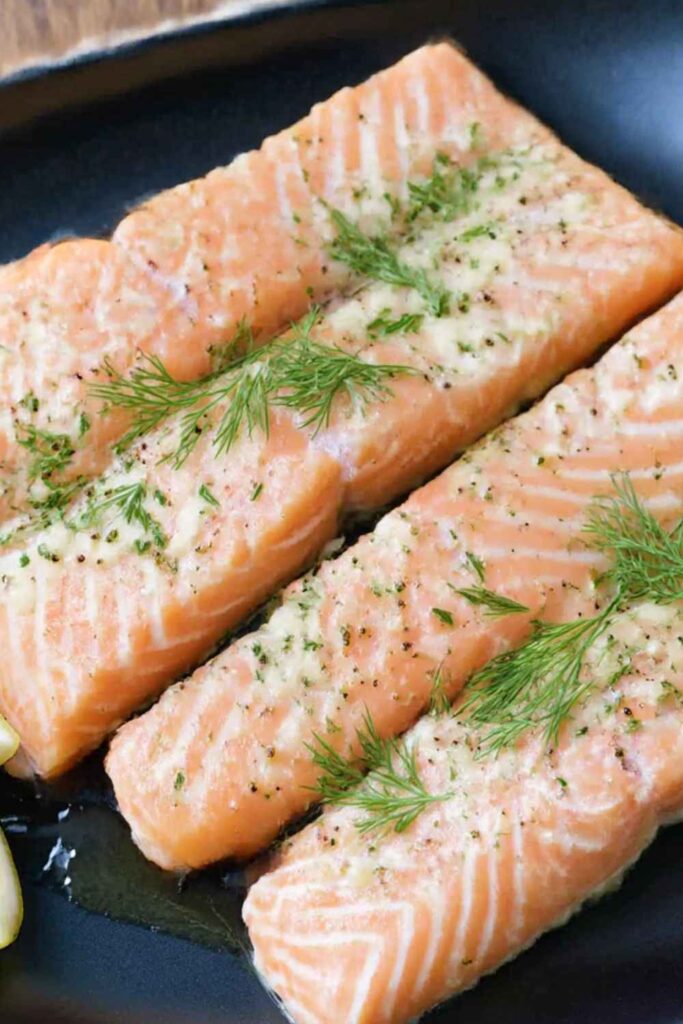
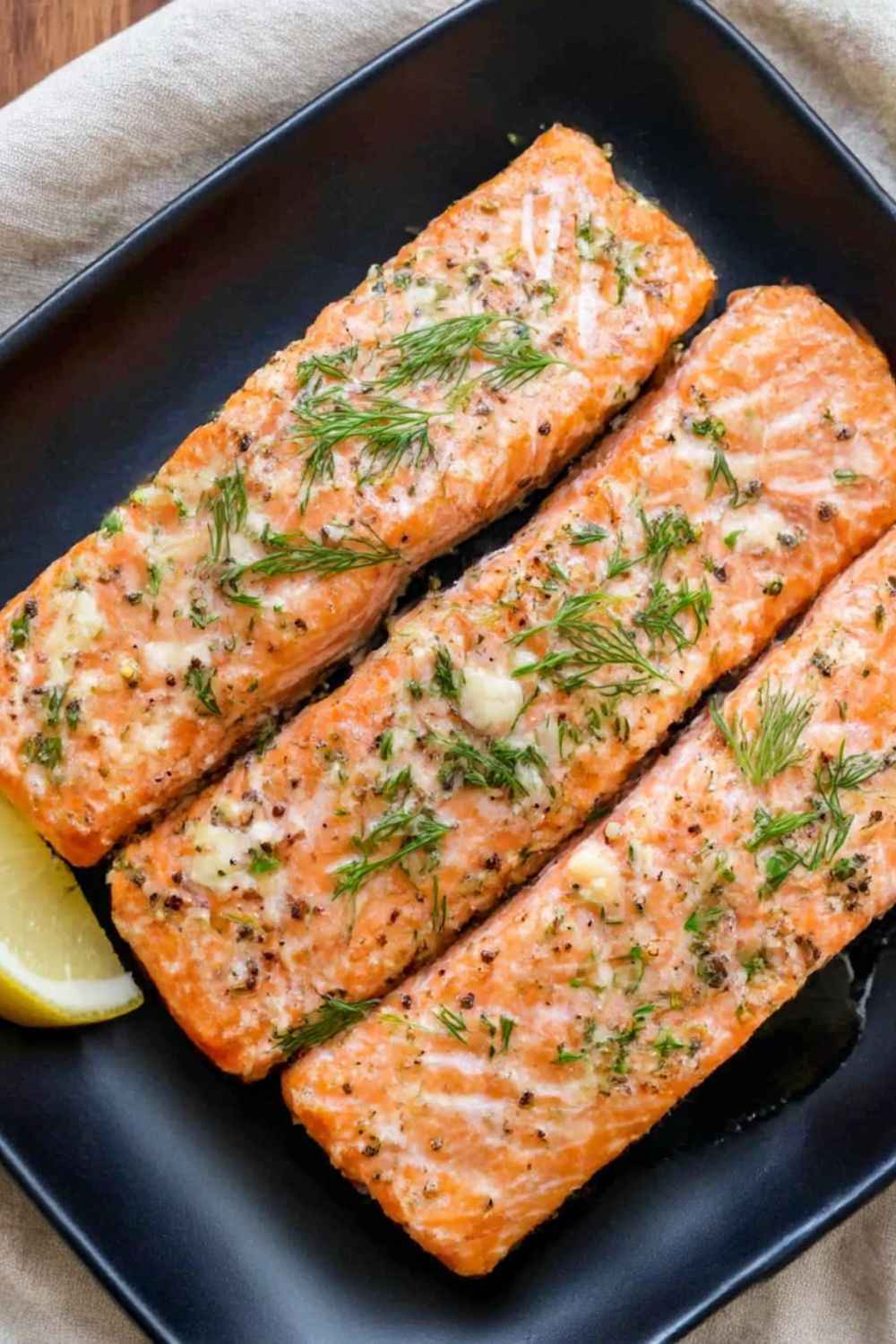
 This Gordon Ramsay Poached Salmon is a light, elegant, and incredibly flavorful recipe, which uses a gentle poaching method in an aromatic broth to create a perfectly tender and moist fillet. Full of clean, fresh flavor in every bite, this is a foolproof way to cook salmon, ready in under 20 minutes.
Gordon Ramsay Poached Salmon Ingredients
For the Poaching Liquid:
- 2 cups water
- 1/2 cup dry white wine (like Sauvignon Blanc)
- 1 shallot, thinly sliced
- 1/2 lemon, cut into thin slices
- A few sprigs of fresh dill, parsley, and thyme
- 5–6 black peppercorns
- 1 tsp Kosher salt
For the Salmon & Finish:
- 1 lb salmon fillet, skin removed, cut into 4 portions
- Freshly ground black pepper
- High-quality extra virgin olive oil, for drizzling
- Extra fresh dill or parsley, for garnish
- Lemon wedges, for serving
How To Make Gordon Ramsay Poached Salmon
- Create the Aromatic Broth: In a wide, shallow skillet, combine the water, white wine, sliced shallot, lemon slices, fresh herbs, peppercorns, and salt. Bring the mixture to a gentle boil, then immediately lower the heat to a bare simmer. Let it cook for 5 minutes to allow all the aromatics to infuse the liquid. Taste the broth; it should be pleasantly seasoned.
- Poach the Salmon: Reduce the heat to the lowest setting to keep the liquid at a gentle poach, between 160–175°F (71–79°C). There should be no bubbling. Carefully add the salmon portions to the liquid in a single layer.
- Cook Until Tender: Poach the salmon for 5–6 minutes for a medium-rare center, or until the internal temperature reaches ~135°F (57°C). The fish should be opaque and flake easily.
- Rest and Serve: Using a fish spatula, carefully lift the salmon fillets out of the poaching liquid and let them rest on a plate for 1–2 minutes. To serve, place a fillet on each plate, drizzle with a little high-quality olive oil, sprinkle with fresh pepper and extra chopped herbs, and serve immediately with fresh lemon wedges.
Recipe Tips
- How to get perfectly cooked, not dry, salmon? The two most important secrets are temperature control and resting. The poaching liquid must be kept at a very gentle, sub-simmer temperature (no bubbles). Overcooking is the enemy of salmon; use a thermometer and pull it from the liquid when it’s slightly under your desired doneness. The 1-2 minute rest allows the residual heat to finish the cooking perfectly.
- Why does the poaching liquid matter so much? As the recipe notes, taste your poaching liquid before you add the fish. It should taste like a delicious, lightly herbed broth. The salmon will absorb these flavors as it cooks, so a well-seasoned liquid is the non-negotiable key to a flavorful final dish.
- Can I make this ahead of time? This dish is best served fresh. However, you can make the poaching liquid ahead of time and store it in the fridge. Gently reheat it on the stove before you’re ready to cook the salmon.
- What’s the best tool for handling the fish? A thin, flexible fish spatula is essential. The poached salmon will be very delicate, and a regular, thick spatula can easily break the fillet apart as you try to lift it from the pan.
What To Serve With Poached Salmon
This is a light and healthy main course that pairs beautifully with simple, fresh sides. Serve it with:
- Steamed new potatoes tossed in butter and fresh dill.
- Tender steamed asparagus with a squeeze of lemon.
- A simple cucumber and dill salad.
- A dollop of yogurt or crème fraîche on the side.
How To Store Poached Salmon
- Best Eaten Fresh: This dish is at its absolute best when it is served warm and fresh from the pot.
- Refrigerate: If you have leftovers, let them cool completely and store in an airtight container in the refrigerator for up to 2 days.
- Leftover Ideas: Chilled, flaked poached salmon is fantastic on top of a salad, mixed into a pasta dish, or used to make a simple salmon spread with mayonnaise and herbs.
Poached Salmon Nutrition Facts
- Serving: 1 fillet
- Calories: 380 kcal
- Carbohydrates: 5g
- Protein: 42g
- Fat: 22g
- Saturated Fat: 4g
- Sodium: 850mg
Nutrition information is estimated and may vary based on ingredients and cooking methods used.
FAQs
Why is my salmon tough?
Tough or rubbery poached salmon is always the result of the cooking liquid being too hot (boiling instead of gently poaching) or from simply overcooking the fish. Low, gentle heat and a short cooking time are key.
Do I have to use wine?
No. The wine adds a crucial layer of acidity and aromatic depth to the broth. If you prefer not to use alcohol, you can substitute it with an equal amount of extra chicken or vegetable broth and a good squeeze of fresh lemon juice into the liquid.
Can I use a different kind of fish?
Yes, this gentle poaching method is perfect for other delicate fish fillets. A thick piece of cod, halibut, or arctic char would all be wonderful substitutes. Just adjust the cooking time based on the thickness of the fillet.
Try More Gordon Ramsay Recipes:
- Gordon Ramsay Salmon Cakes Recipe
- Gordon Ramsay Salmon En Croûte Recipe
- Gordon Ramsay Salmon with Smashed Potatoes Recipe

Gordon Ramsay Poached Salmon Recipe
Description
A simple, elegant, and foolproof method for poaching salmon in an aromatic broth, resulting in an incredibly moist, tender, and flavorful fillet every time.
Ingredients
Instructions
- In a wide skillet, combine all the poaching liquid ingredients. Bring to a boil, then reduce to a very low simmer and cook for 5 minutes.
- Reduce the heat to the lowest setting so there are no bubbles (160–175°F).
- Gently place the salmon portions in the hot liquid.
- Poach for 5–6 minutes, until the salmon is just opaque and flakes easily.
- Carefully remove the salmon with a fish spatula and let it rest for 1–2 minutes.
- Serve drizzled with high-quality olive oil, fresh herbs, and a squeeze of lemon.
Notes
- u003cliu003eu003cstrongu003eGentle Heat is Everything:u003c/strongu003e The most important tip is to ensure your poaching liquid is hot but u003cemu003enotu003c/emu003e boiling. A gentle, sub-simmer temperature is the non-negotiable secret to delicate, tender salmon.u003c/liu003eu003cliu003eu003cstrongu003eFlavor the Liquid:u003c/strongu003e Don’t poach in plain water. Take the time to create a flavorful poaching liquid (a u003cemu003ecourt-bouillonu003c/emu003e). The salmon will absorb all those aromatic notes as it cooks.u003c/liu003eu003cliu003eu003cstrongu003eRest the Fish:u003c/strongu003e Don’t skip the 1–2 minute resting period. Just like a steak, the salmon needs a moment for the juices to redistribute, ensuring it is perfectly moist.u003c/liu003eu003cliu003eu003cstrongu003eUse a Fish Spatula:u003c/strongu003e Poached salmon is very delicate. A thin, flexible fish spatula is the best tool to lift the fillets from the liquid without breaking them.u003c/liu003e
